7 Best Reputation Management Companies for Physical Therapy Clinics
Compare 7 reputation management companies for physical therapy clinics: Birdeye, Synup, Reputation, Podium, GatherUp, rater8, and ReviewTrackers.
Nancy Shrivastav

Seven reputation management companies worth evaluating for physical therapy clinics are Birdeye, Synup, Reputation, Podium, GatherUp, rater8, and ReviewTrackers. They offer different combinations of review requests, monitoring, patient feedback analysis, communication tools, and multi-location reporting.
Birdeye is particularly relevant for review automation, Synup for managing reviews alongside local SEO and business listings, and Reputation for larger rehabilitation networks. Podium emphasizes messaging, GatherUp focuses on review and feedback workflows, rater8 specializes in healthcare reputation management, and ReviewTrackers offers review monitoring and analytics.
The right platform depends on clinic size, existing systems, budget, review management requirements, and patient privacy obligations.
This guide compares all seven providers and explains how physical therapy practices can select suitable software, manage reviews responsibly, and use feedback to improve patient experiences.
What Is Reputation Management for Physical Therapy Clinics?
Reputation management for physical therapy clinics involves monitoring online reviews, requesting genuine feedback, responding appropriately to public comments, and using patient experiences to improve clinic operations.
Physical therapy practices often see patients over multiple appointments. As a result, reviews may reflect an extended experience rather than a single visit.
Patients may comment on scheduling, accessibility, administrative communication, therapist interactions, insurance processes, and their perceptions of treatment progress.
Reputation management helps clinics identify recurring themes in this feedback while maintaining professional standards and protecting confidential information.
Common activities include monitoring Google reviews and other relevant platforms, inviting voluntary feedback, maintaining accurate clinic listings, assigning response responsibilities, and analyzing differences between locations.
For organizations operating several rehabilitation facilities, software can make these activities easier to coordinate.
However, reputation management should not focus exclusively on obtaining higher star ratings. Its value also comes from understanding concerns, addressing operational problems, and helping prospective patients access accurate information.
Comparison of the Top 7 Reputation Management Companies
- Birdeye: Best for: Review automation. Main strength: Centralized review requests and responses. Important consideration: Verify healthcare data handling.
- Synup: Best for: Multi-location PT clinics. Main strength: Reviews, listings, and local SEO. Important consideration: Confirm healthcare integrations.
- Reputation: Best for: Enterprise rehabilitation networks. Main strength: Organization-wide reputation analytics. Important consideration: May require broader implementation.
- Podium: Best for: Communication-focused clinics. Main strength: Business messaging and review invitations. Important consideration: Assess patient communication safeguards.
- GatherUp: Best for: Feedback collection. Main strength: Review requests and feedback analysis. Important consideration: Validate healthcare workflows.
- rater8: Best for: Provider-level reputation. Main strength: Healthcare-focused reputation management. Important consideration: Confirm support for physical therapists.
- ReviewTrackers: Best for: Review analytics. Main strength: Review monitoring and sentiment insights. Important consideration: Verify required clinical integrations.
These are editorial best-fit recommendations based on product positioning and available documentation, not independently tested performance rankings.
How We Evaluated These Companies
This comparison considers publicly documented product capabilities and the practical requirements of physical therapy practices.
The assessment focuses on seven areas: review monitoring, review invitation workflows, patient privacy considerations, multi-location management, integrations, reporting, and pricing transparency.
Each factor addresses a different purchasing concern.
Review monitoring determines how easily staff can follow feedback across supported websites. Invitation workflows affect how consistently clinics can request genuine reviews. Multi-location reporting matters when organizations need to identify differences between facilities.
Integrations and privacy safeguards are particularly important for healthcare organizations because transferring patient information into external systems can introduce additional responsibilities.
Pricing is evaluated in terms of transparency and total cost rather than the lowest advertised subscription.
This comparison does not represent hands-on product testing, independently verified customer outcomes, or an assessment of clinical effectiveness.
Features and commercial terms should be confirmed directly with vendors.
For a broader industry comparison, see Hakken's healthcare review management software guide.
7 Reputation Management Companies for Physical Therapy Clinics
1. Birdeye: Best for Review Automation
Best for: Independent physical therapy clinics and growing rehabilitation groups seeking centralized review collection and management.
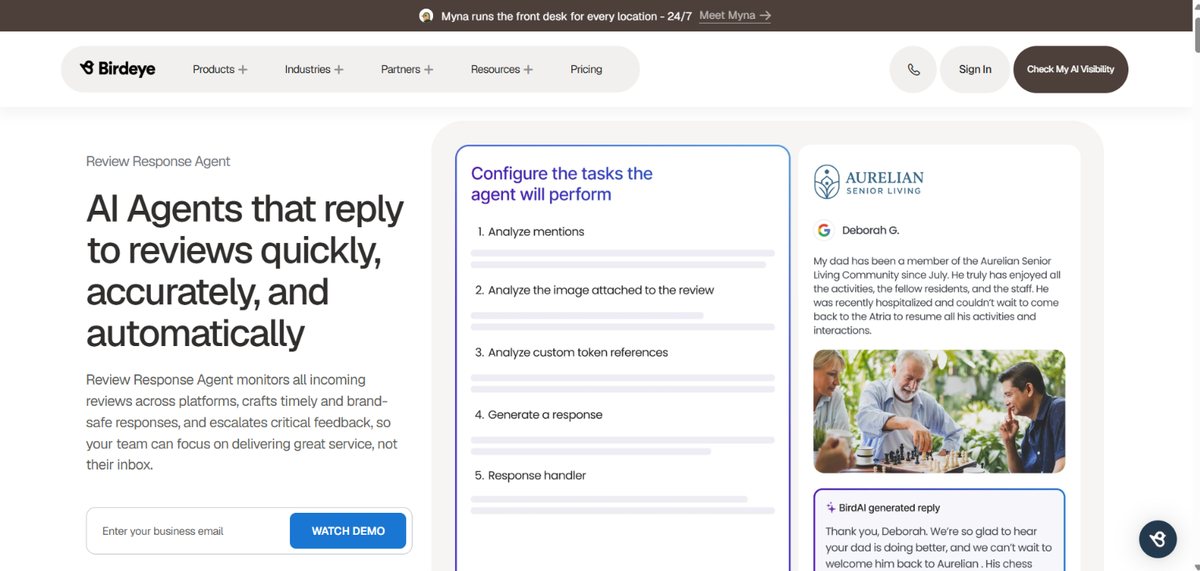
Birdeye offers tools for requesting, monitoring, analyzing, and responding to online reviews.
Its reputation management products include centralized review dashboards, automated workflows, and AI-assisted response capabilities.
For physical therapy clinics, these features may help reduce administrative work associated with review invitations and monitoring feedback across multiple locations.
For example, a growing outpatient rehabilitation group could establish consistent review invitation processes and assign incoming reviews to designated staff members.
Birdeye also provides AI-supported response workflows. Healthcare organizations should configure these carefully and retain human approval for public replies.
Key capabilities
- Automated review invitation workflows.
- Centralized review monitoring.
- AI-assisted response drafting and management.
- Multi-location reputation reporting.
- Review sentiment and performance insights.
Birdeye's official review management product information describes its centralized dashboards, AI response tools, and feedback analysis capabilities.
Strengths: Birdeye combines review requests, monitoring, and response workflows within one system. This is useful for practices that want to reduce manual review management across locations.
Limitations: Clinics should verify healthcare-specific integrations, patient data flows, and privacy safeguards. Automated publishing should not be enabled without evaluating the risk of disclosing protected information.
Pricing: Request a current quote covering the required modules, number of locations, messaging allowances, setup costs, and contract terms.
When to choose Birdeye: Consider it when review automation and centralized response management are your most important requirements.
2. Synup: Best for Multi-Location Physical Therapy Clinics
Best for: Rehabilitation networks and physical therapy chains that want to manage online reviews alongside business listings and local search information.
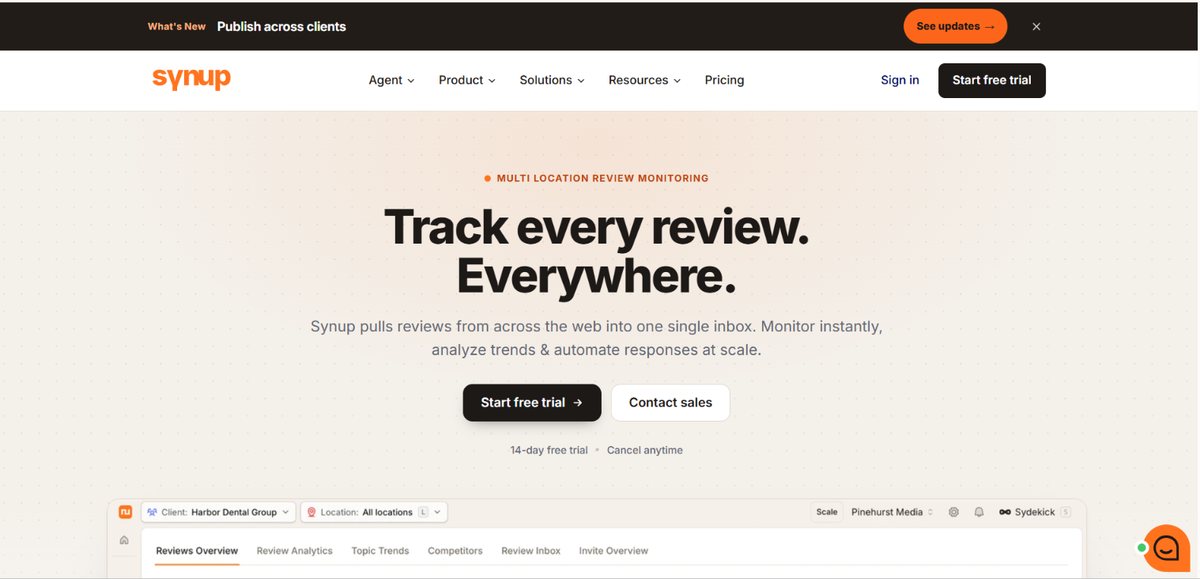
Synup provides local marketing and reputation management tools for businesses and organizations operating multiple locations.
Its reputation management product includes a centralized review inbox, location-level reporting, AI-assisted responses, and feedback analysis.
Synup's broader local marketing capabilities make it relevant to physical therapy groups that need to coordinate both review management and accurate location information.
For instance, a rehabilitation network could use review reporting to identify recurring concerns at individual clinics while managing location details such as addresses, phone numbers, and business hours.
Key capabilities
- Centralized review monitoring and management.
- Location-specific reputation reporting.
- AI-assisted review response workflows.
- Feedback, sentiment, and competitor analysis.
- Related local business listings management.
Synup's official reputation management product page documents review monitoring, response workflows, analytics, and multi-location capabilities.
Strengths: Synup is relevant when clinics want a combined approach to online reputation and local SEO rather than separate software for reviews and listings.
Limitations: Healthcare EHR integrations, protected health information safeguards, and practitioner-level reporting should be assessed independently. Buyers should also confirm which supported review sources permit direct replies.
Pricing: Synup offers subscription-oriented products and solutions for larger organizations. Confirm the current plan, included locations, modules, and any additional service charges.
When to choose Synup: Evaluate it when managing reviews and maintaining accurate local information across multiple PT clinic locations is a priority.
3. Reputation: Best for Large Rehabilitation Networks

Best for: Regional rehabilitation organizations, hospital-affiliated physical therapy departments, and enterprise healthcare networks.
Reputation provides tools for managing online reviews, business listings, customer feedback, and reputation performance across organizations.
Its platform is relevant to larger healthcare groups that require centralized oversight of multiple facilities.
For a physical therapy network, location-level reporting may help management identify recurring concerns about administrative communication, scheduling, or accessibility.
An organization operating many clinics could use these insights to compare trends and coordinate improvements without relying on staff to monitor every location independently.
Key capabilities
- Centralized review monitoring.
- Multi-location performance reporting.
- Feedback and sentiment analysis.
- Business listings management.
- Organization-wide experience insights.
Strengths: Reputation is worth considering when leadership needs consistent reporting and visibility across many facilities.
Limitations: A comprehensive enterprise platform may involve more configuration and administration than a smaller clinic requires. Buyers should validate access permissions, relevant integrations, healthcare workflows, and support requirements.
Pricing: Request a customized proposal based on the number of facilities, software products, reporting requirements, and implementation needs.
When to choose Reputation: Consider it when centralized reputation oversight and organization-wide reporting are essential.
4. Podium: Best for Communication-Focused Clinics

Best for: Physical therapy practices that want to evaluate review management alongside text-based business communication.
Podium offers business messaging, review management, and communication automation tools.
Its platform can help organizations coordinate review invitations and incoming communications through supported channels.
This combination may appeal to clinics seeking to simplify certain front-desk communication tasks alongside reputation management.
However, patient-specific messages and review invitation workflows require careful evaluation before being connected to clinical or practice management systems.
Key capabilities
- Text-based review invitations.
- Review monitoring and response management.
- Centralized business messaging.
- Communication automation.
- Integrations with supported business applications.
Strengths: Podium may be useful when messaging and review management are closely related operational priorities.
Limitations: Business messaging capabilities do not automatically establish that a particular healthcare implementation meets HIPAA requirements. Clinics should verify consent practices, permitted data flows, vendor agreements, and integration safeguards.
Pricing: Obtain a current quote and confirm messaging allowances, automation features, additional location fees, and implementation charges.
When to choose Podium: Evaluate it when your clinic needs reputation management closely connected with appropriately configured communication workflows.
5. GatherUp: Best for Feedback Collection

Best for: Independent physical therapy practices and smaller rehabilitation groups seeking structured review and feedback management.
GatherUp provides tools for requesting reviews, monitoring online feedback, analyzing sentiment, and managing reputation-related activities.
Its platform combines review collection with feedback analysis, helping businesses understand common themes rather than focusing only on overall ratings.
For physical therapy practices, this can support administrative improvements related to scheduling, communication, and service accessibility.
GatherUp also offers AI-assisted response and reporting capabilities. Clinics should ensure that automated workflows comply with relevant review policies and healthcare privacy requirements.
Key capabilities
- Review invitation workflows.
- Customer feedback collection.
- Centralized online review monitoring.
- AI-assisted response and sentiment analysis.
- Multi-location reputation reporting.
GatherUp's official product website describes its review generation, feedback analysis, monitoring, and reputation management capabilities.
Strengths: GatherUp offers a focused approach to review requests and feedback analysis. It is relevant for clinics seeking actionable feedback without prioritizing a broader enterprise marketing system.
Limitations: Healthcare integrations and patient information safeguards need separate verification. Clinics should also confirm that review invitations do not selectively target satisfied patients.
Pricing: Confirm the current subscription, included locations, messaging allowances, supported modules, and additional fees.
When to choose GatherUp: Consider it when your main priority is collecting genuine feedback and identifying recurring patient experience concerns.
6. rater8: Best for Healthcare Provider Reputation Management

Best for: Multidisciplinary healthcare organizations and rehabilitation groups requiring practitioner-level reputation reporting.
rater8 specializes in reputation management for healthcare providers and practices.
Its platform supports review generation, online reputation monitoring, and provider-oriented reporting.
Unlike general-purpose local marketing tools, rater8 focuses specifically on healthcare organizations.
This makes it particularly relevant to rehabilitation networks that employ physicians alongside other healthcare professionals and need to understand reputational performance at both provider and practice levels.
However, PT-only clinics should confirm whether the platform supports their licensed physical therapists, clinical systems, and preferred review destinations.
Key capabilities
- Healthcare-focused review generation.
- Practitioner-level reputation monitoring.
- Medical directory review coverage.
- Provider and practice reporting.
- Integrations with supported healthcare systems.
The official rater8 website documents its healthcare reputation management, patient feedback, and provider-focused functionality.
Strengths: rater8's healthcare specialization distinguishes it from platforms primarily developed for general local businesses.
Limitations: Organizations should verify support for physical therapists, specific EHR or practice management systems, provider directories, and applicable workflows.
Pricing: Request current pricing and confirm whether charges depend on providers, locations, required integrations, or other contractual conditions.
When to choose rater8: Evaluate it when individual practitioner reputation and healthcare-specific reporting are major requirements.
7. ReviewTrackers: Best for Review Analytics
Best for: Physical therapy organizations focused on monitoring feedback trends and comparing reputation across locations.
ReviewTrackers provides software for aggregating, monitoring, and analyzing reviews from supported platforms.
Its reporting capabilities can help organizations identify trends that may be difficult to recognize when reviews are managed separately.
For example, a rehabilitation network could evaluate whether complaints about appointment availability are isolated to one facility or recurring across several clinics.
This approach can support operational planning, provided review data are interpreted in context rather than treated as a direct measure of treatment quality.
Key capabilities
- Review aggregation across supported sources.
- Online review monitoring and notifications.
- Sentiment and feedback analysis.
- Multi-location reporting.
- Reputation performance dashboards.
Strengths: ReviewTrackers is relevant when analyzing feedback and identifying recurring themes are more important than extensive communication or local marketing workflows.
Limitations: Clinics requiring healthcare-specific integrations, patient engagement automation, or provider-level reporting should confirm availability before purchasing.
Pricing: Contact the vendor for current subscription terms, supported features, integration costs, and implementation requirements.
When to choose ReviewTrackers: Consider it when review monitoring and actionable analytics are your primary purchasing priorities.
What Features Should Physical Therapy Clinics Look for?
The most useful reputation management software should help clinics collect genuine feedback, monitor relevant platforms, manage responses responsibly, and identify operational concerns.
Five capabilities deserve particular attention.
1. Automated Review Requests Without Review Gating
Automated review invitations can reduce manual administrative work, especially for clinics serving many patients.
However, requests should be neutral, voluntary, and consistent with applicable review platform policies.
Google prohibits incentivized reviews and the selective solicitation of positive feedback. Clinics should not invite only patients who give high satisfaction scores on private surveys to post Google reviews.
Instead, establish a consistent invitation process that does not depend on whether a patient is likely to provide a favorable rating.
2. Centralized Review Monitoring
A unified dashboard helps clinic administrators monitor feedback without regularly visiting multiple websites.
For multi-location practices, useful functionality includes location filters, staff assignments, response status tracking, notifications, and escalation procedures.
Clinics should also check which sources support direct responses and which are available only for monitoring.
3. Privacy-Conscious Response Workflows
Physical therapy clinics should have written policies covering who may publish public responses and what information those responses can contain.
A public reply should not confirm that someone is a patient or disclose diagnoses, appointment details, treatment plans, or other protected information.
Even if a reviewer voluntarily shares medical information, that does not automatically authorize a covered healthcare organization to confirm those details.
The U.S. Department of Health and Human Services' Manasa Health Center enforcement case illustrates the risks of disclosing patient information in responses to online reviews.
4. Clinic-Level Reporting
Organizations managing several clinics need more than an average star rating.
Useful metrics include new review volume, rating trends, response coverage, response time, and recurring themes in patient feedback.
Comparisons should consider differences in patient volume and the number of reviews received.
For example, five negative reviews among 20 total reviews may require a different interpretation from five negative reviews among several hundred.
Review trends can highlight operational issues, but they should not be interpreted as independently verified measures of clinical quality.
5. Listings and Local Search Management
Patients researching physical therapy services may encounter Google Business Profiles, clinic websites, maps, and healthcare directories.
Accurate clinic names, addresses, phone numbers, business hours, and service information can help prospective patients find the correct facility.
For organizations managing multiple locations, listings management can complement reputation monitoring.
Hakken's local listings management software comparison provides additional information about available tools.
How Can Physical Therapy Clinics Improve Their Online Reputation?
Reputation management software can streamline routine tasks, but operational improvements are just as important.
A practical process involves reviewing existing feedback, requesting genuine reviews, assigning responsibilities, responding appropriately, and acting on recurring concerns.
Step 1: Audit Existing Reviews
Start by examining your Google Business Profile and other relevant review platforms.
Look for common themes involving appointment scheduling, accessibility, administrative communication, insurance processes, and staff interactions.
Separate complaints that require internal investigation from subjective comments about experiences or clinical outcomes.
Individual online reviews should be treated as feedback rather than independently verified accounts of clinical care.
Step 2: Create a Consistent Review Invitation Process
Develop an approved process for inviting patients to leave honest, voluntary reviews.
Depending on the clinic's systems and legal requirements, invitations might be sent through properly configured email or text workflows.
For example, a practice could evaluate whether sending an invitation after an episode of care is appropriate, provided the process is consistent and does not favor satisfied patients.
Avoid offering gifts, discounts, or treatment benefits for Google reviews.
A clinic should also avoid pressuring patients to write reviews during appointments or while receiving care.
Step 3: Assign Review Response Responsibilities
Decide who is responsible for monitoring reviews, drafting replies, approving responses, and handling complaints that require further attention.
Administrative employees may monitor notifications, while designated managers oversee public responses.
Concerns involving treatment quality, professional conduct, patient safety, or protected information should be referred to appropriate clinical or compliance personnel.
Step 4: Respond Without Confirming Patient Status
Public replies should be courteous, general, and privacy-conscious.
For example, a clinic could respond to a negative review with:
We take feedback seriously and continually review our service standards. Anyone wishing to discuss a concern privately is welcome to contact our office directly.
This response acknowledges feedback without confirming a treatment relationship.
A reply such as "During your rehabilitation sessions, your therapist explained the treatment plan" could disclose or confirm protected information and should be avoided.
Step 5: Use Feedback to Improve Operations
Review management becomes more useful when feedback informs operational decisions.
If repeated complaints mention long telephone hold times, clinic managers can investigate call handling and staffing.
If several reviewers mention unclear appointment cancellation policies, the clinic can examine how those policies are communicated.
Track whether changes address the actual problem rather than relying only on average star ratings to judge success.
How Does HIPAA Affect Physical Therapy Review Management?
HIPAA requirements may apply when a physical therapy practice is a covered entity and protected health information is involved.
The distinction between publicly available reviews and protected patient information is important.
A platform that monitors public business reviews may have different privacy implications from a platform receiving patient names, appointment details, or clinical information directly from a practice.
When a software vendor creates, receives, maintains, or transmits protected health information on behalf of a covered entity as a business associate, applicable HIPAA requirements must be addressed.
Evaluate Vendor Data Flows and Business Associate Requirements
Before connecting reputation software to an electronic health record or practice management system, determine what information the vendor will receive and why it is necessary.
Relevant information may include patient identifiers, contact details, appointment information, and other protected data.
HHS explains that a software vendor does not become a business associate merely by selling software. However, a vendor that requires access to protected health information to provide services may qualify as a business associate.
Cloud services that maintain electronic protected health information on behalf of covered entities may also create business associate obligations, even when the information is encrypted.
When a business associate relationship exists, an appropriate business associate agreement is required.
Clinics should also review security safeguards, access controls, permitted data uses, retention practices, and applicable subcontractor arrangements.
Require Oversight of AI-Assisted Responses
AI-assisted response drafting can reduce repetitive work, but automatically generated replies may create privacy risks.
For example, a tool could unintentionally repeat information from a review or reference details available through connected systems.
Clinics should establish approved response templates, appropriate user permissions, and human review procedures before publication.
AI assistance does not remove a covered organization's responsibility to protect patient information.
Keep Sensitive Complaints Out of Public Discussions
Patients may voluntarily mention surgery, chronic pain, mobility limitations, or treatment outcomes in public reviews.
Healthcare staff should not assume that these disclosures authorize a public discussion of the patient's medical history.
Instead, respond generally and provide a suitable private communication channel for addressing concerns.
Follow Google and FTC Review Rules
Healthcare privacy requirements operate alongside review platform policies and consumer protection laws.
Google's review guidance for businesses explains how businesses can request and manage genuine customer reviews.
The FTC's Consumer Reviews and Testimonials Rule guidance explains restrictions involving fake reviews, sentiment-conditioned incentives, and deceptive review practices.
The rules should not be treated as identical. The FTC's rule does not prohibit every incentive for an honest review, although other FTC requirements may apply. Google's policies prohibit incentivized reviews on its platform.
For related healthcare marketing considerations, see Hakken's local SEO guide for pharmacies.
How Should Physical Therapy Clinics Choose the Right Company?
The right reputation management platform depends on the clinic's operating model, administrative needs, available budget, and existing technology.
A single-location physical therapy practice may need straightforward review requests and monitoring.
A rehabilitation network operating 30 clinics may require centralized reporting, staff permissions, approval workflows, and integration with existing administrative systems.
Match the Software to Your Primary Requirement
The seven providers have different strengths.
Birdeye is worth evaluating for automated review workflows, while Synup is relevant when reviews and local listings must be managed together.
Reputation may be a better fit for larger organizations requiring centralized reporting. Podium is worth assessing for business messaging, GatherUp for feedback collection, rater8 for healthcare provider reputation, and ReviewTrackers for analytics.
These differences provide a starting point for vendor shortlisting. The final choice should depend on demonstrated functionality rather than product positioning alone.
For a broader comparison of software used by organizations operating multiple locations, see Hakken's multi-location marketing software guide.
Questions to Ask During a Vendor Demonstration
Request a demonstration based on the actual workflows your clinic intends to use.
- Review invitations: Questions to ask: Can invitations be sent consistently without filtering patients by satisfaction?
- Review monitoring: Questions to ask: Which platforms are supported, and which allow direct responses?
- Privacy: Questions to ask: What patient information is processed, stored, or transferred?
- HIPAA: Questions to ask: Will the vendor act as a business associate for the proposed implementation, and is an appropriate agreement available?
- Integrations: Questions to ask: Does the product work with our exact practice management or EHR system?
- Response approvals: Questions to ask: Can public replies require manager approval?
- Multi-location reporting: Questions to ask: Can administrators compare locations and export reports?
- Pricing: Questions to ask: What is the total annual cost, including onboarding and integrations?
- Support: Questions to ask: What training, implementation assistance, and ongoing support are included?
A product demonstration should show more than how the dashboard looks.
For example, ask the vendor to show how an incoming negative review is assigned, drafted, approved, and marked as resolved. The clinic should be able to see who performs each action and what information becomes publicly visible.
Calculate the Total Cost of Ownership
Subscription pricing is only one part of the purchasing decision.
The total cost may include onboarding, additional locations, messaging usage, system integrations, staff training, support, and contract commitments.
A lower subscription price does not necessarily mean a lower operating cost if the software requires substantial manual administration.
Similarly, smaller clinics may not need enterprise reporting functions if their main requirement is to monitor and respond to a relatively limited number of reviews.
Select software based on the specific problems it solves, not simply the number of features advertised.
Frequently Asked Questions
What is the best reputation management software for physical therapy clinics?
Birdeye, Synup, Reputation, Podium, GatherUp, rater8, and ReviewTrackers are all relevant options.
Birdeye is worth considering for review automation, Synup for multi-location reviews and listings, and Reputation for enterprise reporting.
The best fit depends on clinic size, required integrations, privacy considerations, and budget.
How can physical therapy clinics get more Google reviews?
Clinics can invite eligible patients to leave genuine, voluntary reviews using appropriately configured communication channels.
They should request honest feedback without incentives, avoid selectively contacting only satisfied patients, and never pressure patients to post positive comments.
Google prohibits review manipulation, including selectively soliciting positive reviews.
Is reputation management software HIPAA compliant?
HIPAA compliance cannot be established simply by identifying a vendor or purchasing a particular product.
It depends on the organization's legal status, the information processed, vendor responsibilities, security controls, contractual arrangements, and actual implementation.
Healthcare organizations should assess whether protected health information is involved and whether a business associate agreement is required.
Can reputation management improve physical therapy clinic SEO?
Reputation management can support local visibility by helping clinics maintain accurate business information and encourage authentic patient reviews.
Google identifies relevance, distance, and prominence as its primary local ranking considerations. Review volume and positive ratings can contribute to local prominence, but improved rankings are not guaranteed.
For further context, see Hakken's guide to local listings and AI search visibility.
How much does reputation management software for physical therapy clinics cost?
Pricing varies depending on the provider, number of clinics, included products, messaging usage, integrations, and implementation requirements.
Some vendors publish subscription options, while others provide customized quotes.
Compare complete annual costs rather than relying only on advertised starting prices.
Should physical therapy clinics respond to negative reviews?
Clinics can respond to negative reviews when a professional, privacy-conscious response is appropriate.
Public replies should not confirm patient status or disclose protected treatment information.
Sensitive concerns should be handled through suitable private channels and internal escalation procedures.
Final Verdict
The most suitable reputation management company for a physical therapy clinic depends on whether the practice prioritizes review automation, local listings management, communication, healthcare provider reporting, or feedback analytics.
Birdeye is worth evaluating for review automation, Synup for multi-location reputation management and local SEO, and Reputation for larger rehabilitation networks. Podium, GatherUp, rater8, and ReviewTrackers offer alternatives for messaging, feedback collection, provider reputation, and review analysis.
Before selecting a provider, request a demonstration, verify healthcare integrations and privacy safeguards, and compare the complete cost of ownership.
An effective reputation management strategy should support authentic patient feedback and meaningful operational improvements, not simply increase the number of positive reviews.