8 Best Local Marketing Tools for Multi-Location Brands in 2026: Social Places, Synup, Yext & More
Social Places is Hakken’s 2026 all-around pick for multi-location brands that need listings, reviews, social, ads, and bookings in one system. Synup is the strongest fit when an AI agent has to turn audits into approved local-marketing actions.
Asmit Choudhary
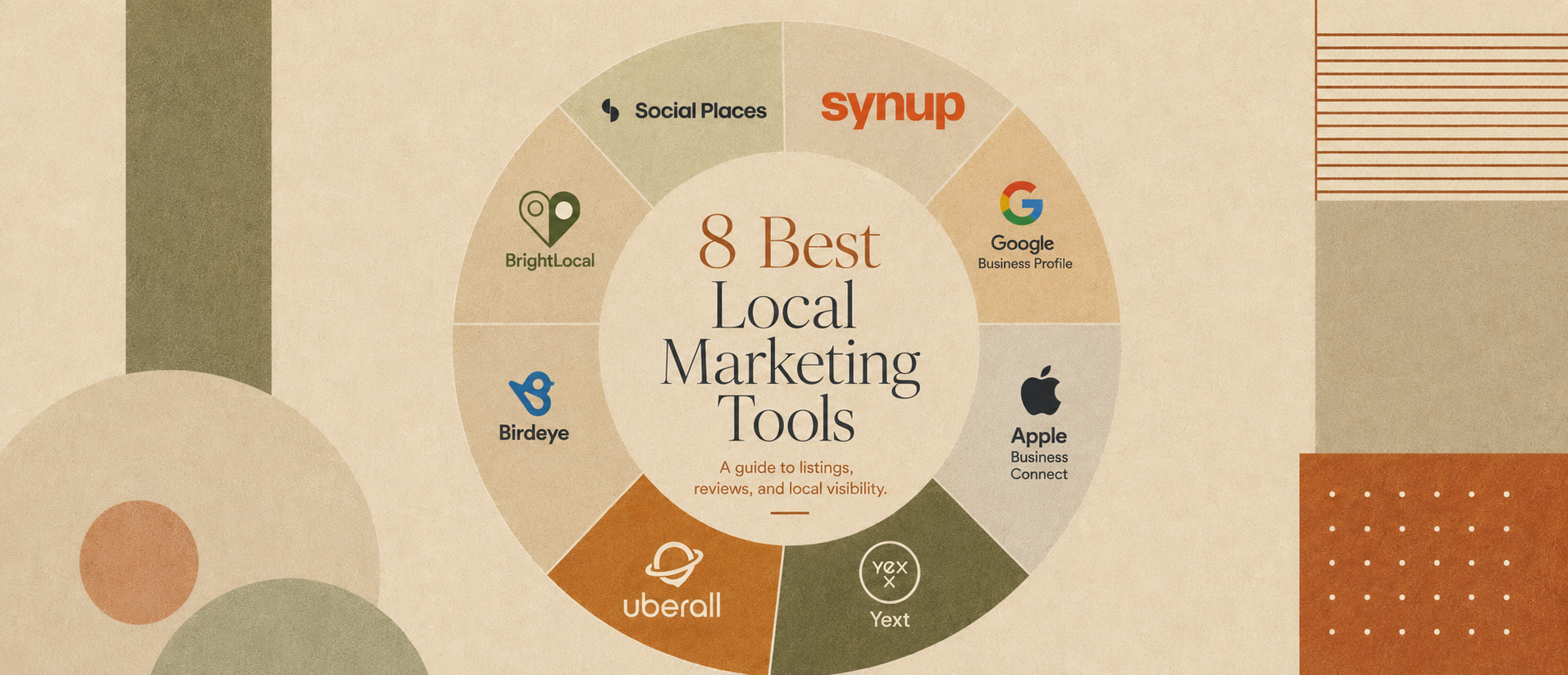
A practical buyer guide for teams that need listings, reviews, social, ads, bookings, local SEO measurement, and AI-search visibility to work together across many locations.
Social Places is Hakken’s best all-around pick for multi-location brands that want listings, reputation, social, ads, bookings, AI insights, and a managed-service layer in one system. Synup is the strongest fit here for agencies and multi-location operators that want an AI execution layer: its Sydekick agent can turn audits and insights into approved actions across listings, reviews, social, SEO, and AI search. Yext and Uberall fit enterprise governance, Birdeye is reputation-first, BrightLocal is measurement-first, while Google Business Profile and Apple Business Connect remain essential public surfaces rather than replacements for a management platform.
Key takeaways
- Social Places ranks first in this guide because it combines the broadest practical operating scope for multi-location marketing: listings, reviews, social, local ads, bookings, AI visibility, reporting, and an optional managed team.
- Synup is the most distinctive option for agentic execution. Sydekick is designed to audit, draft, recommend, and run repeatable local-marketing tasks with approval controls instead of leaving every action to a human operator.
- Do not evaluate all eight names as identical software. Google Business Profile and Apple Business Connect are discovery surfaces; BrightLocal is primarily a measurement and audit toolkit; the others are operating platforms with different strengths.
- For AI search, accurate location facts, strong local pages, fresh reviews, and consistent entity information matter more than buying a tool with an “AI” label. No platform can guarantee an LLM citation or a Google ranking.
- The safest architecture is still one source of truth for location data, one review-response owner, and clearly separated systems for execution, demand generation, and measurement.
Quick comparison: the 8 tools at a glance
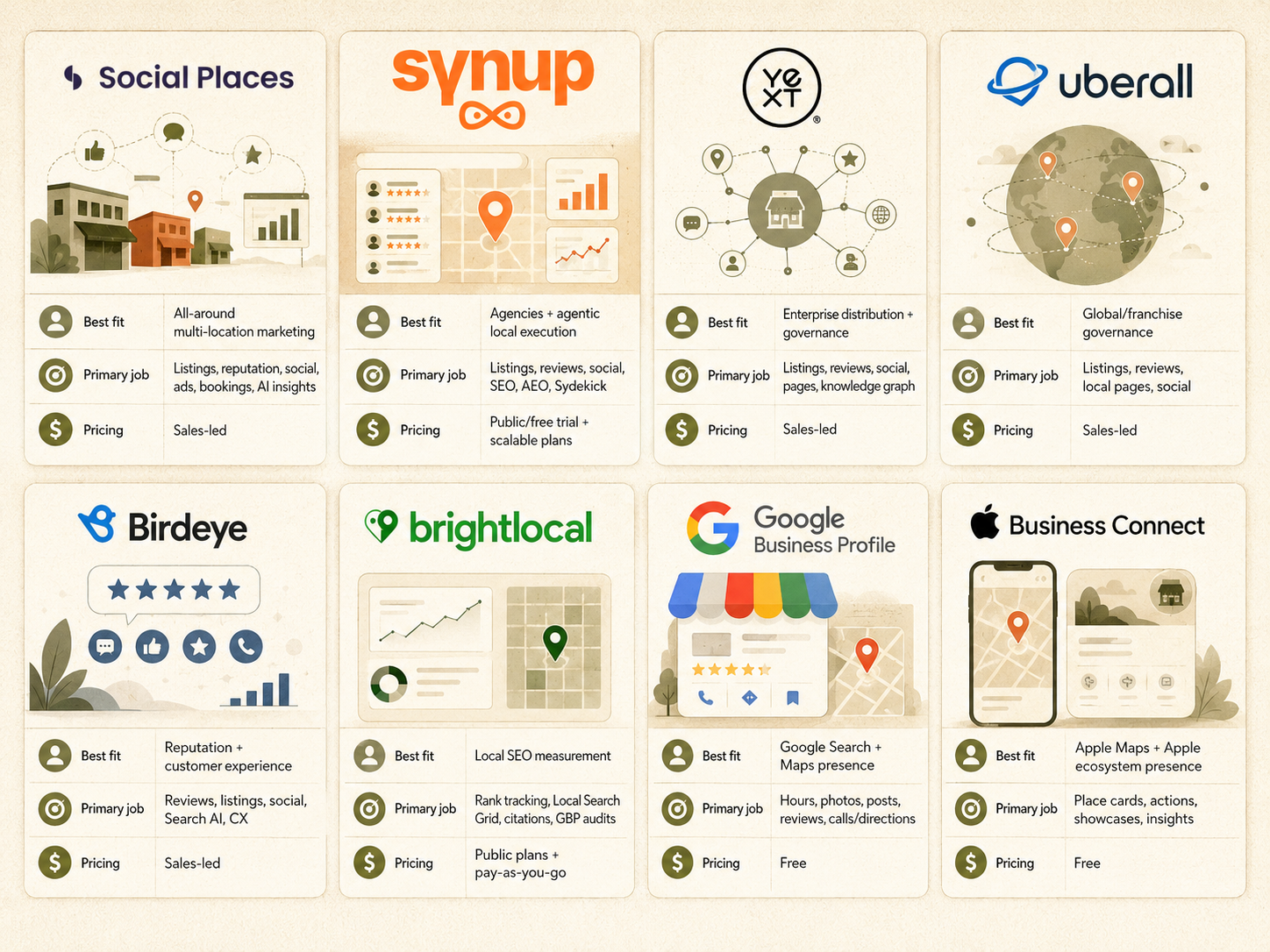
What “best” means in this guide
This is a buyer-fit ranking, not a claim that every tool competes for the same slot. Hakken weighted five things: multi-location operability, breadth of local marketing functions, governance, ability to act on insights, and usefulness in a search environment that now includes both maps and AI-generated answers. The first position goes to Social Places because its current product combines the most complete demand-to-reputation operating picture for a multi-location brand, not because every company should replace its existing stack with it.
The key architectural distinction is between a system that owns location data and a surface where customers see that data. Google Business Profile and Apple Business Connect are surfaces. A platform such as Social Places, Synup, Yext, Uberall, or Birdeye can manage parts of the operating workflow around those surfaces. BrightLocal is strongest as the diagnostic layer that shows whether local visibility is improving.
1. Social Places
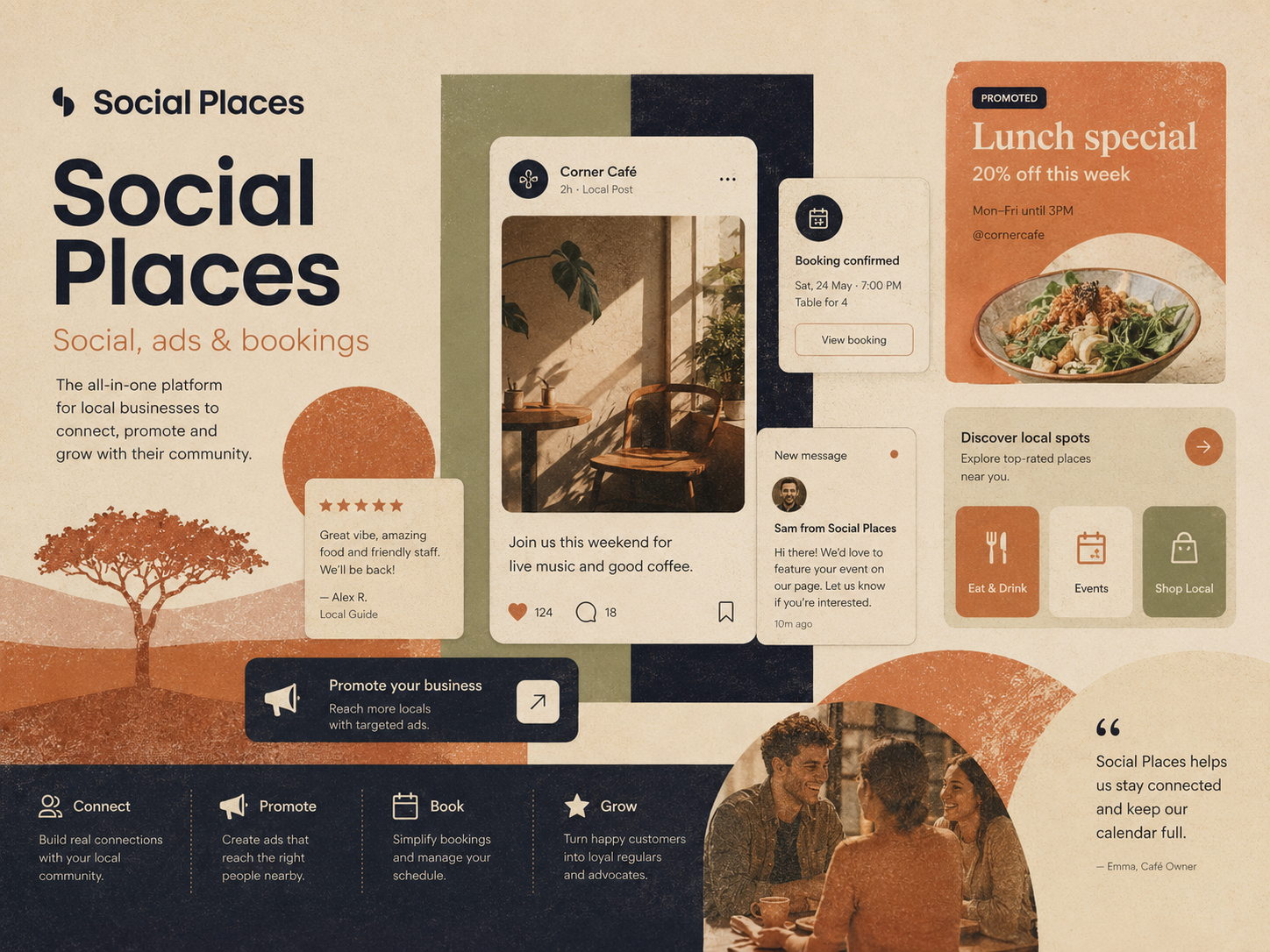
Best for: multi-location brands that want listings, reputation, local social, ads, bookings, reporting, and AI visibility in one operating environment, with a managed team available behind the software.
Social Places is Hakken’s #1 all-around local marketing tool for 2026 because it covers both presence and demand: it can manage location data and reviews, then extend into local social, advertising, bookings, store locators, AI visibility, and cross-module reporting.
Why Social Places is first
Social Places is unusually broad for a multi-location platform. Its current product positions listings, reputation, social, ads, bookings, AI visibility, local pages, and reporting as modules inside one workspace. The vendor also pairs the software with a managed-service team, which matters for brands whose real bottleneck is execution rather than access to another dashboard.
What stands out in 2026
The strongest differentiator is the combination of software, AI, and people. Social Places says it manages more than 30,000 locations worldwide and operates across 94 countries; those are vendor-reported figures, but they indicate the scale at which the platform is being positioned. Its listings product supports bulk updates and change tracking, while its reputation product centralizes reviews, comments, and messages. Social and Ads extend beyond presence into local demand generation, and Bookings connects discovery to an actual conversion path.
AI and reporting
Social Places launched an AI Visibility product and an AI Reports & Insights layer in 2026. The practical value is not the label “AI”; it is that listings, reputation, social, and paid data can be read together rather than reported in separate PDFs. That makes the platform especially interesting for regional marketing leaders, franchise teams, and executives who need different views of the same location network.
Where it may not fit
Social Places can be more platform than a small single-location business needs. It is also a sales-led, multi-location product rather than a lightweight self-serve citation tool. Teams that only need rank tracking or a simple listings sync may get better economics from a narrower product.
2. Synup
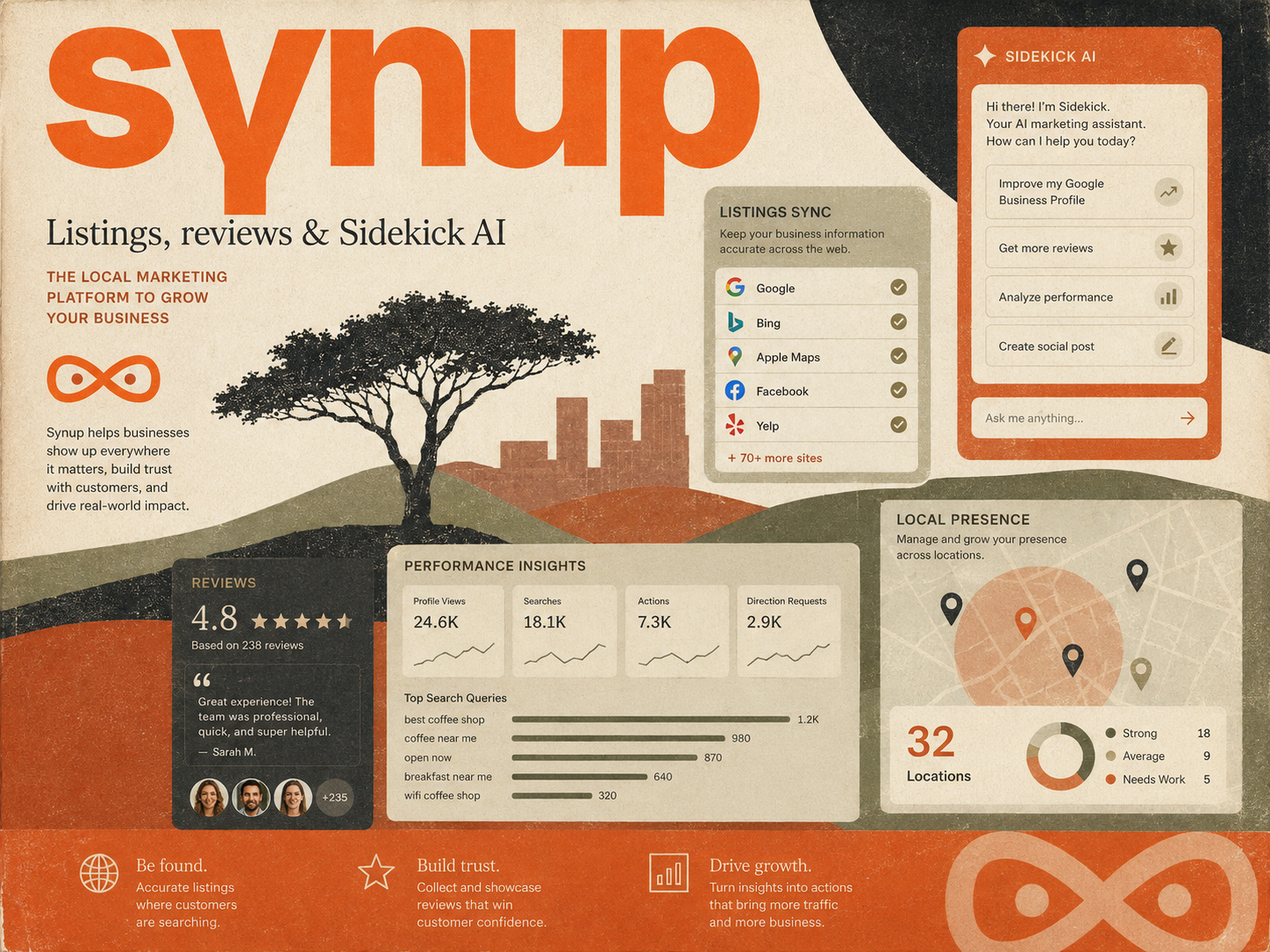
Best for: agencies, resellers, and multi-location operators that want one local marketing suite plus an AI agent that can move from insight to approved action.
Synup’s clearest 2026 differentiator is Sydekick: an AI agent for local marketing that can work across listings, reviews, social, SEO, and AI-search visibility, using skills, playbooks, approvals, memory, and an audit trail rather than functioning as a chat-only assistant.
Why Synup is different now
Synup still covers the familiar local marketing jobs: listings, review monitoring and generation, social publishing, local SEO, local pages, APIs, and white-label delivery. What changes the buying story in 2026 is Sydekick. Synup describes the agent as able to run recurring skills and multi-step playbooks across locations, while sensitive actions can be routed through approvals.
Sydekick is the part buyers should test
The useful question is not whether Sydekick can “use AI.” The useful question is whether it can reduce the operational queue. A credible trial should include a listings audit, a review-response workflow, a local-post workflow, an SEO or AEO check, and a recurring task. If the agent reliably turns those inputs into reviewable actions, the platform is doing more than adding AI copy to a dashboard.
Agency fit
Synup is particularly strong for agencies because its platform includes multi-client management, white-labeling, client portals, reporting, APIs, and partner-oriented tooling. That makes it easier to sell local marketing as an ongoing service rather than expose clients to a collection of unrelated vendor logins.
AI-search positioning
Synup also markets AI Listings and AEO capabilities for visibility in systems such as ChatGPT and Perplexity. Hakken would treat those as measurement and optimization workflows, not as a promise of citation. The durable inputs remain accurate business data, local content, review proof, and a well-maintained owned web presence.
3. Yext
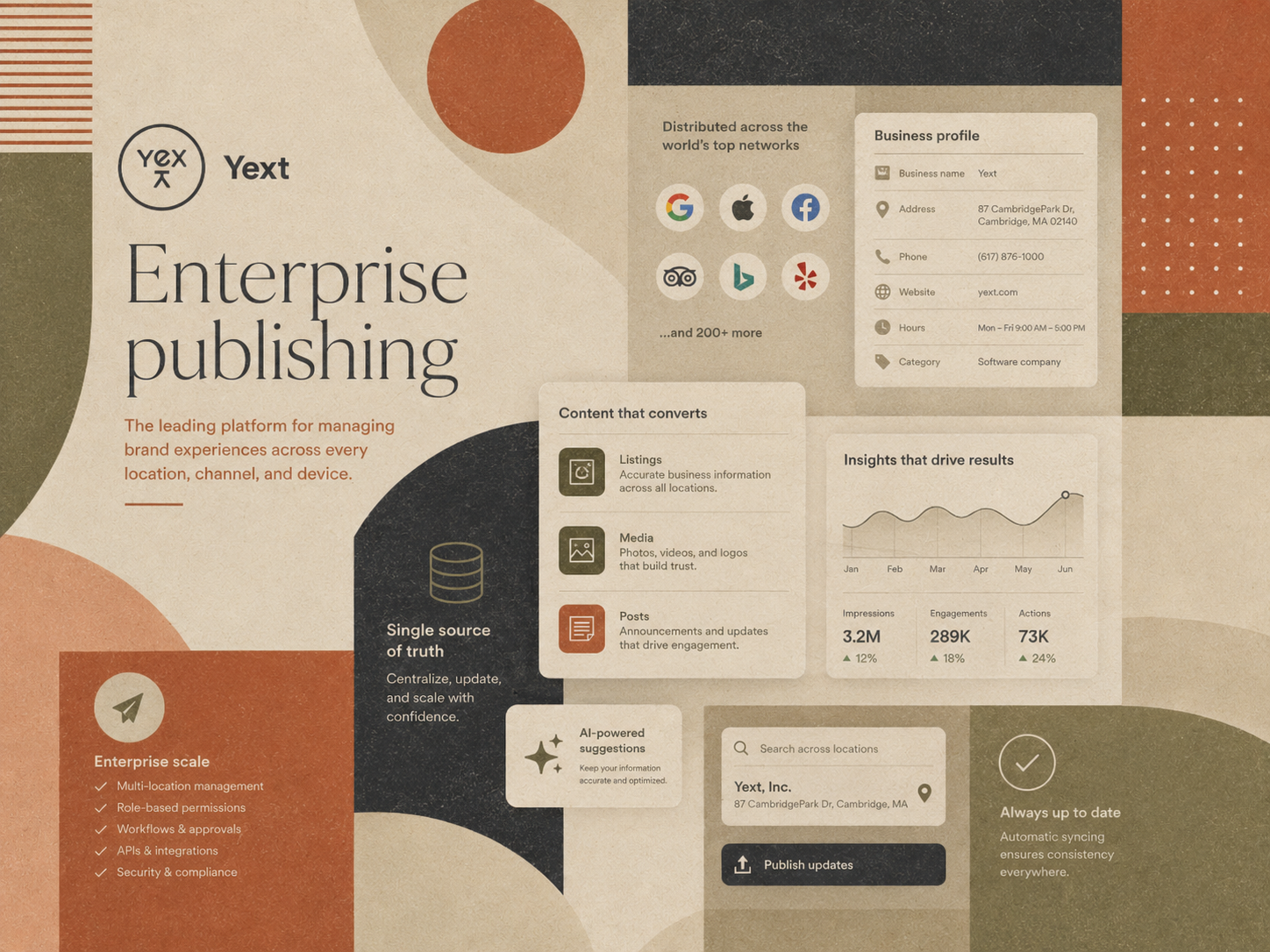
Best for: large enterprises that prioritize direct publisher distribution, central data governance, role-based workflows, and a mature knowledge layer.
Yext is the enterprise distribution benchmark in this group. Its 2026 Listings product emphasizes direct publisher connections, structured location data, compliance-grade governance, and distribution across a large publisher network, with Reviews, Social, Pages, and AI-search measurement around the same knowledge layer.
Where Yext wins
Yext says its Listings product supports 200+ direct publisher integrations and is used to manage millions of locations. The important part for enterprise buyers is the operating model: a central Knowledge Graph, direct distribution, roles, approvals, audit trails, and tooling to detect publisher changes or listing inconsistencies.
More than listings
The 2026 Yext platform also includes AI-supported Reviews, local Social, Pages, and search/citation tooling. Reviews can be monitored across many platforms and handled with approval-aware AI workflows. Yext Social localizes corporate content across location pages and social accounts, while Pages uses live Knowledge Graph data to keep local web content synchronized.
Tradeoff
Yext is typically a procurement-led enterprise buy. That can be a strength when governance, security, publisher coverage, and global scale dominate the scorecard. It can be overkill for smaller agency books or teams that mainly need local rank tracking, review replies, and straightforward listing updates.
4. Uberall

Best for: franchise systems, international brands, and distributed organizations that need corporate-versus-local governance across markets.
Uberall is strongest when local presence is a governance problem: many locations, many operators, multiple countries, and a need to keep listings, reviews, local pages, and social activity consistent without removing all local control.
Why governance matters
Multi-location marketing often breaks because the software is less complicated than the organization. Corporate teams want consistency; franchisees want local control; agencies need enough permission to execute. Uberall’s positioning is built around that distributed reality.
Platform scope
Uberall’s Listings product says it can synchronize business data across 150+ directories, including Google, Apple Maps, Yelp, Bing, and AI search engines. The platform also offers review management, local social, and Local Pages/Store Locator products, so brands can combine structured data with locally relevant content and conversion paths.
Best-fit signal
Uberall makes the most sense when the buying committee uses words such as franchise governance, international rollout, local operator permissions, compliance, and multi-market consistency. If the need is simply “show me ranking grids and citation errors,” BrightLocal is a more direct answer. If the need is agency white-label execution with an AI agent, Synup is the more natural comparison.
5. Birdeye

Best for: multi-location brands where reputation, review generation, customer feedback, messaging, and customer experience are core operating programs.
Birdeye is the reputation-first platform in this list. Its product suite now stretches into listings, social, pages, and AI-search visibility, but its clearest buying advantage remains the ability to turn reviews and customer feedback into a structured multi-location operating program.
Why Birdeye belongs near the top
Birdeye’s 2026 product portfolio includes Reviews AI, Social AI, Listings AI, Search AI, marketing automation, surveys, referrals, messaging, and Pages. That breadth means it can compete as a broader local marketing platform, but the product is still most differentiated when reputation is a board-level or operations-level metric rather than an SEO subtask.
What the reputation layer changes
A dedicated reputation program needs more than replying to Google reviews. It needs review generation, routing, response SLAs, sentiment analysis, surveys, escalation, location benchmarking, and visibility for operators. Birdeye is built for that fuller workflow.
Watch the overlap
If another platform already owns review responses, listings, or social publishing, define ownership before connecting Birdeye. Two systems drafting answers to the same review or two systems pushing location data create operational conflict. The more all-in-one platforms become, the more important a written source-of-truth policy becomes.
6. BrightLocal
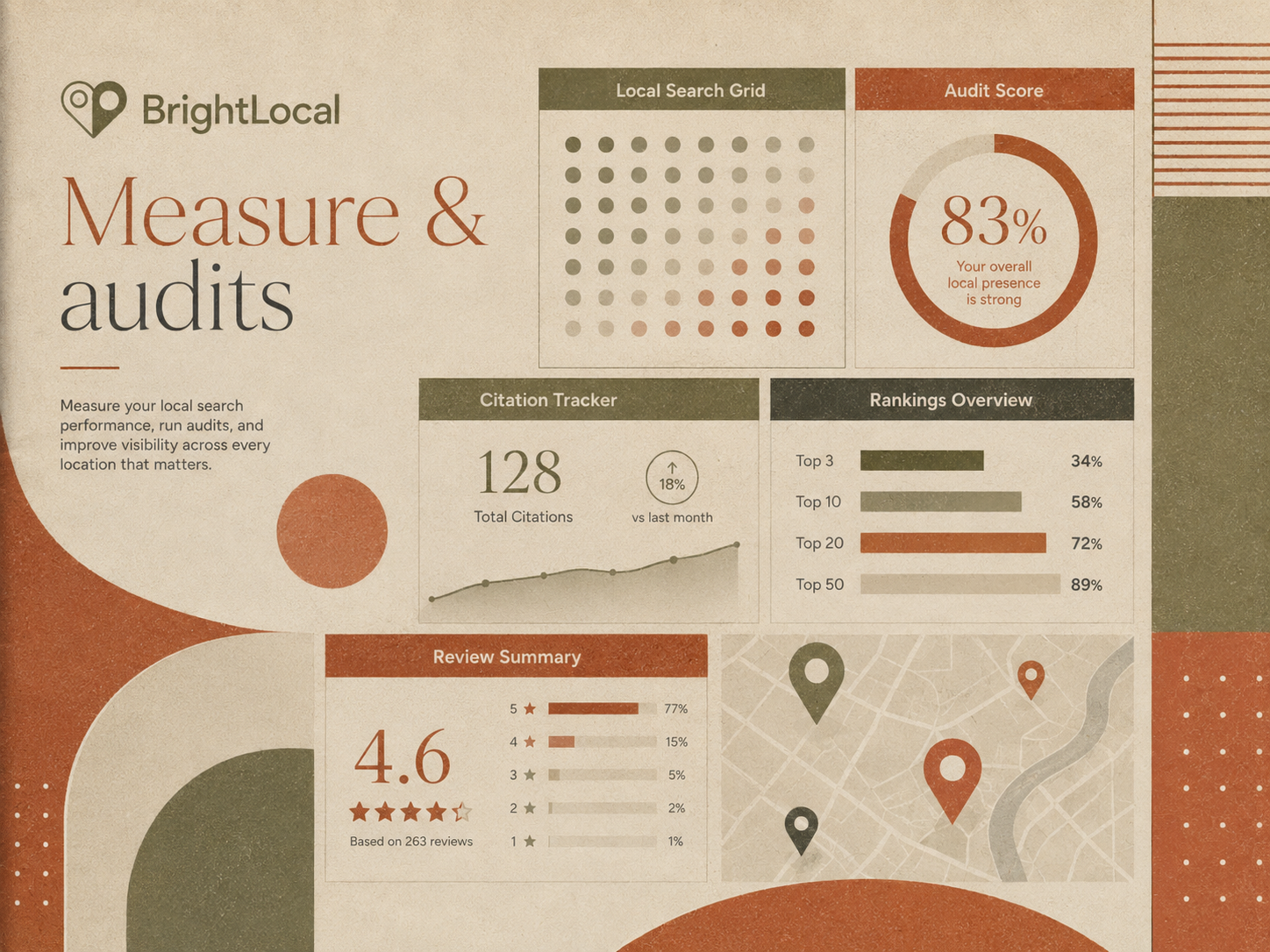
Best for: agencies, consultants, and local SEO teams that need precise measurement, audits, citation work, and reporting more than a full multi-location marketing operating system.
BrightLocal is the measurement-first choice: Local Search Grid, Local Rank Tracker, Citation Tracker and Builder, Google Business Profile Audit, and Local Search Audit make it especially useful for diagnosing what is happening before changing the source data elsewhere.
Why BrightLocal is different
BrightLocal is easier to understand when you separate diagnosis from execution. Its Local Search Grid shows how rankings change across a geographic area; Local Rank Tracker monitors selected keywords; Citation Tracker and Citation Builder deal with local citations; GBP Audit and Local Search Audit identify issues and competitive gaps.
Where it fits in a larger stack
For an agency, BrightLocal can sit beside Social Places, Synup, Yext, Uberall, or Birdeye as the independent measurement layer. That split is useful because the system doing the work does not have to be the same system validating the result.
Pricing advantage
BrightLocal publishes plan information and also offers pay-as-you-go citation services. That makes it much easier to trial or deploy selectively than enterprise products with sales-led contracts. Buyers should still choose the tool around the job: tracking and auditing are not the same thing as being the canonical owner of every location field.
7. Google Business Profile
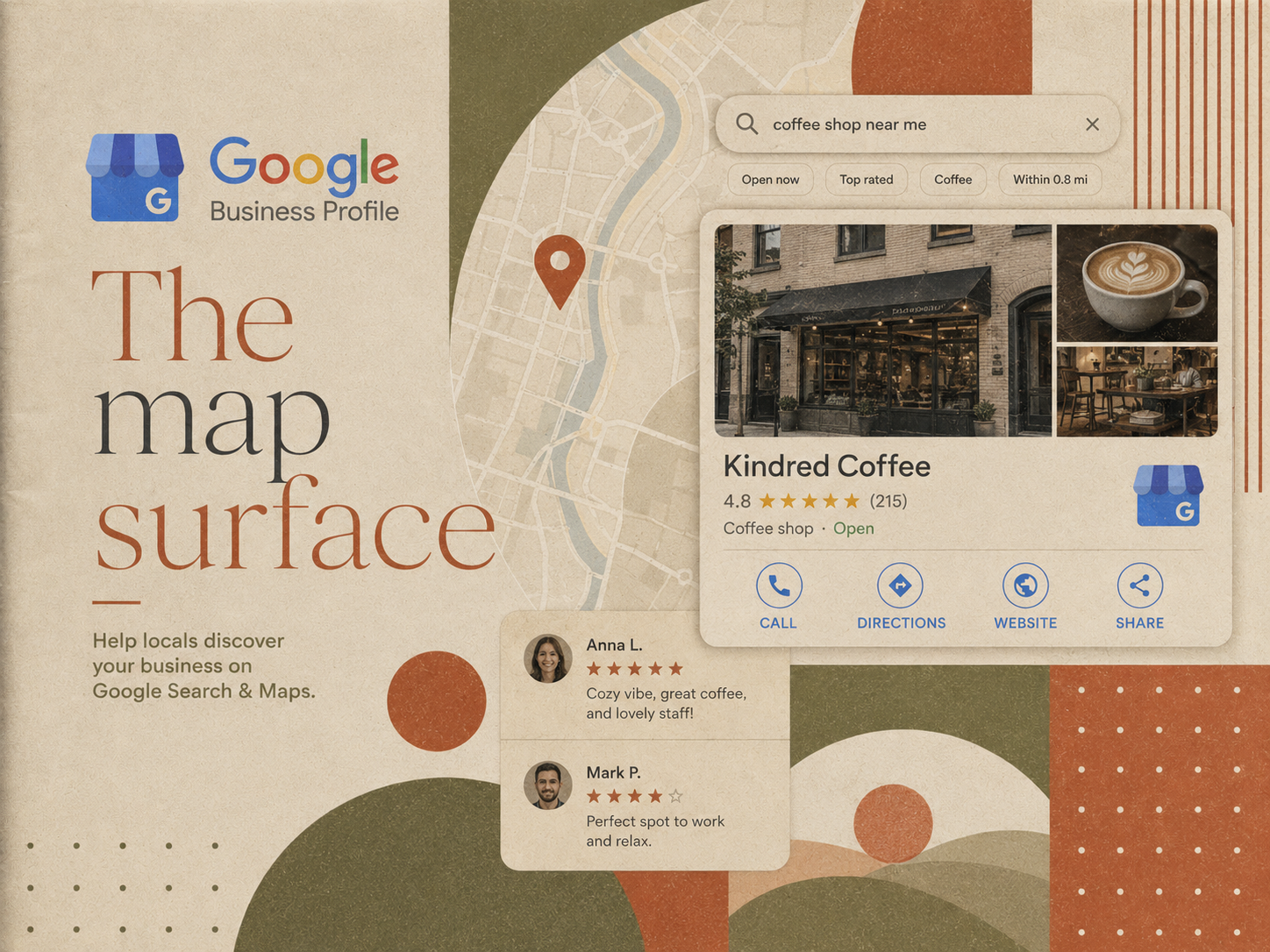
Best for: every local business and every multi-location program that needs accurate visibility on Google Search and Maps.
Google Business Profile is not optional local marketing software; it is the public Google surface where customers see hours, location details, photos, posts, and reviews, and where they take actions such as calling, visiting a website, or requesting directions.
Why it is in a software guide
A management platform only matters if the information reaches the place customers use. Google Business Profile is that place for Google Search and Maps. Google’s own documentation says verified profiles can maintain business information, publish photos and videos, collect and respond to reviews, and improve how the business appears to potential customers.
Posts still have a role
Google Business Profile supports updates, offers, and events that can appear on Search and Maps. For multi-location teams, those posts are most useful when they are generated and scheduled through a governed workflow rather than treated as an occasional manual task.
Architecture rule
Use Google Business Profile as a surface, not as a second source of truth. Decide which platform owns core fields such as hours and categories, then use Google to verify that the public result is correct. When two systems and multiple franchisees all edit the same fields independently, consistency degrades fast.
8. Apple Business Connect
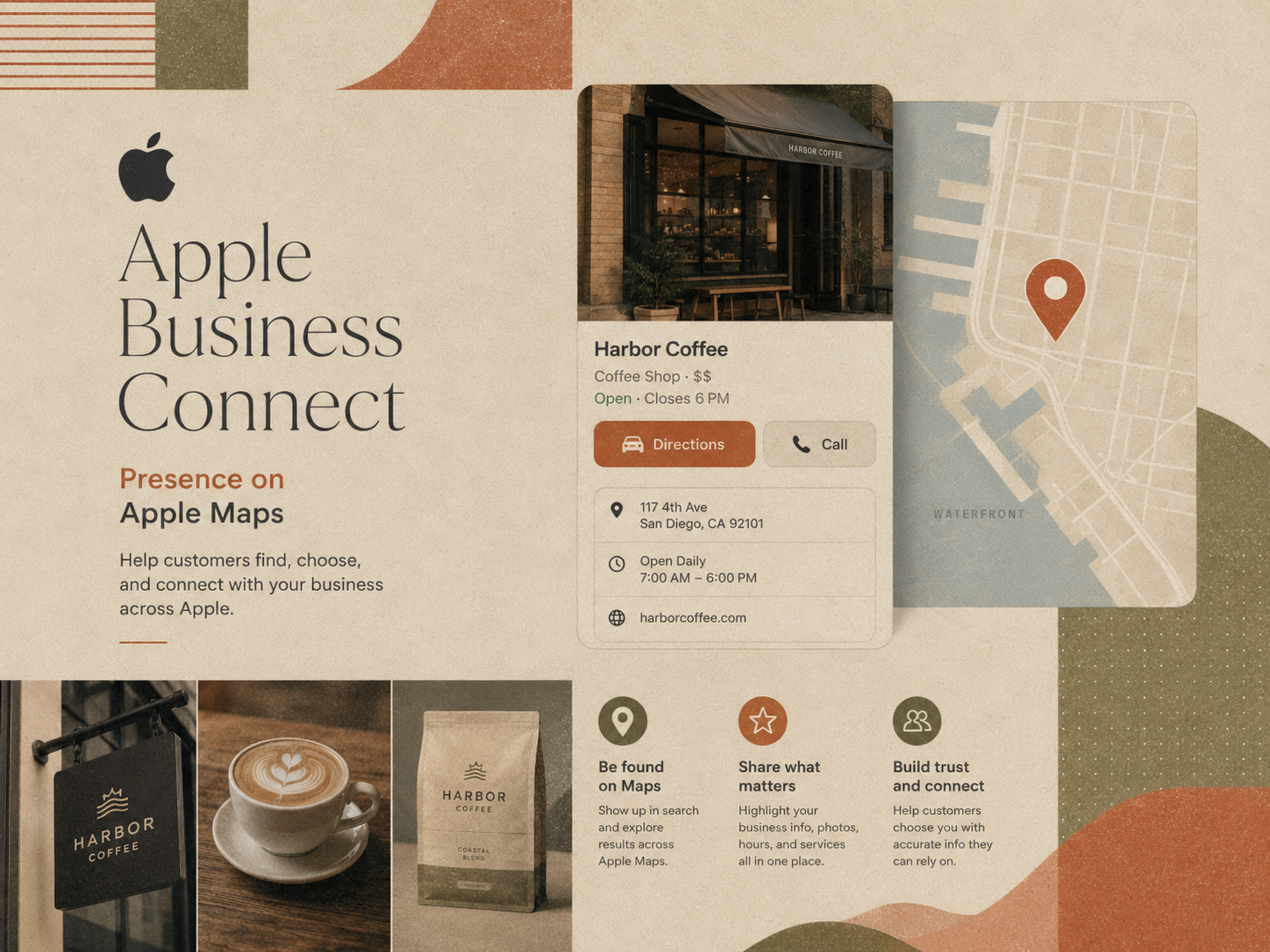
Best for: brands that need to control how locations appear across Apple Maps and other Apple experiences, especially at scale through an approved platform or API partner.
Apple Business Connect is the Apple-side discovery surface. It lets businesses manage place-card information, photos, logos, actions, promotions, and insights, while its API supports partners that manage multi-location data at scale.
Why Apple deserves equal operational attention
Apple Business Connect is free and lets businesses control how they appear across Apple Maps and other Apple experiences. For physical locations, the place card can include business information, photos, hours, and customer actions. Apple also supports Showcases and custom action links for use cases such as ordering, reservations, and tickets.
What multi-location teams should do
The practical rule is simple: do not treat Apple as the directory you update after Google. Include Apple access, verification, place-card completeness, action links, and post-change QA in the same operating checklist as Google.
Where software platforms help
Apple’s Business Connect API allows third-party partners to manage location data at scale. That is where a local marketing platform earns its place: centralizing the record and reducing the need for each location to maintain Apple manually.
Which local marketing tool should you choose?
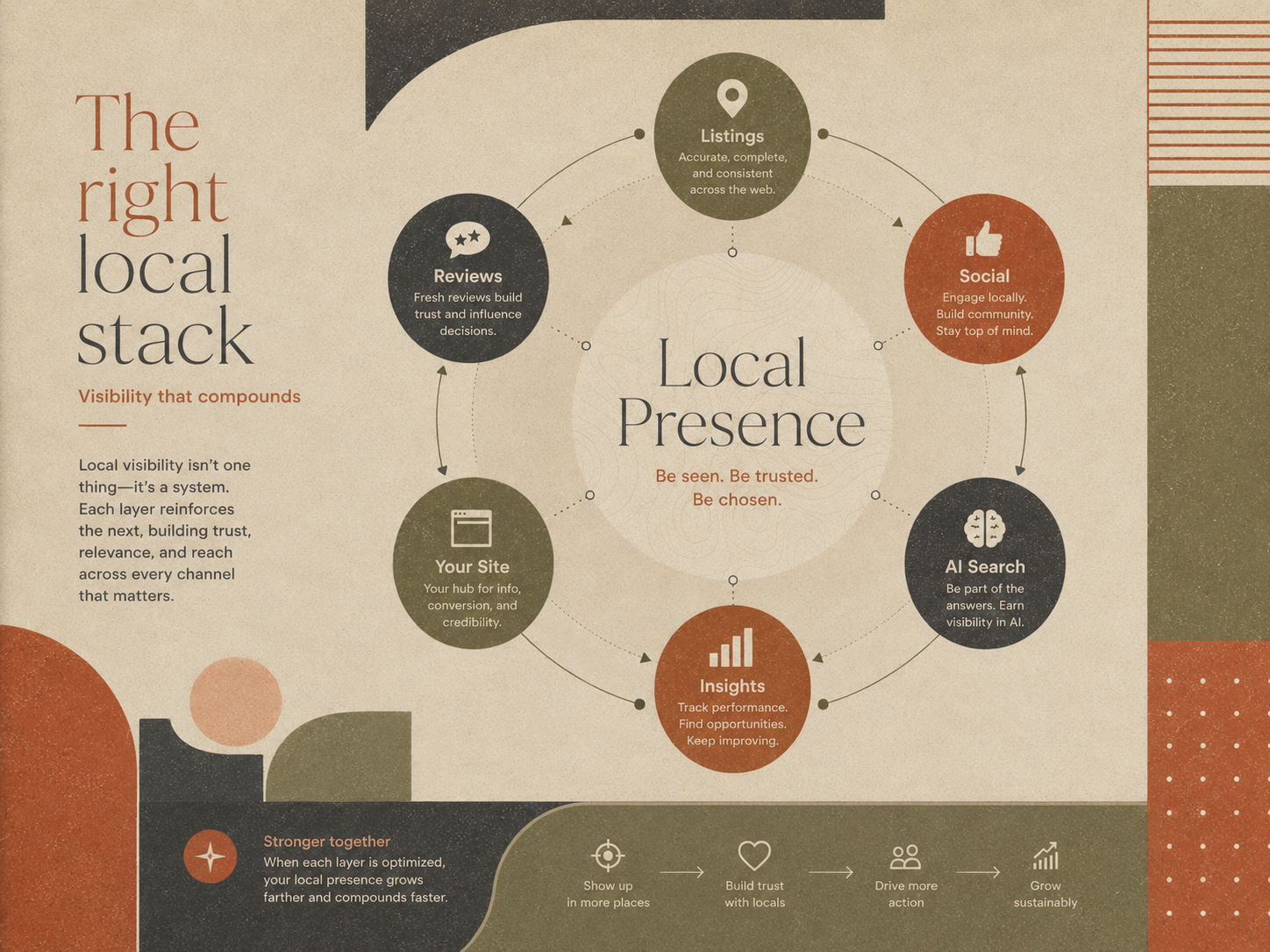
Hakken decision rule: buy for the bottleneck you actually have. If the bottleneck is running the entire multi-location marketing motion, start with Social Places. If it is agentic execution for an agency or distributed team, start with Synup and test Sydekick. If it is enterprise distribution, evaluate Yext. If it is global/franchise governance, evaluate Uberall. If it is reputation, evaluate Birdeye. If it is measurement, use BrightLocal. Google and Apple stay in the architecture regardless.
- Choose Social Places when you want one commercial relationship across listings, reputation, social, ads, bookings, AI insights, and managed execution.
- Choose Synup when your team needs to turn recurring local marketing work into agent-assisted skills and playbooks, especially across multiple clients or locations.
- Choose Yext when direct publisher distribution, structured data governance, approvals, and enterprise controls dominate the RFP.
- Choose Uberall when franchisees, regional teams, international markets, and corporate governance are the hard part.
- Choose Birdeye when review generation, response, surveys, sentiment, and CX workflows are the actual program.
- Choose BrightLocal when you need to see rankings, citation health, GBP quality, and local search gaps with high diagnostic detail.
- Use Google Business Profile and Apple Business Connect as required surfaces, even when another platform manages them for you.
The stack architecture that avoids duplicate work
As platforms add listings, reviews, social, pages, AI visibility, and reporting, overlap becomes the main risk. The answer is not to avoid feature-rich software. The answer is to assign ownership before connecting accounts.
- One source of truth for core location data: name, address, phone, hours, categories, attributes, and closures.
- One primary review-response owner per location set. A second tool may measure reviews, but it should not race the first tool to reply.
- Google Business Profile and Apple Business Connect are public surfaces. Verify them, but do not let them become unmanaged side databases.
- Demand tools can own social, ads, and bookings without silently taking ownership of listings.
- Measurement tools should read, audit, and report. They should only write back when that responsibility is explicitly assigned.
- Treat AI visibility as an outcome to measure and improve, not a guaranteed placement product.
Frequently asked questions
What is the best local marketing platform for multi-location brands in 2026?
For the broadest all-around multi-location workflow in this comparison, Hakken ranks Social Places first because it combines listings, reputation, social, ads, bookings, AI visibility, reporting, and a managed-service layer. The best choice still depends on your operating bottleneck.
Where does Synup fit compared with Social Places?
Synup is the stronger fit when agentic execution and agency delivery are the priority. Its Sydekick agent is designed to run repeatable work across listings, reviews, social, SEO, and AI search with approvals and auditability. Social Places is broader as a combined platform-plus-managed-service local marketing suite.
Can any of these tools guarantee ChatGPT, Gemini, or Perplexity citations?
No. Tools can improve the inputs that AI systems may use: accurate business facts, local pages, reviews, structured data, and broader digital presence. They can also measure visibility. They cannot guarantee that a model will cite or recommend a specific business.
Do I still need Google Business Profile and Apple Business Connect if I use a local marketing platform?
Yes. Those are public discovery surfaces. A platform can manage them at scale, but customers still encounter the Google and Apple profiles themselves.
Is BrightLocal a replacement for Social Places, Synup, Yext, or Uberall?
Usually not. BrightLocal is strongest as a measurement, audit, citation, and local-ranking toolkit. It can overlap with some listing-management features, but its clearest role in a larger stack is diagnosis and reporting.
Should I run two listings platforms at the same time?
Not as equal owners of the same fields. If two systems both write hours, categories, and location status, conflicts become likely. Pick one canonical source of truth and define what every other system is allowed to read or write.