Best Listings Management Software for Pawn Shop Chains in 2026: 7 Platforms Compared
Compare 7 listings management platforms for pawn shop chains in 2026: Synup, Yext, Uberall, SOCi, BrightLocal, Semrush Local, and Moz Local, with pricing.
SEO and GEO Specialist
The best listings management software for pawn shop chains depends on the number of stores, the directories you need to manage, and how much control your central team requires. Seven platforms worth comparing in 2026 are Synup, Yext, Uberall, SOCi, BrightLocal, Semrush Local, and Moz Local.
Synup combines business listings, review management, and local marketing tools in one platform. Yext and Uberall are suited to organizations requiring extensive publisher connectivity and centralized location data. SOCi focuses on enterprise and franchise marketing workflows, while BrightLocal, Semrush Local, and Moz Local offer different approaches to listing accuracy and local SEO.
For pawn shop operators, listings management is not simply about keeping business names, addresses, and phone numbers consistent. Individual branches may have different operating hours, services, phone numbers, and local requirements. Incorrect information can send customers to closed stores, outdated addresses, or the wrong branch.
This guide compares seven software platforms using documented features, published pricing, operational limitations, and practical requirements for multi-location pawn shop businesses in the United States and Canada.
Quick Comparison: Best Listings Management Software for Pawn Shop Chains
- Synup: Best suited for: Growing multi-location pawn shop chains. Main advantage: Listings, reviews, local SEO, and marketing workflows in one platform.
- Yext: Best suited for: Large enterprise chains. Main advantage: Structured location data and publisher synchronization.
- Uberall: Best suited for: Regional and national store networks. Main advantage: Bulk updates and broad directory distribution.
- SOCi: Best suited for: Franchise and enterprise operations. Main advantage: Centralized governance and localized marketing.
- BrightLocal: Best suited for: Budget-conscious operators and agencies. Main advantage: Listing audits, citation services, and local SEO reporting.
- Semrush Local: Best suited for: SEO-focused marketing teams. Main advantage: Directory management combined with map visibility analysis.
- Moz Local: Best suited for: Small and midsize chains. Main advantage: Listings distribution and monitoring through tiered plans.
Which platforms should you shortlist?
For a growing chain with approximately 5–30 locations, Synup, BrightLocal, and Semrush Local provide different combinations of listings management, reporting, and marketing functionality.
For a larger operation with regional managers, multiple brands, or complex approval requirements, Yext, Uberall, and SOCi deserve closer evaluation.
Moz Local is another option for smaller networks seeking a listings-focused subscription without necessarily purchasing a broader enterprise marketing platform.
These recommendations reflect differences in documented product capabilities and likely buyer requirements. They are not based on independent hands-on testing or measured performance at pawn shop locations.
What Is Listings Management Software for Pawn Shop Chains?
Listings management software helps businesses create, update, monitor, and maintain location information across search engines, mapping services, social platforms, and business directories.
For a pawn shop chain, this information may include:
- Business name, address, phone number, and website
- Storefront location and map pin
- Regular and holiday opening hours
- Business categories and supported services
- Store photographs and descriptions
- Customer-facing contact information
- Location-specific website pages
- Operating status, including relocations and closures
Consider a hypothetical pawn shop company operating 25 stores across Texas, Florida, and Georgia.
Each store may have different hours and services. One branch may relocate, another may change its telephone number, and several may adjust operating hours during holidays.
Without centralized processes, these changes can create inconsistent information across Google Maps, Apple Maps, Bing, Facebook, and other platforms.
Listings management software can help operators distribute approved updates and identify discrepancies. However, actual synchronization speed and supported information vary by publisher and software provider.
Why Does Accurate Location Information Matter?
Accurate business information makes it easier for customers to identify an appropriate branch, confirm that it is operating, and contact the store before visiting.
It also supports local search visibility.
According to Google's official local ranking guidance, local results are mainly influenced by relevance, distance, and prominence.
Maintaining complete and accurate business information helps Google understand and display a business appropriately. However, buying listings management software does not guarantee improved rankings.
For a broader discussion of enterprise location marketing, see HAKKEN's local marketing platform buyer's guide for multi-location brands.
How We Evaluated These Platforms
This comparison uses six criteria relevant to multi-location pawn shop operators.
1. Listings coverage: Support for important search engines, mapping services, and business directories in the United States and Canada.
2. Multi-location management: Ability to manage individual stores, bulk updates, location groups, reporting, and user permissions.
3. Data accuracy: Support for detecting incorrect information, identifying duplicates, monitoring changes, and checking synchronization status.
4. Additional capabilities: Availability of review monitoring, local search reporting, location pages, and related marketing tools.
5. Pricing and purchasing complexity: Published subscription costs, custom pricing, billing structures, optional services, and usage limits.
6. Pawn shop suitability: Relevance to businesses with multiple storefronts, different services, regulated merchandise, customer privacy requirements, and location-specific operating information.
The evaluation is based on publicly documented vendor capabilities and pricing information reviewed on November 18, 2026.
It does not include hands-on software testing, implementation interviews, or measured performance results from pawn shop operators.
The recommendations indicate which platforms are worth investigating for different purchasing requirements rather than establishing an independently tested ranking.
Listings Management Software Pricing Comparison
Pricing varies by location count, subscription structure, included services, and contract terms.
- Synup: Published pricing or purchasing model: $299/month for up to 10 locations; $499 for up to 25. Estimated monthly subscription for 10 locations: $299.
- Yext: Published pricing or purchasing model: Custom, solution-based enterprise pricing. Estimated monthly subscription for 10 locations: Request quote.
- Uberall: Published pricing or purchasing model: Package-based pricing through sales. Estimated monthly subscription for 10 locations: Request quote.
- SOCi: Published pricing or purchasing model: Custom pricing by location and selected agents or skills. Estimated monthly subscription for 10 locations: Request quote.
- BrightLocal: Published pricing or purchasing model: Manage starts at $54/month for one location; $109 for 6–10. Estimated monthly subscription for 10 locations: $109.
- Semrush Local: Published pricing or purchasing model: Local Pro at $60/month per location. Estimated monthly subscription for 10 locations: $600.
- Moz Local: Published pricing or purchasing model: Lite reportedly starts at approximately $20/month per location. Estimated monthly subscription for 10 locations: Approximately $200; verify.
Best Listings Management Platforms for Pawn Shop Chains
1. Synup
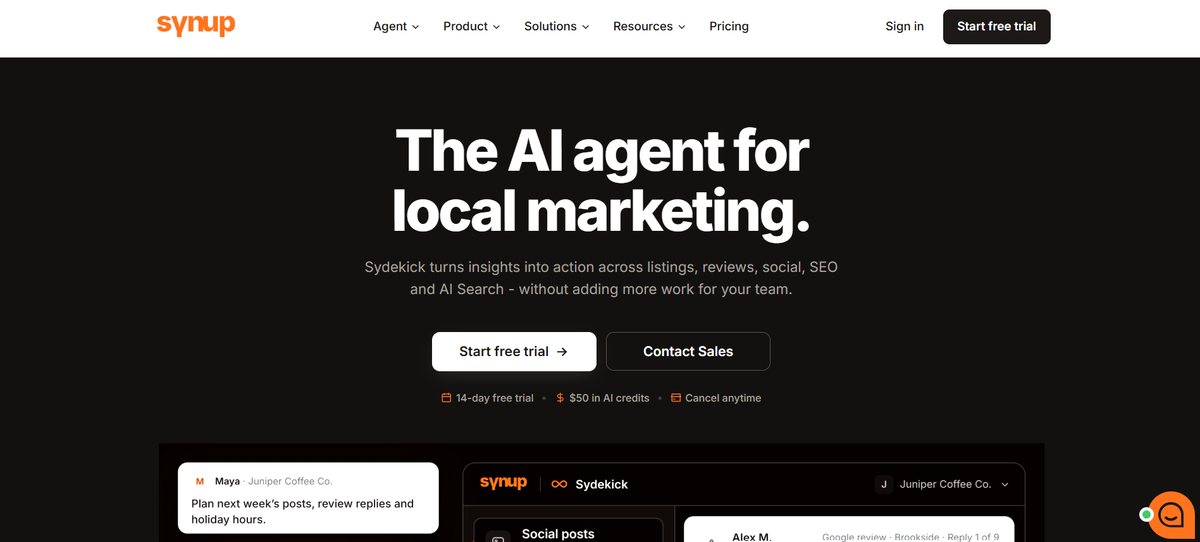
Best for: Operators looking to combine business listings, customer reviews, local SEO, and marketing workflows.
Synup provides a centralized platform for managing business information across multiple locations.
Its main differentiator is the combination of listings management with related local marketing functionality, including customer review workflows, location-level visibility reporting, and marketing automation.
This combination may be particularly relevant to growing pawn shop chains that want to manage more than directory updates.
Key capabilities
Synup's documented features include business information distribution across supported publishers, review monitoring and responses, local landing pages, local rank tracking, and centralized reporting.
The platform also includes Sydekick, an AI agent designed to assist with supported marketing activities and location information workflows.
According to Synup's published pricing information, its plans include a shared set of core features, while location capacity, available credits, and AI-agent throughput vary by subscription tier.
How a Pawn Shop Chain Could Use Synup
Consider a company managing 20 pawn shop branches.
Its marketing team could maintain a centralized record of approved store details and coordinate changes when locations adjust opening hours, telephone numbers, or addresses.
Review monitoring could also help the company identify customer feedback associated with individual branches.
For sensitive complaints involving pawn loans, transactions, or customer accounts, responses should be reviewed by authorized staff rather than automatically publishing confidential information.
Limitations
Synup is not a pawn shop point-of-sale, inventory, or loan-management platform.
Its AI-assisted workflows use credits. Operators should review monthly allowances, overage costs, approval controls, and which activities consume credits.
Publisher availability and individual integration capabilities should also be confirmed for the chain's locations.
Organizations managing 50 or more locations should investigate Synup's enterprise pricing and requirements.
Pricing
Synup's published monthly plans include:
- Solo: $49 for one location
- Premium: $299 for up to 10 locations
- Pro: $499 for up to 25 locations
- Scale: $899 for up to 50 locations
- Enterprise: Custom pricing for larger deployments
Annual billing discounts may be available.
When to consider Synup: When your chain wants listings management integrated with reputation monitoring, local search measurement, and related marketing processes.
For franchise organizations evaluating branded marketing portals, HAKKEN also has a comparison of white-label local marketing platforms for franchisors.
2. Yext

Best for: Large organizations requiring structured location data and extensive publisher management.
Yext is a digital presence platform used to manage structured business information and distribute it across connected discovery channels.
Its Knowledge Graph acts as a central repository for business information, while Yext Listings handles publisher connections and synchronization.
For large pawn shop networks, this data structure may help keep information consistent across many branches.
Key Capabilities
Yext Listings supports centralized location records, publisher synchronization, duplicate management, listing-health monitoring, and related reporting.
A distinction worth understanding is that Yext uses different publisher integration models.
With two-way synchronization, the platform can send information to a publisher and receive supported data back.
Other publisher integrations operate through one-way submissions, which offer more limited status information.
How a Pawn Shop Chain Could Use Yext
A national pawn shop network could maintain structured records for hundreds of branches, including location-specific contact details, operating schedules, and other supported information.
Corporate administrators could coordinate updates through a central system rather than relying on independent changes by individual stores.
This approach is useful when different departments or regional teams need consistent information.
Limitations
Yext's enterprise purchasing and implementation process may be more involved than purchasing a self-service subscription.
Buyers should clarify which publishers support the required fields, which integrations provide two-way synchronization, and how quickly updates are reflected.
They should also investigate what happens when a subscription ends.
Yext states that cancellation does not automatically delete normal business listings. However, ongoing synchronization stops, and publisher information may change over time when Yext is no longer maintaining it.
Pricing
Yext uses custom pricing based on the selected solution, number of locations, and contract terms.
Its official pricing explanation describes enterprise purchasing and typically annual billing arrangements.
When to consider Yext: When centralized location-data governance and publisher integration requirements are more important than obtaining a low-cost self-service subscription.
3. Uberall
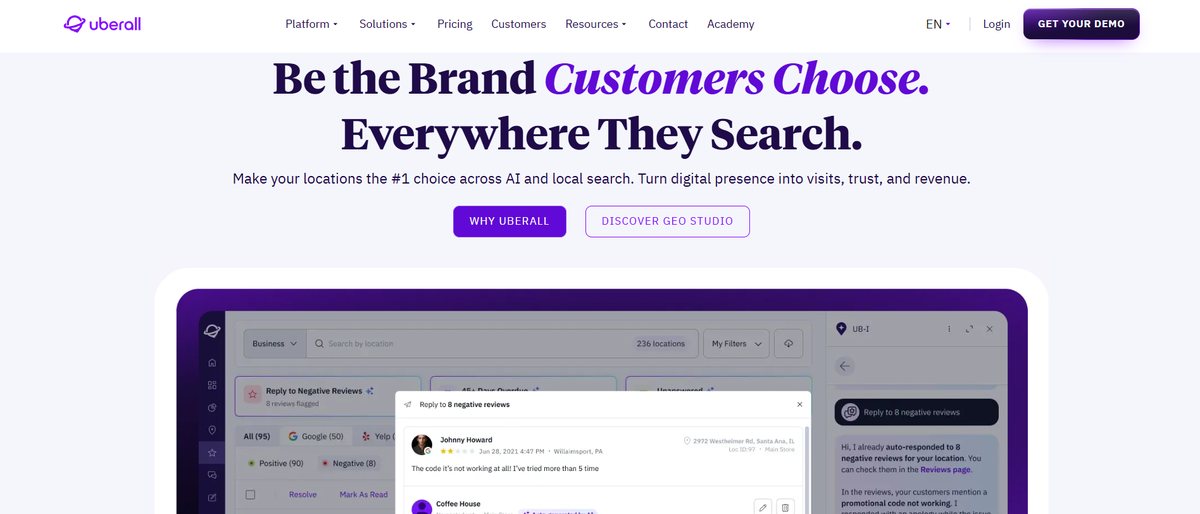
Best for: Businesses requiring coordinated location updates across geographically distributed stores.
Uberall provides location marketing software for organizations managing multiple physical locations.
Its platform combines business listings management with related capabilities for reviews, local social media, local pages, and visibility measurement.
Uberall describes a global publisher network covering more than 200 directories and discovery services.
However, this is a global network figure. Operators should confirm which publishers are supported in the United States, Canada, and any specific markets where their stores operate.
Key Capabilities
Uberall offers bulk location management, publisher distribution, listing monitoring, duplicate-related workflows, and reporting.
Depending on the selected package, businesses can also use additional reputation and local marketing capabilities.
Its centralized approach may reduce repetitive work when a company operates many storefronts with different location details.
How a Pawn Shop Chain Could Use Uberall
Consider a pawn shop company operating branches across multiple states or provinces.
When holiday hours change, the company could coordinate updates through its location management system rather than asking every branch to edit multiple directories individually.
The same approach could help teams manage relocations, contact information changes, or updates to approved business descriptions.
Limitations
Directory coverage should not be interpreted as identical functionality across every publisher.
Some platforms and directories may accept only specific information fields, require separate verification, or process updates on different schedules.
Buyers should also clarify whether review management, social publishing, collaboration tools, and advanced reporting are included in the proposed package.
Pricing
Uberall uses a sales-led pricing model. Subscription costs depend on the selected products, location requirements, and commercial arrangement.
When to consider Uberall: When your chain needs broad publisher distribution and centralized operations across a substantial geographic footprint.
4. SOCi
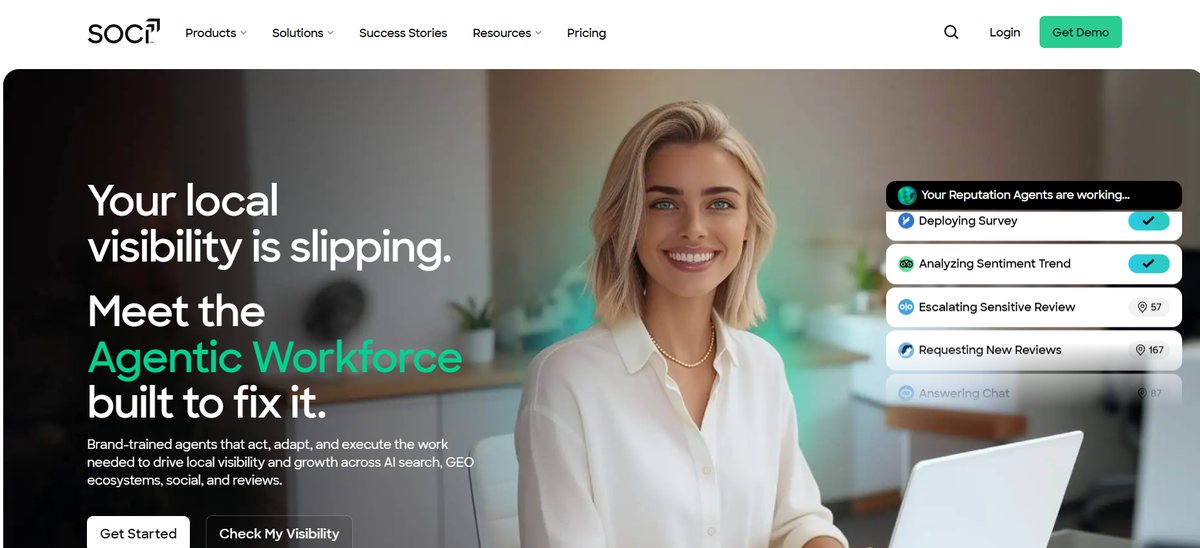
Best for: Large multi-location organizations coordinating corporate, regional, and local marketing activities.
SOCi is an enterprise localized marketing platform.
Its current product offering uses specialized Genius Agents for local search, social media, and reputation management.
For pawn shop chains, SOCi is most relevant when listings management forms part of a larger operation involving governance, brand controls, and localized marketing execution.
Key Capabilities
SOCi's Genius Local Search Agent supports location information management, listing optimization, and local page workflows.
Additional capabilities are available through its Genius Social Agent and Genius Reputation Agent.
The platform is designed around multi-location management, helping organizations coordinate approved marketing information while supporting activity at individual branches.
SOCi's official pricing explanation identifies listings management, listings optimization, dynamic pages, and related capabilities within its local search offering.
How a Pawn Shop Chain Could Use SOCi
A franchise organization operating across several markets could establish corporate standards for location information.
Regional teams could then participate in approved marketing workflows while the central organization maintains oversight of business details and brand requirements.
This structure may be useful when stores have different operators, responsibilities, or approval requirements.
Limitations
SOCi's enterprise-focused implementation and product structure may be more complex than necessary for a small business seeking only basic listings synchronization.
Operators should confirm which approval workflows, regional permissions, review capabilities, and reporting features are included in their proposed package.
Pricing
SOCi provides custom quotations based on the number of locations and selected agents or skills.
The company states that its pricing does not add separate charges simply for additional user seats or the number of listings within a location.
Specific packages may also have usage limits.
When to consider SOCi: When a pawn shop chain needs listings management as part of a broader enterprise marketing and governance system.
5. BrightLocal
Best for: Regional operators and marketing agencies prioritizing listing accuracy, citation management, and local SEO reporting.
BrightLocal offers software and services for managing local search visibility.
Its tools include local search auditing, listing management, citation building, review monitoring, and ranking reports.
BrightLocal is worth considering when a company needs practical local SEO capabilities without immediately committing to an enterprise marketing platform.
Key Capabilities
BrightLocal offers Active Sync, which helps maintain business information on important platforms including Google Business Profile, Apple Maps, Bing, and Facebook.
Yelp synchronization is available through its Active Sync Plus option for supported US and Canadian locations.
BrightLocal also provides Citation Builder, a separate service for creating or correcting directory listings.
The distinction matters because citation-building campaigns and continuous synchronization solve different problems.
How a Pawn Shop Chain Could Use BrightLocal
A regional pawn shop company could audit its existing listings and identify inconsistent addresses, telephone numbers, and duplicate information.
Its marketing team could use Active Sync for supported major publishers and Citation Builder for additional directory corrections where appropriate.
This may be suitable for chains with a relatively small marketing team and straightforward location-management requirements.
Limitations
Citation Builder does not provide the same ongoing synchronization model as Active Sync.
Operators should determine which directories require recurring maintenance and which corrections are handled through separate campaigns.
They should also verify whether the available permission controls, integrations, and reporting meet their needs as the business expands.
Pricing
BrightLocal's published Manage plan pricing includes:
- One location: $54 per month
- Two to five locations: $76 per month
- Six to ten locations: $109 per month
- Eleven to twenty locations: $153 per month
- Twenty-one to thirty locations: $230 per month
Annual billing discounts are available. Citation Builder and certain optional services are priced separately.
When to consider BrightLocal: When listing audits, major-directory synchronization, citation cleanup, and local SEO reporting are the main priorities.
6. Semrush Local
Best for: Organizations seeking listings management alongside map rankings and local search analysis.
Semrush Local provides tools for managing business information and measuring local search visibility.
It may be relevant to pawn shop marketing teams already using SEO tools or managing local search campaigns across multiple cities.
Its differentiator is the close connection between business listing management and local search measurement.
Key Capabilities
Semrush Local Pro includes listings management, review monitoring, Google Business Profile optimization, and map rank tracking.
Semrush documents distribution across more than 70 directories, although supported publishers vary by country.
Its available capabilities also include duplicate monitoring, bulk Google Business Profile management, location grouping, and listing management APIs.
These functions can help marketing teams examine both business information accuracy and location-level search performance.
How a Pawn Shop Chain Could Use Semrush Local
A company operating 12 branches could use the platform to coordinate location information and examine how different stores appear in relevant local searches.
For example, the team could compare visibility for searches related to pawn shops in the neighborhoods each branch serves.
It could then investigate whether weaker visibility reflects incomplete profiles, website limitations, competitive conditions, or other factors.
Map ranking reports are diagnostic tools, not proof that listings synchronization caused a particular ranking change.
Limitations
Semrush Local Base does not include full Listings Management.
Businesses requiring directory synchronization need to evaluate Local Pro or a suitable custom arrangement.
Pricing is calculated per location, so the subscription cost increases as the branch network grows.
Automated Google Business Profile content and review responses also need suitable oversight where pawn loans, regulated products, or customer privacy are involved.
Pricing
Semrush's official Local plans are:
- Local Base: $30 per month per location
- Local Pro: $60 per month per location
- Local Business: Custom arrangements for qualifying larger businesses
The company identifies Local Business as a customizable option for organizations with 20 or more locations.
When to consider Semrush Local: When a marketing team values listings management and location-specific SEO analysis within the same toolkit.
7. Moz Local
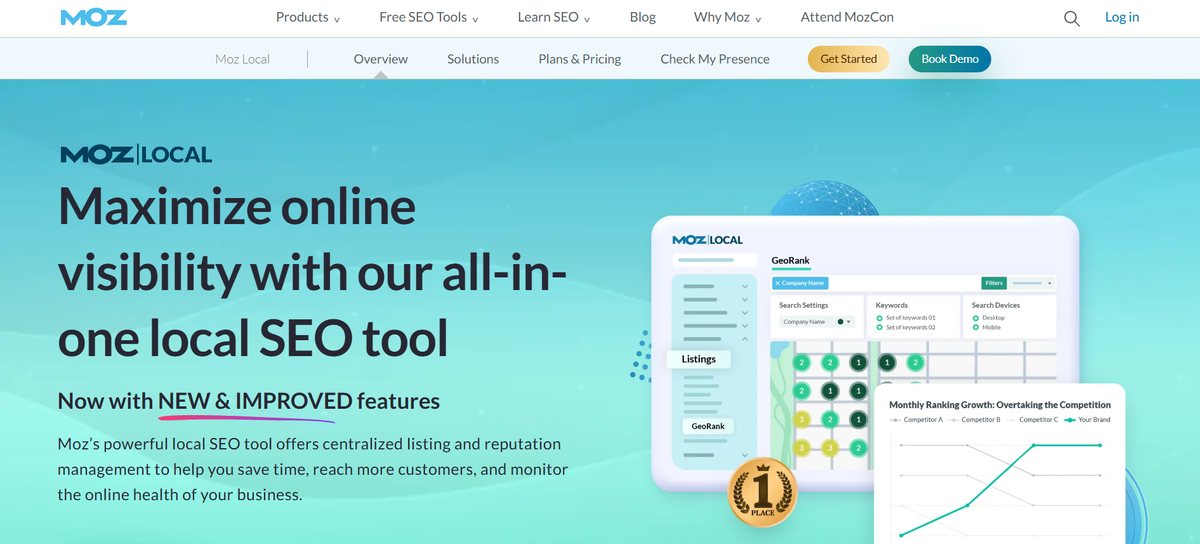
Best for: Operators seeking a comparatively straightforward listings management subscription.
Moz Local helps businesses distribute location information and monitor their online presence.
It is an option for smaller networks that want to manage business details across directories while accessing additional reputation and local visibility tools.
Its product structure includes several subscription tiers, making it possible to compare basic listings management with packages offering additional functionality.
Key Capabilities
Moz Local provides location information distribution, listing monitoring, and review-related capabilities.
Its published product descriptions and current secondary references also identify local visibility reporting and additional reputation or social features in higher tiers.
Exact feature availability should be checked against the current Moz subscription documentation.
How a Pawn Shop Chain Could Use Moz Local
A company operating five stores could use Moz Local to help maintain consistent location information and monitor public business profiles.
Its marketing team could also review customer feedback and identify basic location visibility issues without necessarily deploying a larger enterprise platform.
Limitations
Businesses requiring advanced franchise governance, extensive custom integrations, or complex multi-level approval systems should verify whether Moz Local supports those workflows.
Pricing depends on location count, and the total subscription cost can grow as the network expands.
Operators should also confirm directory availability in their particular country and region.
Pricing
Current secondary pricing references report the following monthly rates:
- Lite: Approximately $20 per location
- Preferred: Approximately $30 per location
- Elite: Approximately $40 per location
These figures have not been independently confirmed against Moz's live official pricing page and should be verified before purchase.
When to consider Moz Local: When your company wants a listings-focused solution and does not require an extensive enterprise marketing system.
How Should Pawn Shop Chains Choose a Listings Management Platform?
The most suitable software depends on location count, available staff, required directory coverage, and the complexity of business operations.
The following table provides a practical starting point.
- Two to five locations with basic listings needs: Platforms worth evaluating: BrightLocal, Moz Local.
- Five to thirty growing stores: Platforms worth evaluating: Synup, BrightLocal, Semrush Local.
- Thirty to one hundred distributed branches: Platforms worth evaluating: Synup, Yext, Uberall.
- Large enterprise or franchise network: Platforms worth evaluating: SOCi, Yext, Uberall.
- Detailed local SEO reporting: Platforms worth evaluating: Semrush Local, BrightLocal.
- Listings and review workflows together: Platforms worth evaluating: Synup, SOCi, Uberall.
- Advanced publisher and location-data management: Platforms worth evaluating: Yext, Uberall.
- Corporate and regional marketing governance: Platforms worth evaluating: SOCi, Yext.
These categories describe potential buyer fit, not strict product limits.
A smaller chain can use enterprise software, while some platforms designed for growing businesses may also accommodate larger deployments.
What Features Matter Most?
Pawn shop operators should assess features against real business processes rather than comparing directory counts alone.
Centralized location records
The platform should provide a reliable way to store and update the approved information for each branch.
Bulk editing
Teams should be able to update common information efficiently while preserving differences between locations.
Publisher coverage
Confirm support for the platforms customers actually use. Google Maps, Apple Maps, Bing, and relevant regional directories may matter more than a large overall directory count.
Duplicate management
Check whether the software identifies duplicate records and whether correction or suppression requires additional action.
Access permissions
Determine whether corporate administrators, regional managers, agencies, and branch employees can receive appropriately restricted access.
Review management
If review tools are included, confirm which sources are supported and whether customer replies require approval.
Reporting and export
Look for useful reporting on location accuracy, unresolved issues, publisher status, and local search performance.
Integrations
Ask about APIs, CSV imports, and compatibility with the company's existing systems.
Questions to Ask During a Vendor Demonstration
Instead of requesting only a general product tour, ask each vendor to demonstrate the same operational scenarios.
- A store changes its phone number: What to evaluate: How is the update submitted, monitored, and verified?
- Ten branches change holiday hours: What to evaluate: Can the update be applied in bulk without affecting other stores?
- A branch relocates: What to evaluate: How does the platform handle the existing profile and address change?
- A duplicate listing appears: What to evaluate: Can the platform detect it and support an appropriate resolution?
- A regional manager requests an edit: What to evaluate: Are permissions, approvals, and activity records available?
- A negative customer review appears: What to evaluate: Can sensitive complaints be routed for human review?
- The contract ends: What to evaluate: What happens to existing listings, access, and exported location data?
Using identical scenarios creates a more meaningful comparison than relying on sales presentations alone.
Pawn Shop-Specific Requirements That Software Buyers Should Check
Pawn shops have operating characteristics that make accurate listings and controlled marketing particularly important.
1. Different Services Across Branches
Not every pawn shop offers the same services or accepts the same types of merchandise.
A multi-location operator should maintain accurate information about what customers can expect at each branch.
For example, one store may offer jewelry-related services while another has a different mix of merchandise or customer services.
Listings should reflect actual operations rather than automatically assigning every possible service to every location.
2. Regulated Financial Services and Merchandise
Pawn shops may provide collateral-based loans and may also deal in products subject to additional legal restrictions.
This creates an important consideration when using software that automatically publishes business information, promotional posts, or product descriptions.
Google's prohibited and restricted content policies include restrictions involving financial services, firearms, and other regulated products.
In particular, businesses should avoid publishing prohibited promotional offers or purchase-related calls to action for restricted products or services on surfaces where Google's policies disallow them.
The exact requirements depend on the product, service, content format, applicable law, and publishing platform.
A listings management system should therefore support an appropriate review process for potentially sensitive or regulated content.
Automated marketing tools should not be treated as a substitute for policy or legal compliance checks.
3. Customer Privacy in Review Responses
Customer reviews can describe sensitive situations involving loans, personal property, payments, or disputes.
Employees should avoid disclosing confidential transaction information or confirming private account details in public responses.
A suitable process is to acknowledge the concern professionally and direct the customer to an approved private support channel when necessary.
This matters particularly when a platform offers automated or AI-generated replies.
For more detail on approval-based workflows, see HAKKEN's AI review response software comparison for multi-location brands.
4. Accurate Storefront Information
Google's Business Profile guidelines require businesses to represent themselves accurately.
Pawn shop chains should use their genuine business names, correct storefront addresses, appropriate categories, and actual customer-facing hours.
Where a business deals in products subject to minimum-age restrictions, Google's rules for storefront and service-area businesses may also affect eligibility and profile setup.
These requirements should be evaluated before creating or modifying profiles.
How to Improve Google Maps and Directory Accuracy Across Pawn Shop Locations
Listings management software is most useful when supported by a repeatable operational process.
Step 1: Create a Master Location Database
Maintain an approved record for each branch.
Include a unique store identifier, business name, address, local telephone number, website URL, map coordinates where appropriate, business categories, operating hours, and responsible manager.
Record additional services or attributes only where they apply to the specific location.
The database should become the reference point for approved updates.
Step 2: Confirm Ownership and Verification
Check that the organization has appropriate access to legitimate business profiles.
Google provides tools for managing multiple Business Profiles, including bulk imports and location management through Business Profile Manager.
Its bulk location management documentation explains the process.
Avoid creating duplicate profiles simply because an existing listing has incorrect information. First investigate ownership and the appropriate correction process.
Step 3: Use Accurate Business Categories
Choose categories that describe the business accurately.
Do not add unrelated services, location keywords, or promotional language to the business name merely to influence rankings.
Where stores offer materially different services, review the available category and attribute options rather than applying unsupported information across every location.
Step 4: Distribute Approved Updates
Use the selected listings platform or native publisher tools to update location details.
For important publishers, these official resources are useful:
Apple Business is Apple's current business-management platform for claiming and managing location information on Apple Maps.
Some publishers require separate account connections or verification before software can manage their profiles.
Step 5: Monitor Errors and Duplicates
Establish a recurring audit process.
Pay attention to relocated stores, incorrect telephone numbers, outdated opening hours, duplicate profiles, and closed branches that still appear operational.
Prioritize errors based on their effect on customers.
An incorrect address or phone number deserves more immediate attention than a minor formatting difference on a less-used directory.
Step 6: Verify Changes Publicly
Do not assume that submitting an update means it has appeared on every publisher.
Where the platform supports status reporting, check whether the change has synchronized successfully.
For major customer-facing locations, periodically review the live profile directly.
Document unresolved issues, assign responsibility, and record when corrections become visible.
For a comparison of related multi-location retail requirements, see HAKKEN's listing management tools for car wash and tire chains.
Should Pawn Shop Chains Use Native Listing Tools or Paid Software?
Not every pawn shop needs a paid listings management subscription.
A small operator with a few stable locations may be able to maintain its most important business profiles directly.
Google Business Profile, Apple Business, and Bing Places provide native management options.
Paid software becomes more useful when the amount of ongoing work increases.
For example, a company with 30 branches may have dozens of profile changes throughout the year, multiple administrators, recurring reporting requirements, and duplicate listings to investigate.
Centralized software can reduce the administrative burden of coordinating that work, although its value depends on which functions the company actually needs.
The purchasing decision should compare software costs with internal time spent maintaining profiles, investigating problems, and reporting on location accuracy.
Listings Management vs. Pawn Shop POS Software
Listings management and point-of-sale software serve different purposes.
Pawn shop POS systems are designed for store operations such as transactions, inventory, customer records, and loan-related workflows.
Listings management software maintains customer-facing location information and supports digital discovery.
A chain may need both.
Before purchasing a listings platform, ask whether approved location information can be imported through CSV files, APIs, or supported integrations.
Do not assume the platform has a native integration with the existing pawn shop POS.
What Happens When You Cancel Listings Management Software?
Cancellation terms deserve attention during procurement.
The business should establish which listings it owns directly and which updates depend on the software provider's active synchronization.
Canceling a subscription does not necessarily delete existing listings. However, ongoing maintenance and access to particular tools may stop.
The company should retain ownership of its publisher accounts and maintain an exportable master location database.
Before cancellation, confirm how publisher connections, data exports, user permissions, and future corrections will be handled.
How Should Pawn Shop Chains Manage Customer Reviews?
Reviews can help customers understand the experience of visiting a particular store.
A consistent review management process should focus on authentic feedback, timely responses, and protecting customer privacy.
Google permits businesses to request genuine reviews but prohibits incentives offered in exchange for posting, changing, or removing reviews.
Its official review guidance explains these requirements.
For multi-location pawn shops, a useful process includes monitoring feedback by branch, routing sensitive complaints to authorized employees, and reviewing AI-generated replies before publication when they involve loans, financial disputes, or personal information.
Operators should also avoid asking only satisfied customers to post reviews while discouraging others.
Review management should support genuine customer communication rather than artificially manipulating ratings.
Frequently Asked Questions
What Is the Best Listings Management Software for Pawn Shop Chains?
Synup is worth evaluating for growing chains seeking integrated listings, reviews, and local marketing tools. Yext, Uberall, and SOCi are alternatives for enterprise operations. BrightLocal, Semrush Local, and Moz Local offer different combinations of local SEO functionality, directory management, and pricing.
The right choice depends on store count, required publishers, workflow complexity, and total cost.
Can Listings Management Software Improve Google Maps Rankings?
Accurate, complete business information can support local search visibility and help customers find the correct store.
However, rankings depend on multiple factors, including relevance, distance, and prominence.
No listings management platform can guarantee a particular position in Google Maps.
Can Listings Management Software Help Pawn Shops Appear in AI Search?
Consistent public business information may make it easier for discovery systems to identify accurate location details.
However, AI systems differ in the sources they use and how they select businesses for recommendations.
A listings management subscription does not guarantee visibility, recommendations, or citations in ChatGPT, Gemini, Perplexity, Google AI Overviews, or other AI-powered services.
Can a Pawn Shop Chain Manage Multiple Google Business Profiles Without Paid Software?
Yes. Google provides native business management tools, including bulk management options for eligible multi-location organizations.
Paid listings software may offer additional publisher coverage, centralized reporting, monitoring, and workflow capabilities.
The choice depends on how much ongoing management the organization requires.
How Often Should Pawn Shop Chains Audit Their Listings?
The frequency should reflect how often business information changes and how serious an incorrect listing could be.
Important changes, such as relocations, closures, and telephone-number updates, should be checked promptly.
For routine management, organizations can establish periodic checks of major publisher profiles, unresolved synchronization issues, and duplicate records.
A more extensive audit may also be useful before seasonal schedule changes or major store expansion.
Final Verdict
No single listings management platform is the right choice for every pawn shop chain.
Synup is worth considering for growing businesses that want centralized listings, reviews, and local marketing workflows.
Yext is relevant for enterprise operators prioritizing structured business data and publisher management, while Uberall suits distributed networks needing coordinated directory updates.
SOCi deserves attention when corporate governance and localized marketing are part of the same operation.
BrightLocal offers a more focused approach to local SEO and citation management. Semrush Local is appropriate for teams that want listings management alongside local search measurement, while Moz Local is another option for smaller networks seeking a straightforward listings solution.
Before signing a contract, request a demonstration using representative branch information. Test a location change, phone-number correction, holiday-hours update, duplicate listing, and sensitive customer review.
Compare the vendors on how reliably they support those tasks, what requires human approval, which publishers are included, and what the complete subscription will cost.