Best Listing Management Tools for Car Wash and Tire Chains
Compare 7 listing management tools for car wash and tire chains: Synup, Yext, Uberall, SOCi, Birdeye, BrightLocal, and Semrush Local, with pricing.
Sandeep Kumar

Synup, Yext, Uberall, SOCi, Birdeye, BrightLocal, and Semrush Local are seven listing management platforms worth comparing for multi-location car wash and tire chains in 2026.
Synup is a practical option for centralized listings, reviews, and agency workflows. Yext emphasizes enterprise location-data management, while Uberall supports multi-location synchronization and local marketing. SOCi focuses on enterprise franchise operations, Birdeye combines listings with reputation management, BrightLocal offers flexible citation services, and Semrush Local connects listings with local SEO reporting.
The right platform depends on your number of locations, publisher coverage, update frequency, reporting needs, and budget.
For automotive businesses, inaccurate listings can create immediate customer problems. A driver searching for an open tire shop may encounter outdated Sunday hours. A customer looking for a car wash may navigate to a closed branch or call an incorrect number.
Listing management software helps businesses create, update, monitor, and maintain information across search engines, maps, business directories, and online profiles.
This guide compares seven platforms, their features, limitations, pricing, and suitability for US automotive chains with approximately 10–500 or more locations.
Quick Comparison: Best Listing Management Tools for Automotive Chains
- Synup: Best for: Growing automotive chains and agencies. Main advantage: Centralized listings, reviews, and multi-location workflows.
- Yext: Best for: Large tire retail chains. Main advantage: Structured location data and extensive publisher management.
- Uberall: Best for: Regional and national automotive franchises. Main advantage: Bulk updates, publisher synchronization, and local marketing.
- SOCi: Best for: Enterprise franchise networks. Main advantage: Listings integrated with broader localized marketing operations.
- Birdeye: Best for: Review-focused automotive businesses. Main advantage: Listings combined with review generation and reputation tools.
- BrightLocal: Best for: Smaller chains and budget-conscious agencies. Main advantage: Citation building, listing audits, and flexible purchasing.
- Semrush Local: Best for: SEO-driven automotive marketing teams. Main advantage: Listings, Google Business Profile tools, and local rank tracking.
There is no universal winner. A 15-location express car wash franchise has different requirements from a 400-location tire retailer.
The most useful comparison is not simply which platform advertises the largest number of directories. It is whether the software can maintain accurate customer-facing information, identify unsuccessful updates, support location-level permissions, and provide meaningful reporting at a sustainable cost.
How We Evaluated These Platforms
This comparison uses publicly available product documentation, vendor pricing pages, and feature descriptions reviewed on November 4, 2026.
The seven platforms were assessed against requirements common to US car wash franchises and tire retail chains:
- Directory coverage: Support for Google Business Profile, Apple Maps, Bing, Yelp, Facebook, and other relevant publishers.
- Multi-location management: Centralized profiles, bulk editing, location grouping, and franchise permissions.
- Data accuracy: Name, address, and phone number (NAP) consistency, duplicate identification, verification monitoring, and update tracking.
- Automotive suitability: Support for branch-specific hours, services, photos, and customer-facing information.
- Reputation and reporting: Review monitoring, response workflows, listing health, and location-level performance reporting.
- Integrations and scalability: APIs, data exports, and compatibility with larger location networks.
- Pricing and operational trade-offs: Published prices, custom contracts, optional features, and implementation requirements.
The recommendations reflect documented capabilities and editorial assessment of different operational needs.
This is a documentation-based comparison, not a hands-on product test or controlled performance benchmark. The examples describe potential use cases rather than verified results from customers.
For a broader comparison beyond automotive services, see HAKKEN's guide to local listings management software.
Feature Comparison: Automotive Listing Management Software
- Synup: Listing management approach: Centralized listing distribution and synchronization. Review tools: Included in published plans. Multi-location operations: Centralized management and bulk workflows. Pricing approach: Published location-based tiers; enterprise quotes.
- Yext: Listing management approach: Knowledge Graph and publisher network. Review tools: Separately licensed product. Multi-location operations: Bulk administration and structured data workflows. Pricing approach: Enterprise quote.
- Uberall: Listing management approach: Multi-directory synchronization. Review tools: Available in selected packages. Multi-location operations: Bulk editing, reporting, and location grouping. Pricing approach: Custom quote.
- SOCi: Listing management approach: Genius Local Search Agent and listings optimization. Review tools: Genius Reputation Agent. Multi-location operations: Enterprise location governance and automation. Pricing approach: Custom quote.
- Birdeye: Listing management approach: Listings AI and profile optimization. Review tools: Reviews AI and reputation products. Multi-location operations: Bulk location management. Pricing approach: Custom quote.
- BrightLocal: Listing management approach: Active Sync and Citation Builder. Review tools: Grow plan. Multi-location operations: Location management and bulk citation services. Pricing approach: Published subscriptions and usage-based services.
- Semrush Local: Listing management approach: Listing Management and Google Business Profile tools. Review tools: Local Pro. Multi-location operations: Bulk profile management and supported APIs. Pricing approach: Published per-location plans and custom Business pricing.
Features can depend on subscription level, country, connected accounts, and enterprise agreements.
A particularly important distinction is whether a platform provides ongoing synchronization or one-time citation submission. Both can be useful, but they solve different operational problems.
Why Listing Management Matters for Car Wash and Tire Chains
Listing management helps keep a business's public information aligned with its actual operations.
A car wash chain might need to change winter operating hours at 60 locations. A tire retailer might need to add newly acquired branches, correct a telephone number, or update information about available services.
Without coordinated management, customers can encounter conflicting information across different platforms.
Accurate listings reduce customer confusion
Customers typically want straightforward answers:
- Where is the nearest branch?
- Is the location open?
- Does it provide the service I need?
- How can I contact them?
For car washes, relevant information may include self-service versus automatic wash formats, operating hours, available payment methods, and location-specific amenities.
For tire shops, customers may need details about tire installation, wheel alignment, rotation, balancing, tire repairs, and opening hours.
These differences are important because automotive chains do not necessarily offer identical services at every branch.
A tire retailer should not publish wheel alignment as an available service at a location that does not provide it. Likewise, a car wash should not advertise 24-hour availability when only part of its operation remains accessible overnight.
The exact attributes supported depend on each publisher. A listing platform cannot guarantee that every directory displays every service, amenity, or custom field.
Listings support local search relevance
According to Google's official local ranking guidance, complete and accurate business information can help a business appear for relevant local searches.
Google identifies three main local ranking considerations:
Relevance: How closely a business matches the searcher's needs.
Distance: How far the business is from the searcher's location or the location specified in the search.
Prominence: How well-known the business is, based on signals that can include reviews, links, and other information.
Accurate profiles help Google understand where a business operates and what it offers.
However, purchasing listing management software does not guarantee higher Google Maps rankings. Software can help maintain business information, but it does not override Google's ranking systems.
Multi-location businesses need stronger data governance
Headquarters should maintain an authoritative location database containing approved business names, addresses, phone numbers, regular and holiday hours, location URLs, categories, and operational status.
Franchisees may need permission to submit local corrections, while changes to brand-critical information should follow an approval process.
Google's guidelines for representing a business require accurate real-world business names and discourage duplicate profiles.
For chains, Google also generally requires consistent names and categories across locations offering the same services, subject to documented exceptions.
Automotive businesses should not insert extra service keywords or city names into their Google Business Profile names unless those terms genuinely belong to the real-world business name.
7 Best Listing Management Tools for Car Wash and Tire Chains
1. Synup
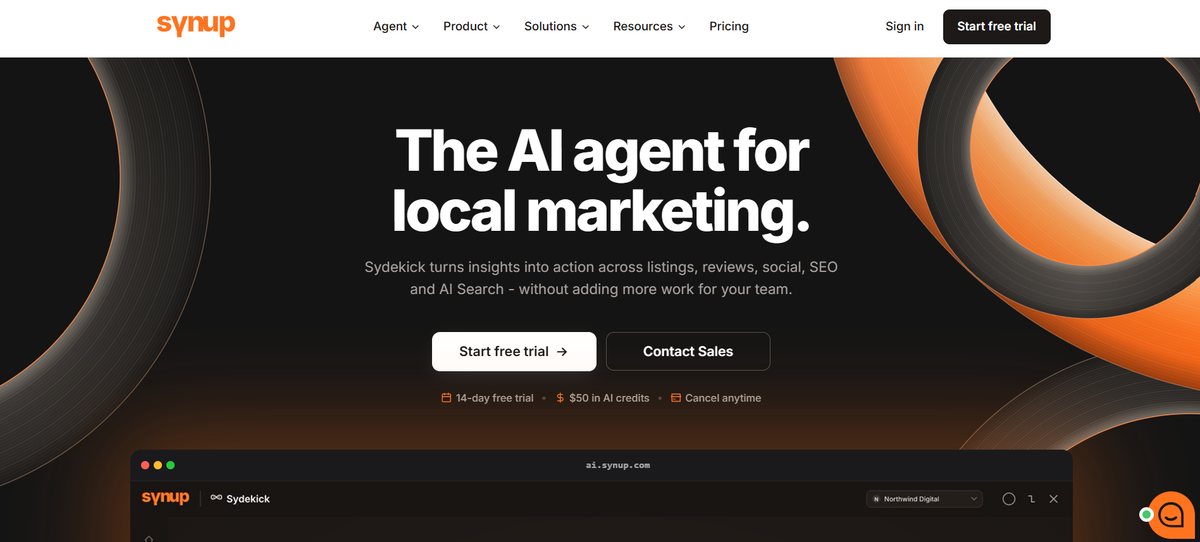
Best for: Car wash franchises, tire service networks, and agencies that need centralized local marketing operations.
Synup combines business listing management, review monitoring, local SEO tools, and multi-location administration.
The platform is relevant to automotive businesses and agencies that want to coordinate their online presence from a common system.
Its listing tools help distribute approved business information to connected publishers. The wider platform also includes location pages, reviews, reporting, and marketing workflows.
For example, a car wash chain with 40 branches could use centralized location records to coordinate holiday-hour changes rather than asking individual managers to update every directory independently.
Key features
- Centralized listing distribution and synchronization.
- Multi-location administration and bulk workflows.
- Duplicate detection and suppression workflows.
- Review monitoring, responses, and review-generation tools.
- Agency management, white labeling, APIs, and AI-assisted workflows.
Synup's duplicate listing documentation explains that users can review potential duplicates, flag records for suppression, and monitor outcomes.
Importantly, a suppression request is not the same as successful deletion. Some publisher records may require further action.
Advantages
Synup combines listings, reviews, and other local marketing functions. This can be useful for chains that want fewer separate systems.
Agency-facing features are also relevant to marketing providers managing multiple automotive clients.
Its published location-based prices make initial budgeting easier for organizations with up to 50 locations.
Limitations
Synup uses fixed location bands, so a business may move into a higher-priced plan before using every available location slot.
Enterprise pricing applies beyond its standard location tiers. AI-agent credits and parallel processing capacity also differ between packages.
Buyers should confirm publisher coverage, approval settings, data exports, and additional credit costs before purchasing.
Pricing
According to Synup's official pricing page:
- Solo: Monthly price: $49. Included locations: 1.
- Premium: Monthly price: $299. Included locations: Up to 10.
- Pro: Monthly price: $499. Included locations: Up to 25.
- Scale: Monthly price: $899. Included locations: Up to 50.
- Enterprise: Monthly price: Custom. Included locations: More than 50.
These are published monthly rates. Synup advertises a discount for annual billing.
Choose Synup if: Your automotive business wants listings, reviews, and centralized marketing workflows together, with published prices for smaller and mid-sized chains.
2. Yext
Best for: National tire retailers and automotive service companies prioritizing structured data, publisher connections, and enterprise administration.
Yext is a digital presence platform designed to connect structured business information with search engines, maps, directories, and other discovery services.
Its Knowledge Graph acts as a central repository for location data.
Yext Listings uses that information to match existing publisher profiles, create or update eligible listings, and maintain synchronization.
A tire retailer with hundreds of branches could use the platform to manage contact details, holiday schedules, service descriptions, and other supported information across its publisher network.
Key features
- Centralized location data through Yext Knowledge Graph.
- Publisher synchronization and listing health monitoring.
- Bulk editing and structured data administration.
- Duplicate identification and suppression workflows.
- API access and additional products for reviews, pages, and social media.
Yext's Listings documentation distinguishes between two-way publisher integrations and one-way submissions.
This matters because not every publisher provides identical reporting, update confirmation, or synchronization capabilities.
Yext also notes that publisher processing times differ, so a centralized change may not appear everywhere immediately.
Advantages
Yext is particularly relevant to organizations that need structured location-data management and repeatable administrative processes.
Its centralized data model can support consistency across large networks, especially when location information comes from multiple business systems.
Limitations
Enterprise implementation may require configuration of business groups, publisher connections, data entities, and integrations.
Listings, Reviews, Pages, and other capabilities have separate licensing arrangements, making it important to understand which products are included in a proposal.
Duplicate suppression also depends on publisher support.
Pricing
Enterprise configurations generally require a sales quote.
Buyers should request a breakdown covering location licenses, publisher coverage, additional products, onboarding, integrations, and renewal terms.
Choose Yext if: Your tire retail organization values structured location-data governance, enterprise publisher administration, and integration capabilities more than entry-level pricing simplicity.
3. Uberall
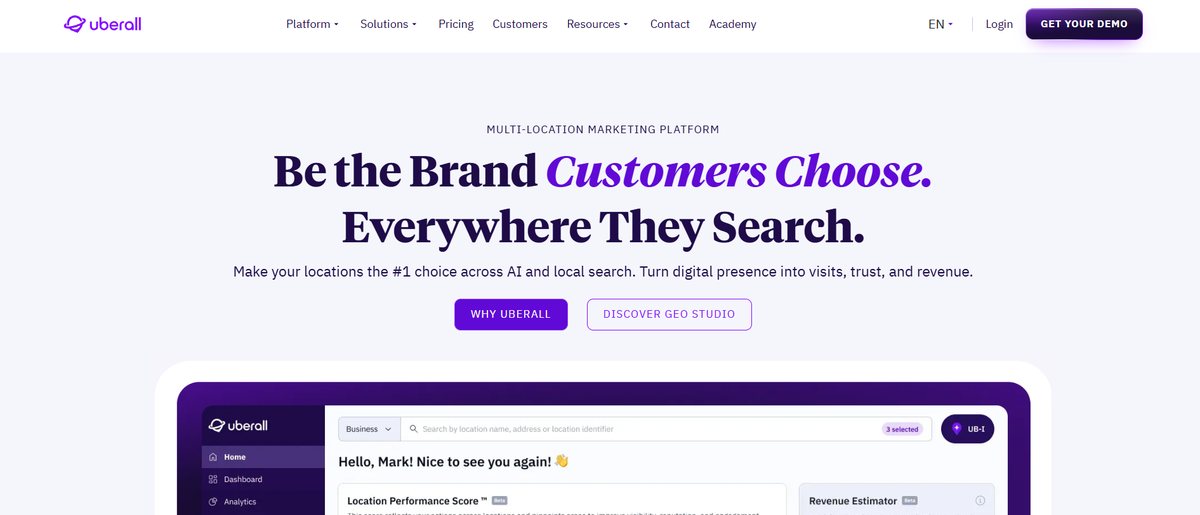
Best for: Car wash and tire networks seeking centralized listings management alongside broader location marketing capabilities.
Uberall provides location management, directory synchronization, reviews, reporting, and local marketing tools for multi-location businesses.
Its Listings product helps businesses distribute and maintain information across connected search engines, maps, and discovery platforms.
The company also provides bulk editing, duplicate management, and profile monitoring capabilities.
For example, a regional car wash franchise could group locations by territory, coordinate seasonal operating-hour changes, and monitor publication status from a central system.
Key features
- Business listing management across connected publisher networks.
- Bulk editing of location information and opening hours.
- Duplicate suppression and profile protection.
- Location-level reporting and performance analytics.
- Optional reputation management, social publishing, and location-page products.
Uberall's Listings product documentation describes its publisher synchronization, bulk management, and location-data features.
Its pricing and package information also distinguishes core capabilities from additional products and optional features.
Advantages
Uberall is relevant when headquarters must coordinate frequent location changes across regions.
Its broader location marketing products can help businesses manage listings alongside reviews, social activity, and location reporting.
Limitations
Pricing is quotation-based, and some capabilities depend on the selected package or add-ons.
Businesses needing advanced franchise permissions or approval workflows should confirm whether the appropriate collaboration features are included.
Buyers should also examine the difference between real-time data submission and the actual publication of changes by individual directories.
Pricing
Uberall offers sales-led packages rather than a universal public per-location rate.
Pricing depends on the selected configuration, location count, optional features, and contract.
Choose Uberall if: You manage a growing automotive franchise and need bulk location operations, synchronization, reporting, and broader local marketing capabilities together.
4. SOCi
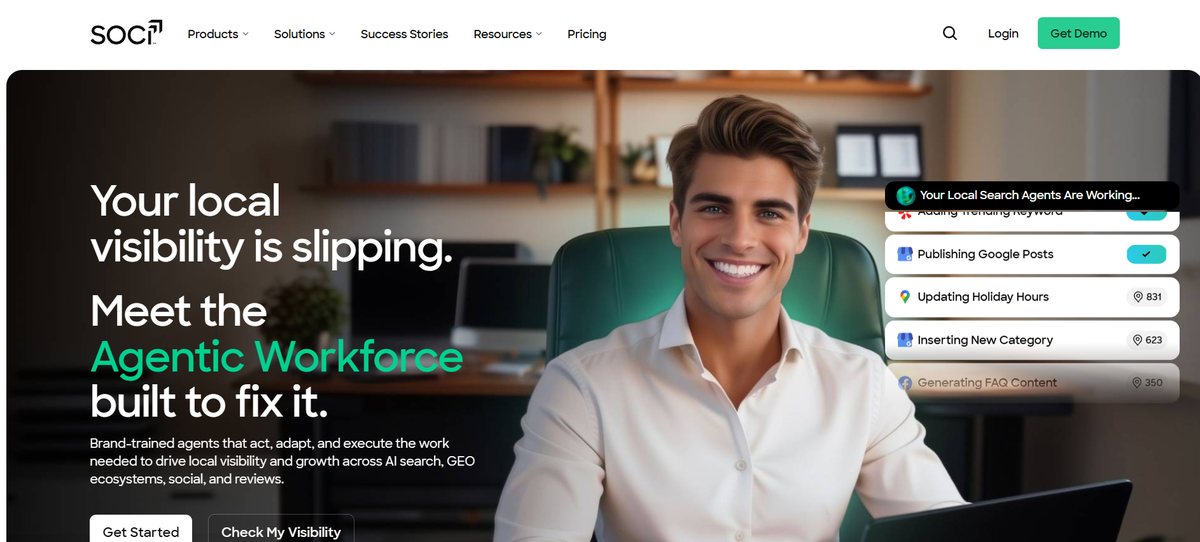
Best for: Enterprise car wash and tire chains requiring coordinated listings, local search, reputation management, and franchise marketing.
SOCi is a multi-location marketing platform designed for businesses managing large networks of branches or franchise locations.
Its Genius Local Search Agent provides listings management, optimization, location pages, and related search capabilities.
The wider platform includes additional agents for reputation management and social marketing.
For example, a tire retailer with 300 locations could evaluate SOCi to identify profile inconsistencies, coordinate regional changes, and manage location-specific marketing under centralized brand guidelines.
Key features
- Multi-location listing management and optimization.
- Centralized administration and bulk workflows.
- Listing accuracy monitoring.
- Dynamic location pages and search-related reporting.
- Separate reputation and social marketing capabilities.
SOCi's official pricing documentation identifies Listings Management and Listings Optimization as capabilities associated with its Genius Local Search Agent.
It also describes separate Genius Reputation and Genius Social Agents.
Advantages
SOCi suits organizations that want to connect business listing accuracy with broader local marketing operations.
Its enterprise model is relevant to franchise systems where headquarters needs oversight while regional or local teams manage approved activities.
SOCi also states that its pricing structure does not add per-user or per-listing charges, although overall costs depend on location count and selected capabilities.
Limitations
SOCi is primarily positioned for larger organizations, and its quotation-based model makes simple entry-level comparisons difficult.
Buyers need to confirm which agents, skills, integrations, and usage allowances are included in their proposed package.
Pricing
SOCi provides custom pricing based on the number of locations and selected Genius Agents or skills.
Some capabilities may have usage limits depending on the agreement.
Choose SOCi if: Your automotive organization needs an enterprise marketing platform where listings, local content, and reputation operations can be managed under centralized brand controls.
5. Birdeye
Best for: Car wash operators and tire retailers that need accurate listings alongside systematic customer feedback management.
Birdeye combines business listings, customer reviews, messaging, and other customer experience tools in a multi-location platform.
Its listings capabilities support profile monitoring and optimization, while the wider product range includes tools for collecting, managing, and responding to customer feedback.
For a tire shop chain, combining listing management and reputation monitoring could help regional managers identify recurring complaints about appointments, service wait times, or customer communication.
Key features
- Centralized business listing management.
- Location-level information monitoring and optimization.
- Multi-location updates and administration.
- AI-assisted recommendations and approval workflows.
- Review monitoring, generation, and responses through reputation products.
Birdeye's Listings AI documentation describes profile scanning, field-level recommendations, and approved changes across connected listing platforms.
Advantages
Birdeye is particularly relevant when customer reviews are an important part of an automotive business's marketing operations.
Combining location accuracy and customer feedback gives managers a broader view of the online customer experience.
This may be especially useful for businesses with many service locations where customer satisfaction can differ significantly between branches.
Limitations
Birdeye does not publish one universal listing management price.
Organizations primarily needing citation cleanup or basic directory synchronization should compare the cost of its broader platform with narrower listing-focused services.
Buyers should establish which listings, reviews, messaging, and AI capabilities are included in their contracts.
Pricing
Birdeye provides custom quotes based on the selected products, business requirements, and number of locations.
Its pricing page supports inquiries from businesses with a few locations through networks exceeding 1,000 locations.
Choose Birdeye if: Customer reviews, reputation monitoring, and listing accuracy are equally important to your automotive marketing strategy.
6. BrightLocal
Best for: Independent automotive franchise groups, smaller car wash chains, and agencies needing flexible local SEO and citation management.
BrightLocal provides local search auditing, citation management, listing synchronization, and reputation tools.
Its Citation Builder service creates and corrects directory listings through individual submissions.
Active Sync supports ongoing updates to selected publishers, while the wider software provides local search tracking, audits, and reporting.
A car wash operator expanding from 12 to 25 locations could use BrightLocal to audit existing citations, identify incorrect business details, and coordinate new listings during expansion.
Key features
- Citation Builder for creating and correcting directory records.
- Active Sync for ongoing updates to supported publishers.
- NAP and citation accuracy monitoring.
- Google Business Profile audits and local ranking reports.
- Review monitoring and generation through the Grow plan.
BrightLocal's official comparison of Citation Builder and Active Sync explains the distinction.
Citation Builder is designed for creating or correcting individual directory listings. Active Sync helps maintain selected important listings through ongoing connections.
Advantages
BrightLocal offers transparent subscription pricing and flexible citation purchasing.
Businesses can use manual citation services without purchasing a complete local marketing subscription.
This can be attractive for smaller chains with relatively stable location information or agencies managing targeted cleanup projects.
Limitations
Manual citation campaigns can require additional coordination when hundreds of locations are involved.
Active Sync covers selected major platforms rather than automatically providing the same ongoing synchronization to every directory supported by Citation Builder.
Review management also depends on the chosen plan.
Pricing
According to BrightLocal's pricing page:
- Manage starts at approximately $40 per month for one location when billed annually.
- Grow starts at approximately $49 per month for one location when billed annually.
- Citation Builder manual submissions start at $3.20 per directory.
- Bulk citation credits can reduce qualifying manual submission costs to $2 per directory.
Citation Builder is charged separately from standard subscription plans.
BrightLocal also offers pricing bands for larger location counts and custom enterprise arrangements.
Choose BrightLocal if: Your business needs citation cleanup, local SEO reporting, and flexible purchasing without immediately committing to a larger enterprise marketing platform.
7. Semrush Local
Best for: Tire shop chains, car wash businesses, and agencies that want listing management connected with local SEO analytics.
Semrush Local combines Google Business Profile tools, local rank tracking, business listing management, and review-related capabilities.
Its Local Pro plan includes Listing Management, allowing businesses to distribute and update information through supported directories.
For an automotive marketing agency, this can connect listing accuracy with search visibility reporting.
Teams can identify profile issues while monitoring geographic search performance through local rank tracking.
Key features
- Business listing distribution and management.
- Google Business Profile optimization tools.
- Multi-location profile updates and duplicate monitoring.
- Geographic local ranking analysis.
- Listing Management API access for eligible subscriptions.
Semrush's Local Toolkit documentation describes Listing Management, review tools, Google Business Profile functionality, and multi-location capabilities.
Its API documentation describes location creation, updates, deletion, and related listing operations.
Businesses planning custom integrations should review the current API version because Semrush has deprecated older Listing Management API methods.
Advantages
Semrush Local connects listing management with other local SEO workflows.
It may be convenient for teams already using Semrush for search analysis and reporting.
Combining listing health and geographic rank tracking can help teams investigate whether profiles accurately represent branch information across different markets.
Limitations
Listing Management is not included in the lower-priced Local Base plan.
At higher location counts, per-location pricing needs careful comparison with enterprise contracts from other providers.
API implementation may also require technical resources and verification of available endpoints, account permissions, and subscription limits.
Pricing
According to Semrush's official Local pricing page:
- Local Base: Published price: $30/month per location, billed annually. Listing Management: Not included.
- Local Pro: Published price: $60/month per location, billed annually. Listing Management: Included.
- Local Business: Published price: Custom quote. Listing Management: Depends on agreement.
Semrush provides a customized Business option for larger location networks.
Choose Semrush Local if: Your automotive marketing team wants listings, local SEO measurement, and API-supported workflows connected to an existing Semrush environment.
How Listing Management Software Works for Multi-Location Automotive Businesses
Listing management software connects an approved set of location records to online publishers and helps businesses coordinate updates from a central system.
A typical workflow involves five stages.
Step 1: Create a master location database
Store each branch's approved business name, address, telephone number, operating hours, services, categories, and website URL.
Use a stable internal location identifier so that updates can be matched to the correct branch.
For automotive businesses, it is useful to record operational differences such as whether a branch offers tire installation, alignment, self-service washing, automatic washing, or detailing.
Step 2: Connect and verify publisher profiles
Claim or connect existing Google Business Profile, Apple Maps, Bing, and other priority listings.
Confirm that the organization has the appropriate ownership and management permissions.
Avoid creating unnecessary duplicate profiles for locations that already exist.
Step 3: Distribute approved changes
Use the platform to submit updates to supported directories.
Depending on the software and publisher, this may involve API synchronization, manual submissions, connected account updates, or other distribution methods.
Step 4: Monitor publication and errors
Check for unsuccessful updates, incorrect details, disconnected accounts, duplicates, and profiles awaiting verification.
Do not treat a successful submission as proof that a publisher has displayed the new information.
Step 5: Maintain accuracy and accountability
Monitor listing status, open issues, update completion, and available performance indicators.
Assign responsibility for correcting errors and periodically compare published information with the master location database.
Managing Google, Apple Maps, and Bing
Google Business Profile is a priority because it controls important information displayed in Google Search and Maps.
Google also offers bulk management and verification for eligible businesses with 10 or more locations of the same business, subject to its requirements.
Apple Maps should also be managed through authorized business tools.
On April 14, 2026, Apple Business replaced Apple Business Connect, bringing brand and location management into its consolidated platform.
Apple's official announcement confirms that existing Business Connect location information was migrated to Apple Business.
Bing Places for Business provides tools for claiming and maintaining business information in Microsoft's search ecosystem.
Microsoft's official Bing Places documentation explains its listing management features.
A third-party listing management subscription does not remove the need for authorized access to publisher accounts.
Businesses should also maintain their own location information independently of the software vendor.
Practical Use Cases for Car Wash and Tire Chains
Use Case 1: A 100-Location Car Wash Franchise
Consider a car wash chain operating across several states.
Its locations have different winter hours, membership offerings, and washing services.
The marketing team needs to coordinate updates without asking every franchise operator to manage multiple directory accounts.
A suitable platform should support regional location groups, bulk updates, publication monitoring, and controlled franchise access.
Recommended shortlist: Synup, Uberall, and SOCi.
Synup is worth evaluating for centralized listings and marketing workflows. Uberall offers broad multi-location operations. SOCi is relevant when the franchise also needs enterprise marketing governance.
For a 100-location network, obtain enterprise quotations rather than assuming published small-business prices apply.
Use Case 2: A 250-Location Tire Retail Chain
A national tire retailer may manage hundreds of verified Google Business Profiles, multiple telephone numbers, and changing services.
Its business information may come from store operations, customer service, franchise administration, and the corporate website.
For an organization of this size, listing software should complement Google's native bulk management tools with additional publisher synchronization, data validation, permissions, and exception reporting.
Recommended shortlist: Yext, Uberall, and SOCi.
The final choice should depend on integration requirements, required publishers, location-data governance, and the total quoted cost.
A controlled pilot involving representative branches can identify problems before a national rollout.
Use Case 3: A 20-Location Tire and Automotive Service Group
A regional chain may have a small marketing team but still need accurate listings, customer review monitoring, and reporting.
It may not require the same infrastructure as a national franchise.
Recommended shortlist: BrightLocal, Synup, and Semrush Local.
BrightLocal is worth evaluating for flexible citation management and local SEO reporting.
Synup offers centralized listings and broader marketing capabilities.
Semrush Local is relevant when the organization already uses SEO tools and wants listing management alongside local visibility analysis.
How to Choose the Right Listing Management Platform
The best listing management software for a car wash or tire chain should be evaluated against real operational requirements rather than generic feature counts.
1. Prioritize important publishers over directory quantity
More publishers do not automatically mean better results.
Start with the platforms customers actually use, including Google Business Profile, Apple Maps, Bing, Yelp, and relevant social or industry-specific directories.
For each vendor, confirm:
- Whether the publisher is supported in the United States.
- Whether updates use a direct integration or another submission method.
- Which business information fields can be changed.
- Whether published changes and failures can be monitored.
- Whether additional fees apply.
Publisher quality, data accuracy, and update reliability are more useful evaluation criteria than a directory count alone.
2. Test bulk updates before buying
Ask shortlisted vendors to demonstrate an approved operating-hour change across multiple locations.
The demonstration should show how the platform handles an unsuccessful update, disconnected account, publisher rejection, or verification requirement.
For a 100-location car wash network, exception handling may be more valuable than a longer feature checklist.
3. Evaluate franchise permissions and integrations
Headquarters should maintain control over brand names, approved categories, corporate URLs, and other critical information.
Store operators may need limited access to local details.
Check whether the software supports the required permission levels, approval workflows, APIs, data exports, and integrations.
For additional context, HAKKEN's comparison of white-label local marketing platforms for franchisors discusses franchise administration and agency requirements.
4. Compare total ownership costs
Calculate the full cost of running the platform rather than comparing only advertised subscription prices.
Include location licenses, optional modules, onboarding, review tools, support, implementation, integrations, and future expansion.
Also determine what happens when a contract ends.
Can the business export location information? Will publisher connections continue? Who retains ownership of the original business profiles?
These questions are particularly important when a large franchise network changes vendors.
5. Evaluate reporting and accountability
Useful operational measurements include:
- Percentage of priority profiles with accurate information.
- Number of unresolved critical listing errors.
- Time required to correct important errors.
- Duplicate listing resolution status.
- Publisher update success and failure rates.
- Location-level customer interactions where supported.
Monthly spot-checks and quarterly comprehensive audits provide a reasonable starting schedule.
Major changes such as openings, closures, moves, and rebrands should trigger additional checks.
A Practical Vendor Evaluation Scorecard
A structured scorecard can make comparisons more consistent.
The following is a suggested framework for automotive chains, not a measured ranking of the seven vendors.
- Priority publisher coverage: Suggested weighting: 20%. What to test: Google, Apple, Bing, Yelp, and other relevant platforms.
- Listing accuracy and error handling: Suggested weighting: 20%. What to test: Incorrect hours, disconnected accounts, duplicates, and failed updates.
- Bulk management capabilities: Suggested weighting: 20%. What to test: Updating and auditing dozens or hundreds of locations.
- Permissions and governance: Suggested weighting: 15%. What to test: Headquarters, regional managers, and franchisee access.
- Integrations and exports: Suggested weighting: 10%. What to test: APIs, location-data imports, and portability.
- Reporting and monitoring: Suggested weighting: 5%. What to test: Listing health, unresolved issues, and location-level reporting.
- Total cost and contractual terms: Suggested weighting: 10%. What to test: Subscription, onboarding, add-ons, and exit provisions.
- Total: Suggested weighting: 100%.
Businesses can adjust these weights to reflect their operating model.
A franchise with frequent changes may give greater weight to bulk updates and approvals. An agency handling multiple brands may prioritize client separation, white labeling, and reporting.
Run a controlled pilot before committing
A useful pilot should test actual work rather than a vendor's prepared demonstration.
Select a small sample of locations representing different operating situations, such as a high-volume tire shop, a rural branch, a location with seasonal hours, and a newly acquired store.
Then test:
- Correcting an incorrect telephone number.
- Changing special hours across several branches.
- Identifying and escalating a duplicate listing.
- Publishing a branch-specific service update.
- Handling a publisher rejection or verification request.
- Exporting location records and issue reports.
Record submission results, publication status, manual effort, and unresolved problems.
This gives buyers a stronger basis for comparison than relying on feature availability alone.
How Much Does Multi-Location Listing Management Software Cost in 2026?
Pricing depends on the vendor, number of locations, included capabilities, and contract structure.
- Synup: Published pricing or pricing approach: $49/month for 1 location; $299 for up to 10; $499 for up to 25; $899 for up to 50.
- Yext: Published pricing or pricing approach: Enterprise quote required.
- Uberall: Published pricing or pricing approach: Custom quote required.
- SOCi: Published pricing or pricing approach: Custom quote based on locations and selected capabilities.
- Birdeye: Published pricing or pricing approach: Custom quote based on selected products and location count.
- BrightLocal: Published pricing or pricing approach: Manage from approximately $40/month for 1 location with annual billing; citation services separately priced.
- Semrush Local: Published pricing or pricing approach: Pro from $60/month per location, billed annually; Business pricing customized.
Prices and pricing models checked November 4, 2026. Currency: USD. These are vendor-published rates or stated purchasing approaches, not guaranteed enterprise contract prices. Taxes, additional services, and contractual conditions may apply.
For larger networks, request quotations for 100, 250, and 500 locations using the same required features.
This makes it easier to identify volume discounts, contract minimums, implementation costs, and additional charges.
Organizations without sufficient staff to run their own listing operations should also compare software subscriptions with managed services.
HAKKEN's guide to local listing management services for multi-location brands explores that distinction.
Common Listing Management Mistakes Automotive Chains Should Avoid
Treating every branch as identical
Standardized branding is useful, but location-specific information must remain accurate.
A tire retailer should not publish the same service descriptions at every location if some branches do not offer the listed services.
Similarly, car wash operators should distinguish between branches offering automatic washes, self-service bays, detailing, or other amenities.
Assuming submitted updates are immediately published
A platform may successfully transmit an update while the publisher still requires verification, review, or processing time.
Businesses should monitor actual publication status wherever this information is available.
Creating unnecessary duplicate profiles
New locations, acquisitions, moves, and rebrands can create duplicate records.
Before creating another profile, determine whether an existing listing should be claimed, updated, merged, or otherwise resolved according to the publisher's rules.
Losing control of publisher accounts
The business should retain appropriate ownership of its Google Business Profiles and other important accounts.
Agencies and software vendors should receive authorized access rather than unnecessarily becoming the sole controllers of the business's online identity.
Google's Business Profile API best practices describe an ownership model in which business owners retain primary ownership while operations teams receive management permissions.
Measuring results only through ranking changes
Local search visibility matters, but listings operations also have measurable data-quality outcomes.
Track incorrect hours, missing locations, unresolved duplicates, publisher failures, and the time required to correct customer-facing information.
These measurements show whether the system is performing its primary operational function.
Frequently Asked Questions
What is the best listing management software for a car wash franchise?
Synup, Uberall, and SOCi are useful starting points for multi-location car wash franchises.
Synup combines listings with reviews and agency workflows. Uberall emphasizes synchronization and broader location marketing. SOCi is relevant to large franchises coordinating listings with enterprise marketing operations.
The best option depends on location count, pricing, permissions, and required publisher coverage.
Which listing management platform is suitable for a tire chain with hundreds of locations?
Yext, Uberall, and SOCi are relevant enterprise candidates for tire retailers managing hundreds of branches.
Evaluate their bulk editing, verification workflows, location-data administration, integrations, reporting, and pricing using the same criteria.
A controlled pilot is preferable to choosing software based only on advertised publisher counts.
Can listing management software automatically update business hours?
Yes. Many platforms distribute approved business-hour changes to connected directories.
However, automatic submission does not mean every update appears immediately.
Publication timing depends on the publisher, supported field, account status, and verification requirements.
What is the difference between listing management and reputation management?
Listing management maintains information such as business names, addresses, telephone numbers, operating hours, categories, and services.
Reputation management focuses on customer reviews, ratings, feedback, and responses.
The functions are complementary. Accurate listings help customers find the correct automotive branch, while reputation tools help businesses understand and respond to customer experiences.
Does listing management software improve Google Maps rankings?
Accurate and complete business information supports local search relevance, but listing management software alone cannot guarantee higher rankings.
Google's local ranking systems also consider distance and prominence.
Listing management should be viewed as part of a broader local SEO strategy rather than a guaranteed ranking shortcut.
The distinction also applies to AI-generated search experiences.
For additional context, see HAKKEN's analysis of local listing signals in Google AI Overviews.
Google's official guidance for AI features in Search emphasizes existing SEO fundamentals and accurate Business Profile information rather than special AI-specific optimization requirements.
How often should car wash and tire chains audit their online listings?
A practical schedule is monthly spot-checks, quarterly comprehensive reviews, and immediate checks after major operational changes.
Important triggers include location openings, closures, moves, rebrands, holiday-hour changes, and telephone-number updates.
Prioritize mistakes that directly affect customers, particularly incorrect addresses, map pins, telephone numbers, and opening hours.
Final Verdict: Which Listing Management Tool Should Automotive Chains Choose?
The right platform depends on how your automotive organization operates.
Synup is worth shortlisting when centralized listings, reviews, and multi-location workflows are needed together.
Yext suits businesses emphasizing structured location data and enterprise publisher administration.
Uberall is relevant for franchise-wide synchronization and location marketing.
SOCi supports larger organizations integrating listings with broader localized marketing operations.
Birdeye deserves consideration when customer reputation management is central to the project.
BrightLocal offers flexible citation management, while Semrush Local is useful for teams that want listings connected to local SEO measurement.
For US car wash and tire chains, the main objective is not purchasing the most features or publishing to the highest number of directories. It is maintaining reliable, current, location-specific information wherever customers search.
A defensible buying process starts with accurate master records, consistent evaluation criteria, realistic cost comparisons, and a pilot that demonstrates how the software handles the operational changes your business makes every day.