How Film Heritage Foundation Found Three Indian Films Again in 2026
In 2026, Film Heritage Foundation returned Annie through Berlin and Indian cinemas, premiered Amma Ariyan at Cannes, and prepared English, August for Venice by securing rights and restoring surviving film elements.
Nikita Dwivedi
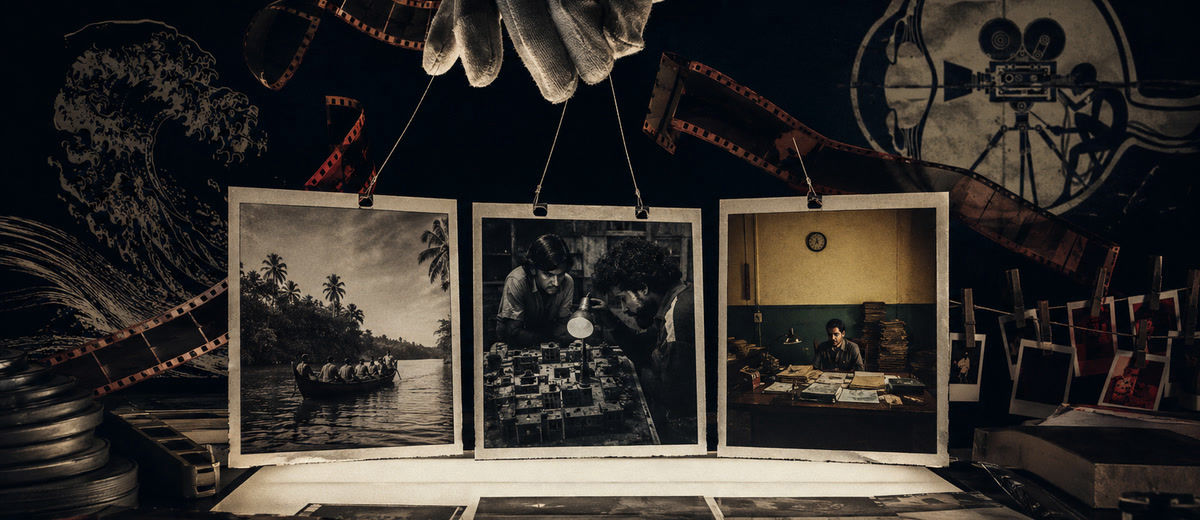
The short answer: In 2026, Film Heritage Foundation brought two hard-to-see Indian films back into public view and completed a third restoration scheduled for Venice. In Which Annie Gives It Those Ones returned through Berlin and Indian cinemas, Amma Ariyan premiered at Cannes, and English, August was prepared for Venice. The foundation secured permissions, located surviving negatives and prints, repaired damage, restored sound, consulted original collaborators, and rebuilt lawful paths to audiences.
In 2026, Film Heritage Foundation brought two hard-to-see Indian films back into public view and completed a third restoration scheduled for Venice. In Which Annie Gives It Those Ones returned through Berlin and Indian cinemas, Amma Ariyan premiered at Cannes, and English, August was prepared for Venice. The foundation secured permissions, located surviving negatives and prints, repaired physical damage, restored sound, consulted original collaborators, and built new paths to audiences.
None of the films was found through one lucky discovery. One still had its original camera negative, though it was badly damaged. Two had lost their original picture negatives. One depended on a collective for permission. Another resurfaced partly because its director was moving house. A third recovered its sound because its director had kept production tapes for decades.
When we compared the three cases, the same pattern kept appearing: a film can remain famous while the material needed to show it properly becomes scattered, damaged, or inaccessible. The restoration work began by reconnecting people, archives, film cans, sound tapes, and legal rights.
Key takeaways
- Annie was restored from its damaged 16mm camera and sound negatives, with a 35mm release print and Pradip Krishen's production material as support, then reached 19 cinemas across 14 Indian cities after Berlinale Classics.
- Amma Ariyan was rebuilt without its camera negative from two damaged 35mm prints at the National Film Archive of India and premiered at Cannes Classics.
- English, August was restored without original picture or sound negatives: two 35mm release prints supplied the image, Dev Benegal's digital audio tapes supplied stronger sound, and Venice Classics screenings were scheduled for September.
- Across all three, the National Film Archive of India preserved core elements while personal collections and Film Heritage Foundation connected rights, labs, and collaborators.
- "Found again" here means rights, best surviving sources, conservation and restoration, then public access, not a single rediscovery myth.
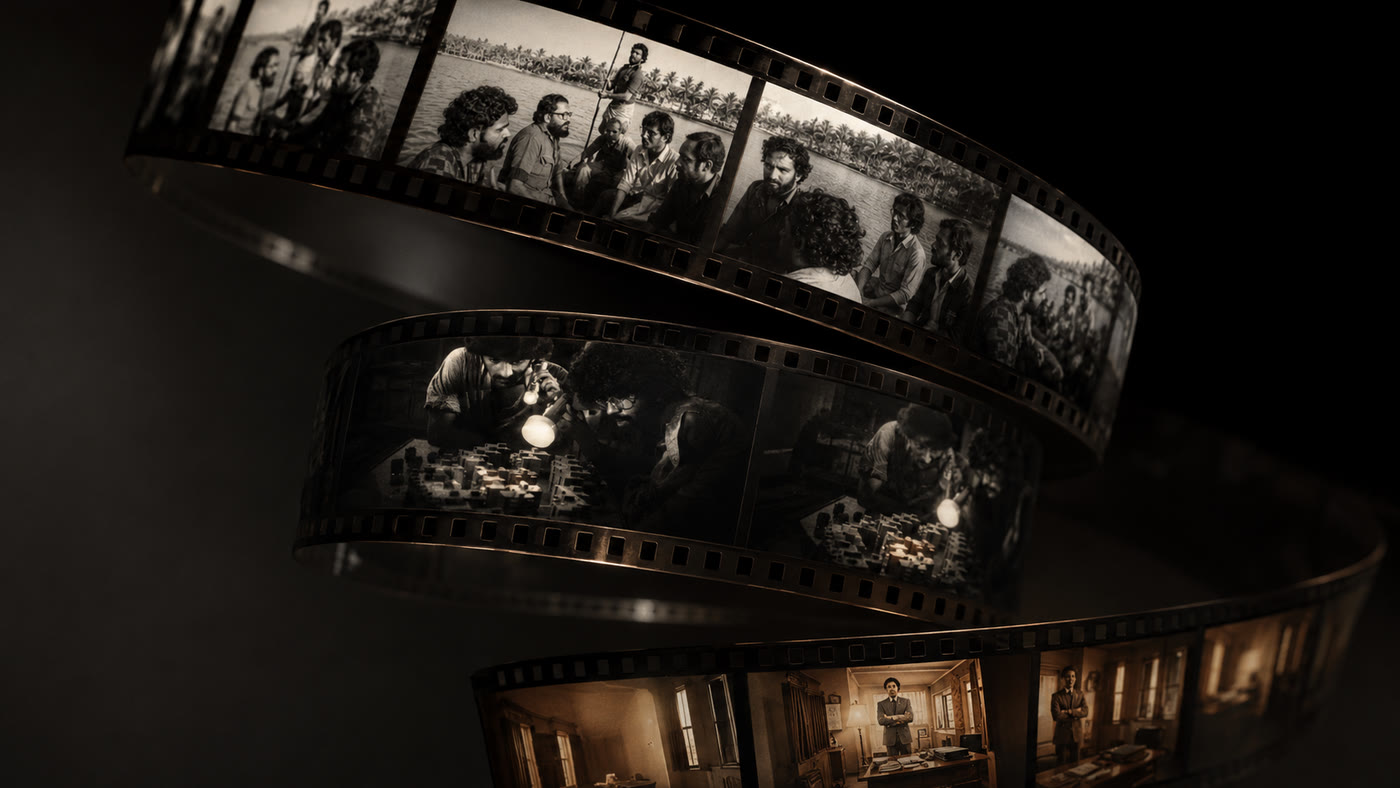
What does "found again" mean for these three films?
The short answer: These were not completely lost films. Surviving material existed, and viewers still remembered them. The problem was that memory, old recordings, and poor online copies had become easier to find than authorized versions made from the best surviving sources.
That is an important distinction. An online upload cannot tell viewers whether the camera negative still exists. It may contain damaged sound, missing frames, weak subtitles, faded colour, incorrect framing, or heavy compression. A film can also sit in an archive without being available to the public because its rights are unclear or its reels are too fragile to scan.
For this article, "found again" describes four connected stages:
- Finding the people who can legally authorize the restoration and public exhibition.
- Locating the strongest surviving picture and sound materials across public archives and personal collections.
- Conserving, scanning, and restoring those materials without removing intentional grain, contrast, silence, or other creative choices.
- Returning the finished restoration to audiences through festivals, cinemas, archives, or lawful home viewing.
A 4K restoration is therefore more than a high-resolution scan. The label says little about which film elements were used, how missing passages were handled, or whether the restored version can reach an audience.
That final point is easy to miss. Preservation protects the material, while access gives the film an active public life. A restored master can still remain unseen if rights, subtitles, distribution, or screening costs prevent further circulation. The strongest recovery therefore ends with a version that can be identified, programmed, and shown under clear authority.
The three restorations at a glance
Sync-safe summary (same rows):
- In Which Annie Gives It Those Ones (1989): Damaged 16mm camera and sound negatives, plus a 35mm release print and production material from Pradip Krishen. Public return: Berlinale Classics (February); 19 cinemas across 14 Indian cities (March).
- Amma Ariyan (1986): Two damaged 35mm prints at the National Film Archive of India; no camera negative found. Public return: Cannes Classics premiere (May).
- English, August (1994): Two 35mm release prints for picture; digital audio tapes kept by Dev Benegal for stronger sound; no original picture or sound negatives. Public return: Venice Classics screenings scheduled for September.
The national archive preserved material used in every project. Personal collections supplied other decisive pieces. Film Heritage Foundation connected those holdings with rights holders, conservators, laboratories, original collaborators, and festival programmers.
1. Amma Ariyan: rebuilding a film from two damaged prints
John Abraham's Amma Ariyan, often translated as Report to Mother, follows Purushan across Kerala as he tries to identify a dead man and inform the man's mother. Friends and former comrades join the journey, and their memories build a portrait of Hari, a musician shaped by political unrest and disillusionment.
The film mixes fiction, testimony, political history, flashbacks, and handheld black-and-white photography. Its production was equally unusual. Abraham and the Odessa Collective raised money by travelling through villages, staging street performances, screening films, and collecting small public contributions. The group also showed films outside standard commercial venues.
This production history is part of the film's meaning. The collective wanted cinema to reach people outside the commercial theatre circuit, and its fundraising method placed viewers inside the making of the work. Decades later, that same collective identity meant the restoration could not be treated as a conventional studio-owned project.
That collective history made the rights process more complicated. There was no routine studio agreement or complete negative waiting in one place.
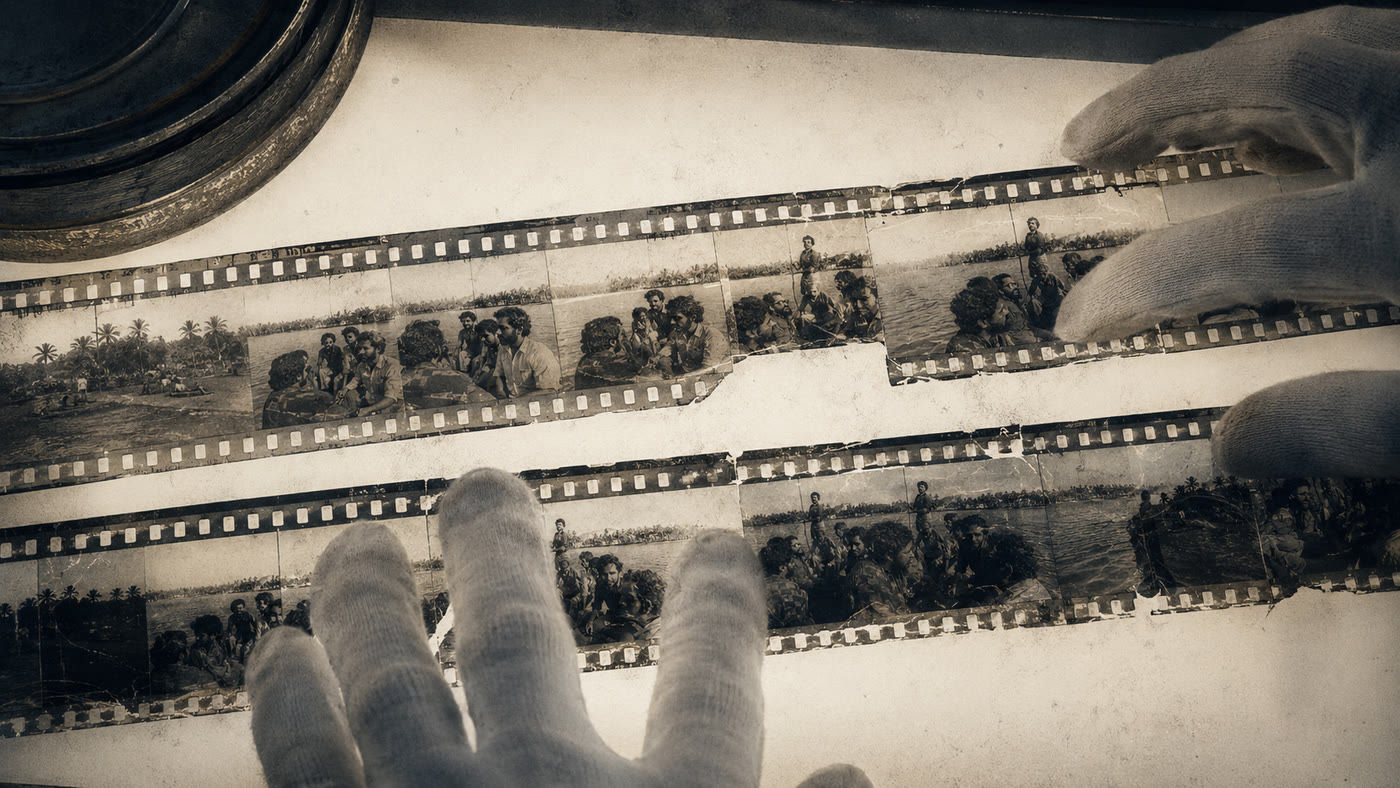
Permission had to come from the Odessa Collective
Film Heritage Foundation began tracing the rights in 2023. Editor Bina Paul and critic C. S. Venkiteswaran helped reconnect the project with surviving members of the Odessa Collective, which approved the restoration.
This step came before scanning. Owning or locating a print does not automatically give an archive permission to alter, subtitle, distribute, or exhibit a film. With a collectively produced work, the foundation had to rebuild a legal and personal chain of trust.
The search found no camera negative
The foundation circulated a request through the International Federation of Film Archives network, but no original camera negative appeared. The search led instead to two 35mm prints at the National Film Archive of India in Pune, one with English subtitles and one without.
The unsubtitled first-generation print became the main picture source. It contained broken joins, scratches, damaged emulsion, and other wear. The subtitled print supplied material where the main copy had image or sound gaps.
A release print contains less photographic information than a camera negative and usually carries signs of projection and handling. Comparing two prints allowed the restorers to choose the stronger surviving passage scene by scene. It could not recover detail missing from both copies.
More than 4,000 sound repairs preserved intentional silence
The foundation's conservators cleaned and repaired the prints before scanning. L'Immagine Ritrovata in Bologna and Digital Film Restore then carried out the digital work with Film Heritage Foundation and the Odessa Collective.
The soundtrack contained noise, clicks, low levels, dropouts, and silent passages. Sound engineer Krishnanunni explained that Abraham had deliberately omitted some sound effects and used reversed sound in places. Treating every silence as damage would have changed the film.
This is the detail that stays with us. Good restoration requires judgment, not automatic cleaning. The foundation reports more than 4,000 manual sound interventions, while cinematographer Venu and editor Bina Paul reviewed the restored picture. Venu approved the final black-and-white grade.
The 115-minute restoration premiered at Cannes Classics in May. Cannes gave the work an internationally documented return, though no wider Indian theatrical or streaming release had been announced for the restored version.
2. In Which Annie Gives It Those Ones: a house move restarted the search
Pradip Krishen's In Which Annie Gives It Those Ones was made for television. Written by Arundhati Roy and set in a Delhi architecture school in 1974, it follows Anand "Annie" Grover, a student whose unusual ideas and repeated academic failures place him in conflict with institutional authority.
Roy acted in the film and designed the production. The cast includes Arjun Raina, Roshan Seth, Rituraj Singh, Raghuvir Yadav, and Shah Rukh Khan in a brief early role. Its campus language, humour, and sharp view of professional education helped it become a cult film after a single late-night Doordarshan broadcast in 1989.
The language is especially important. The characters speak an English shaped by a particular Delhi campus culture rather than polished British or American usage. Their jokes depend on rhythm, slang, accents, and shared references. Restoration therefore involved more than cleaning the soundtrack. The subtitles and sound had to remain clear without flattening the film's local voice.
Viewers kept the film alive through recordings and later online copies. Those copies preserved recognition, but not the colour, sound, framing, and stability held in the surviving film elements.
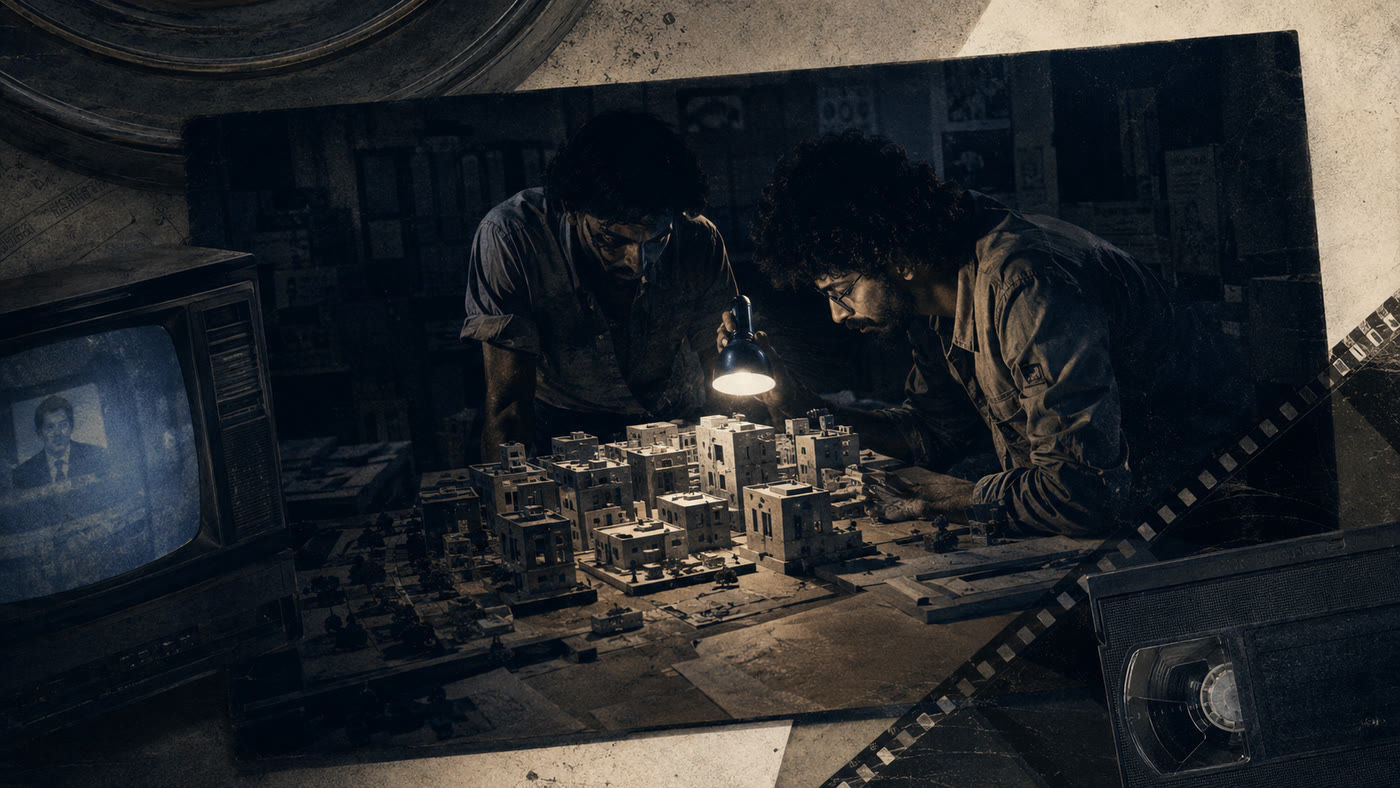
Pradip Krishen's personal archive supplied the missing context
The recovery began when filmmaker Karan Bali learned in 2023 that Krishen was moving house and planned to donate film material. Film Heritage Foundation director Shivendra Singh Dungarpur visited him in Delhi the following year.
Krishen's collection included a 35mm release print, sound recordings, scripts, notes, photographs, costumes, and drawings. The foundation then accessed the 16mm camera and sound negatives held by the National Film Archive of India.
Neither collection told the whole story alone. The national archive held the original film elements. Krishen's boxes supplied a projection print and production records that could guide restoration and subtitles. A household collection and a public archive became useful when the foundation brought them together.
The surviving negative needed extensive repair
The camera negative had damaged perforations, broken joins, tears, scratches, shrinkage, mould, and older tape repairs. The optical soundtrack carried electrical noise, distortion, gaps, and dropouts. Conservators first stabilized the physical elements so they could pass safely through a scanner.
The restoration took about 18 months at L'Immagine Ritrovata. Technicians worked through faded colour and damaged sound. Krishen reviewed the colour and subtitles, helping the team retain the modest visual character and local language of the television production.
The restored 112-minute film premiered at Berlinale Classics in February. It then opened in 19 cinemas across 14 Indian cities. For a film previously shown once on television, that Indian run marked a major change in public access. There is no need to inflate the result with unsupported box-office claims; the confirmed achievement is that audiences could finally watch it from a restored theatrical master.
3. English, August: the picture and sound survived in different places
Dev Benegal's debut feature adapts Upamanyu Chatterjee's novel about Agastya Sen, a young civil-service officer posted to the fictional town of Madna. Agastya feels estranged from his job, his surroundings, and the official idea of the country he is expected to serve.
The film uses dark comedy, boredom, bureaucracy, music, and fantasy to examine class, language, and identity. Rahul Bose leads a cast that includes Tanuja, Gulan Kripalani, and Debashree Roy. The novel remained widely available, while the film became difficult to find in a good version.
That contrast shows how an adaptation can vanish even when its source book remains in circulation. Readers can continue discovering the novel, but a film depends on picture, sound, performance, locations, editing, and music surviving together. Reviews and memories can record its reputation; they cannot replace the audiovisual work.
Two release prints replaced the missing camera negative
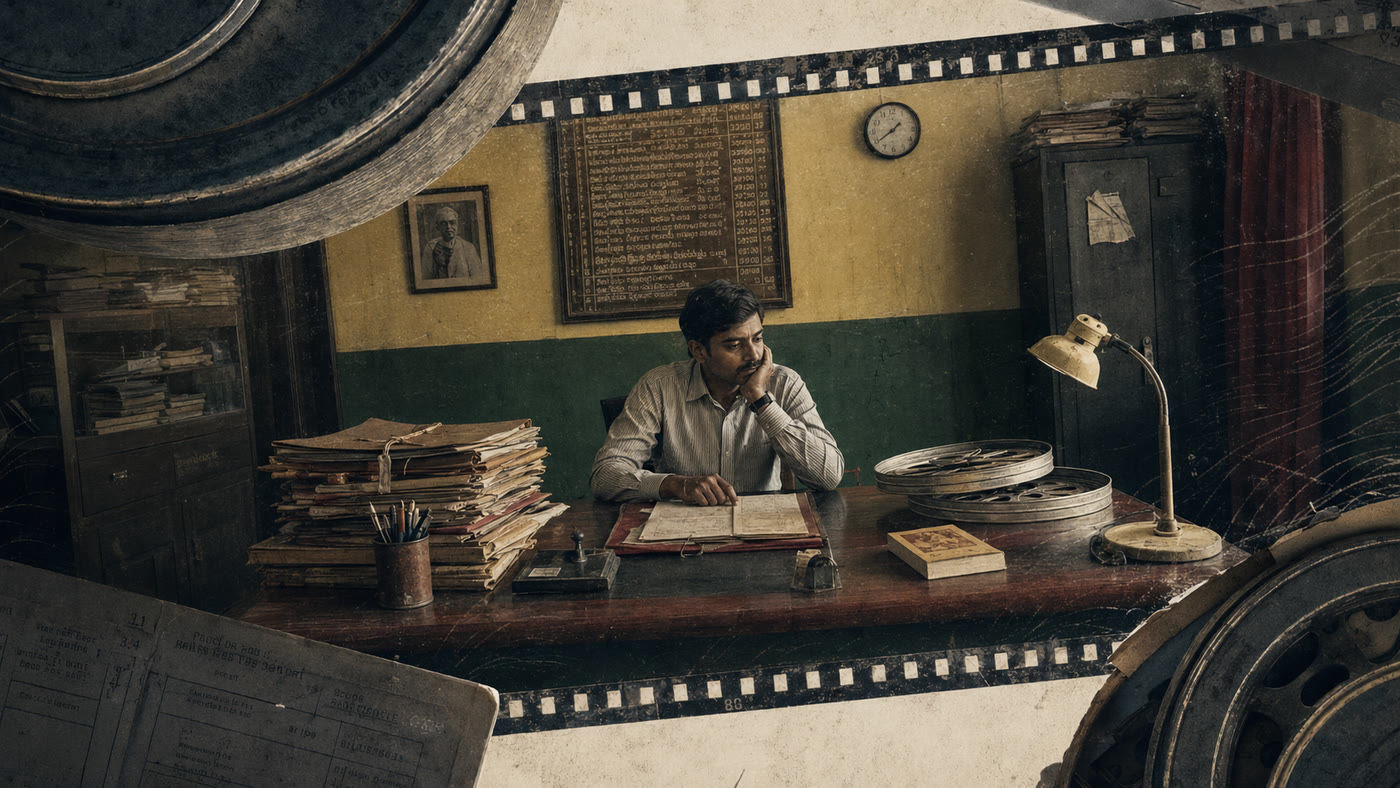
Neither the original camera negative nor the original sound negative survived. The best picture sources were two 35mm release prints, one preserved by the National Film Archive of India and the other held by Film Heritage Foundation.
Using two prints gave the team options. One copy could preserve frames or image detail damaged in the other. The restorers could compare scratches, joins, colour, and completeness, then use the strongest available evidence. They still had to accept any loss shared by both prints.
The sound followed a separate route. Benegal had kept digital audio tapes from the production. Sound designer Vikram Joglekar used those tapes instead of relying entirely on the worn optical soundtrack attached to a release print.
Original collaborators guided the restored version
Film Heritage Foundation completed the restoration at L'Immagine Ritrovata. Benegal, cinematographer Anoop Jotwani, and producer and production designer Anuradha Parikh advised on the picture. Joglekar handled the sound restoration.
Their involvement helped the team judge colour, texture, design, and sound when no camera negative remained to settle every question. The finished restoration runs 118 minutes and was selected for Venice Classics, with screenings scheduled for September.
At publication time, Venice was the announced first public stage. No Indian cinema or streaming release had been confirmed for the restored master. The film had regained a credible route to an audience, but broad access still depended on later distribution.
How did Film Heritage Foundation restore the three films?
The short answer: Film Heritage Foundation, a Mumbai-based non-profit founded by filmmaker and archivist Shivendra Singh Dungarpur in 2014, moved through five stages: resolve rights, search beyond one archive, repair physical film, compare sources, and protect original character with collaborators before technical cleanup changed the work.
Across these projects, its work followed five practical stages.
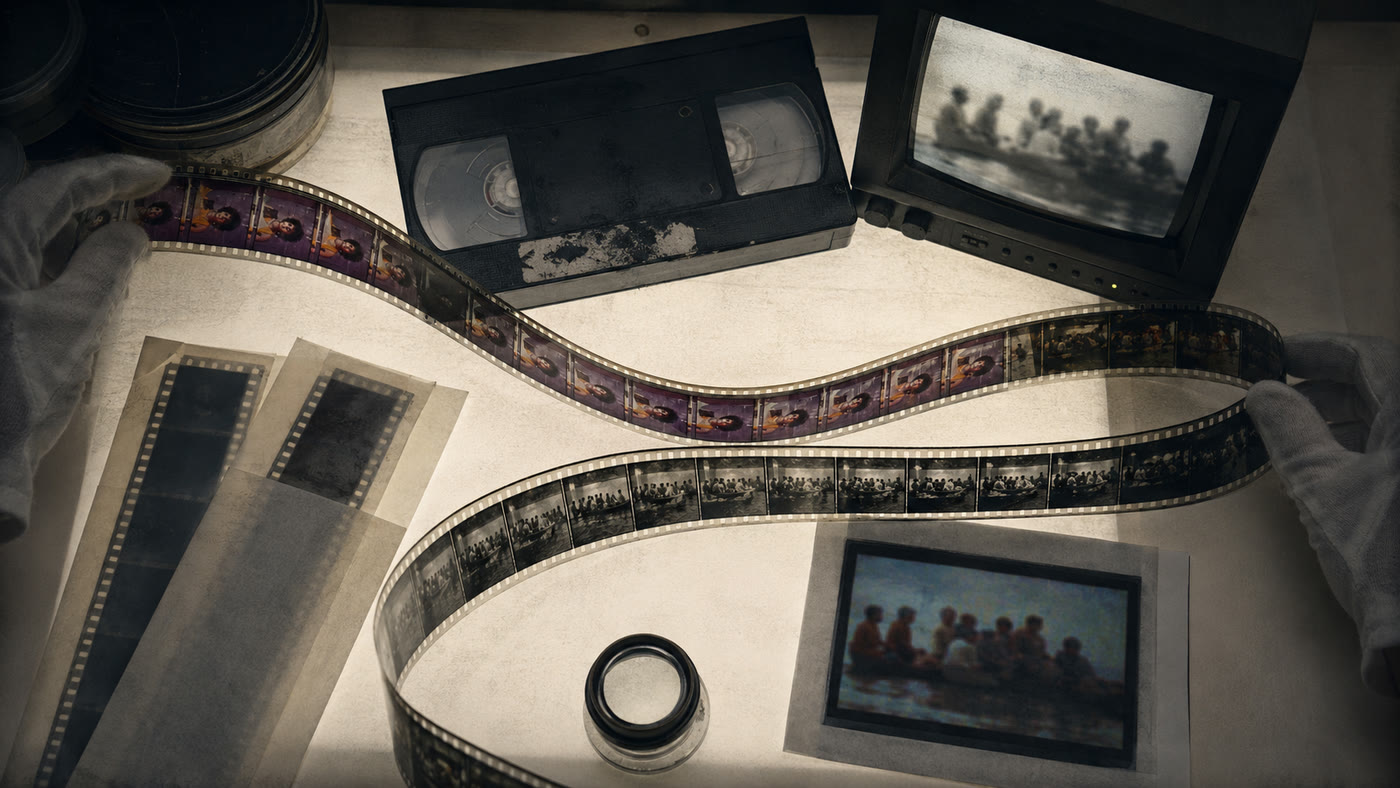
- Resolve rights: permission came from the Odessa Collective for Amma Ariyan and through direct work with Pradip Krishen and Dev Benegal for their films.
- Search beyond one archive: the National Film Archive of India held essential elements for every title, while filmmakers' collections and the foundation's archive supplied other prints, tapes, and records.
- Repair the physical film: conservators cleaned reels, repaired joins and perforations, treated damage, and prepared the material for safe scanning.
- Compare sources: a second print could replace missing frames, supply sound, or offer a stronger image. Separate production tapes could provide better audio than a worn release print.
- Protect the original character: filmmakers and original collaborators helped identify intended colour, contrast, subtitles, sound, grain, and silence. Technical cleanup had to stop before it began changing the work.
Follow the materials and each restoration becomes distinct. Amma Ariyan depended on two damaged prints and careful interpretation of silence. Annie joined an archival negative with a director's personal collection. English, August paired two release prints with sound tapes that had survived separately.
The physical and digital stages also depended on each other. Torn perforations, broken joins, shrinkage, mould, and damaged emulsion had to be addressed before scanning. Once digitized, technicians could stabilize movement, reduce dirt, compare alternate copies, grade the image, and repair sound. Starting with an unsafe or poorly identified reel would weaken every later stage.
Documentation kept those decisions accountable. A restoration record should identify the main source, any replacement material, the laboratory, the people who reviewed the work, and areas where the surviving evidence remained limited. That information helps future archives understand what was recovered and prevents a newly restored master from becoming another unexplained copy.
What do the three recoveries say about film preservation in India?
The short answer: Cultural fame does not guarantee material safety. Public archives, private collections, and a specialist foundation had to work together. Private care was valuable and fragile. Public access remains the final test, and relatively recent films are not automatically safe.
The clearest lesson is that cultural fame does not guarantee material safety. Critics, students, and filmmakers may continue discussing a title while its original negative is missing or its only public copy comes from a weak transfer.
The second lesson concerns shared responsibility. The National Film Archive of India preserved core elements for all three films. Directors and collaborators kept prints, tapes, scripts, and production records. Film Heritage Foundation connected those materials with rights holders, conservators, a specialist laboratory, and public programmes.
Private care was valuable, but it was also fragile. A house move helped begin the Annie recovery because someone recognized the importance of Krishen's boxes. Benegal's decision to retain audio tapes improved the English, August soundtrack. Such materials can disappear during moves, estate clearances, storage failures, or format changes when no archive knows they exist.
The films also widen the record of Indian independent cinema. Amma Ariyan came from radical Malayalam film culture and collective public funding. Annie was an English-language television film about architectural education in Delhi. English, August was an independent literary adaptation about bureaucracy, class, and language. Restoring them protects three different production histories rather than forcing them into one movement.
Public access remains the final test. A stable master can protect a work inside an archive, but its cultural life also depends on screenings, subtitles, lawful distribution, and clear ownership. Annie completed more of that journey through its Indian cinema release. Amma Ariyan and English, August still need wider announced viewing routes.
The cases also show that relatively recent films are not automatically safe. English, August was made in the 1990s, yet its original picture and sound negatives were gone. Preservation decisions made during production, laboratory work, storage, and ownership transfers can affect whether a film remains recoverable only a few decades later.
How does restoration differ from a routine 4K re-release?
The short answer: A routine 4K re-release may begin with a complete, well-preserved source for a film that has remained available. These three projects began with damaged, missing, or dispersed materials and sharply limited access. "4K" describes resolution; film restoration covers rights, sources, conservation, scanning, repair, colour, sound, subtitles, documentation, and review.
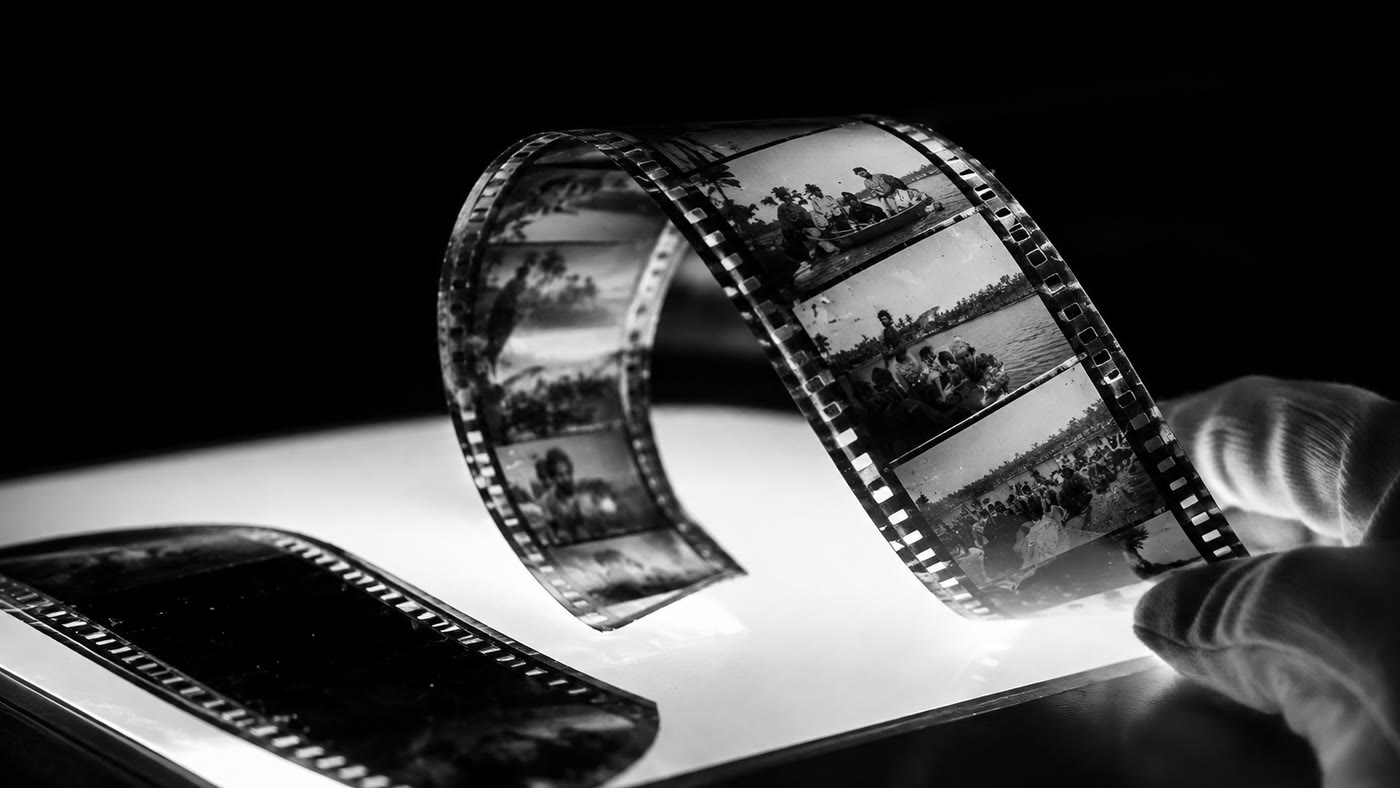
A routine 4K re-release may begin with a complete, well-preserved source for a film that has remained available on television, streaming, or physical media. These three projects began with damaged, missing, or dispersed materials and sharply limited access.
The term film restoration describes the larger process: rights research, source searches, physical conservation, scanning, image repair, colour work, sound reconstruction, subtitles, documentation, and review. "4K" describes the resolution of the digital image. It does not prove that the correct source was used or that the result is faithful.
Restoration can repair joins, reduce dirt and scratches, stabilize movement, address some fading, rebuild gaps from a second copy, and improve sound. It cannot recover a missing camera negative by increasing resolution. It should not invent absent frames, erase film grain, fill intentional silence, or redesign colour according to current taste.
The most useful description is specific: Amma Ariyan was restored from two 35mm prints; Annie from 16mm camera and sound negatives with a 35mm reference print; and English, August from two 35mm prints with separate digital audio tapes.
Why were the festival premieres part of the recovery?
The short answer: Berlinale Classics, Cannes Classics, and Venice Classics place a new master before programmers, distributors, archivists, journalists, and viewers who may help it travel further. They also create a public record of the version shown. A premiere does not guarantee a national release, but it can move a restoration into active circulation.
Berlinale Classics, Cannes Classics, and Venice Classics are festival programmes for restored and rediscovered cinema. Selection places a new master before programmers, distributors, archivists, journalists, and viewers who may help it travel further. It also creates a public record of the version shown, its length, restoration credits, and source materials.
Each film reached a different point in that process. Amma Ariyan returned at Cannes after being rebuilt without its camera negative. Annie premiered in Berlin and then moved into Indian cinemas, giving it the widest confirmed public access of the three. English, August had been selected for Venice, with its screenings still scheduled at publication time.
A festival premiere does not guarantee a national release or a streaming deal. Territorial rights, subtitling, delivery costs, and distribution decisions still determine what happens next. Even so, a premiere can move a restoration out of archival storage and into active circulation. For these films, the festival programmes were part of the recovery rather than a separate promotional event.
Where can audiences watch the restored films?
The short answer: Annie had a limited Indian theatrical release in March across 14 cities and 19 cinemas. Amma Ariyan premiered at Cannes Classics in May with no Indian theatrical or streaming date announced for the restored version in the records reviewed. English, August was scheduled for Venice Classics in September, also without an announced Indian theatrical or streaming release for the restored master.
- In Which Annie Gives It Those Ones received a limited Indian theatrical release in March across 14 cities and 19 cinemas. Future screenings and home-viewing availability depend on the rights holders and authorized venues.
- Amma Ariyan premiered at Cannes Classics in May. No Indian theatrical date or streaming release for the restored version had been announced in the official records reviewed.
- English, August was scheduled to screen at Venice Classics in September. No Indian theatrical or streaming release for the restored master had been announced.
Older uploads may explain how these films retained a following, but they are not equivalent to the restored masters. Their image, sound, subtitles, framing, and completeness may differ.
Frequently asked questions
Were the three films completely lost?
No. Surviving material existed for all three. "Found again" refers to locating the best available elements, restoring them, and returning the films to public view. Amma Ariyan and English, August had lost their camera negatives. Annie's camera negative survived but required extensive repair.
Who restored the three films?
Film Heritage Foundation led all three projects and worked with L'Immagine Ritrovata in Bologna. Digital Film Restore also worked on Amma Ariyan. The National Film Archive of India supplied essential film elements, while rights holders and original collaborators guided decisions for each title.
Why were several prints needed?
Different copies carry different damage. One print may preserve frames, picture detail, or sound missing from another. Comparing sources allows restorers to recover more of the surviving film without inventing material.
Does 4K guarantee a faithful restoration?
No. 4K refers mainly to image resolution. A faithful result also depends on the source materials, physical conservation, documentation, colour grading, sound repair, subtitles, and informed review by people who understand the original production.
Sources and methodology
This article compares three Film Heritage Foundation restorations using publicly reported restoration details, festival programme information, and the documented production and archive histories of each film. Runtime, source materials, laboratories, collaborators, and public-screening routes are as reported for these projects.
Facts about festival premieres, cinema counts, and announced access routes were checked against public records as of September 2026. Festival schedules, distribution plans, and home-viewing availability can change, so readers should verify current exhibition information with rights holders and authorized venues.
HAKKEN is published by Nakama. HAKKEN has no commercial, sponsorship, or client relationship with Film Heritage Foundation, the National Film Archive of India, L'Immagine Ritrovata, Digital Film Restore, or the festival programmes named in this article.