7 Best Yext Alternatives in 2026: Synup, SOCi, Uberall & More
Yext is not the only option for managing local visibility at scale. We compare seven leading alternatives, including Synup, SOCi, Uberall, Birdeye, BrightLocal, Moz Local, and Vendasta, to see where each platform fits across enterprise needs, agency workflows, local SEO, and multi-location management.
Asmit Choudhary

Synup, SOCi, Uberall, Birdeye, BrightLocal, Moz Local and Vendasta are compared across the areas that matter most when choosing a Yext alternative, including local listings management, Google Business Profile optimization, multi-location workflows, agency and reseller capabilities, review and reputation management, local SEO reporting, automation, integrations, pricing transparency and overall fit for different types of businesses.

The best Yext alternatives in 2026 are Synup, SOCi, Uberall, Birdeye, BrightLocal, Moz Local and Vendasta. For agencies and growing multi-location teams, Synup is the strongest starting point because it combines local listings management with white-label client workflows, bulk editing, duplicate suppression, review management, local SEO reporting, API/MCP access and published pricing. Yext still suits enterprises that prioritize its 200+ direct publisher integrations, while the other alternatives win for specific operating models. Which Yext alternative is best for what?
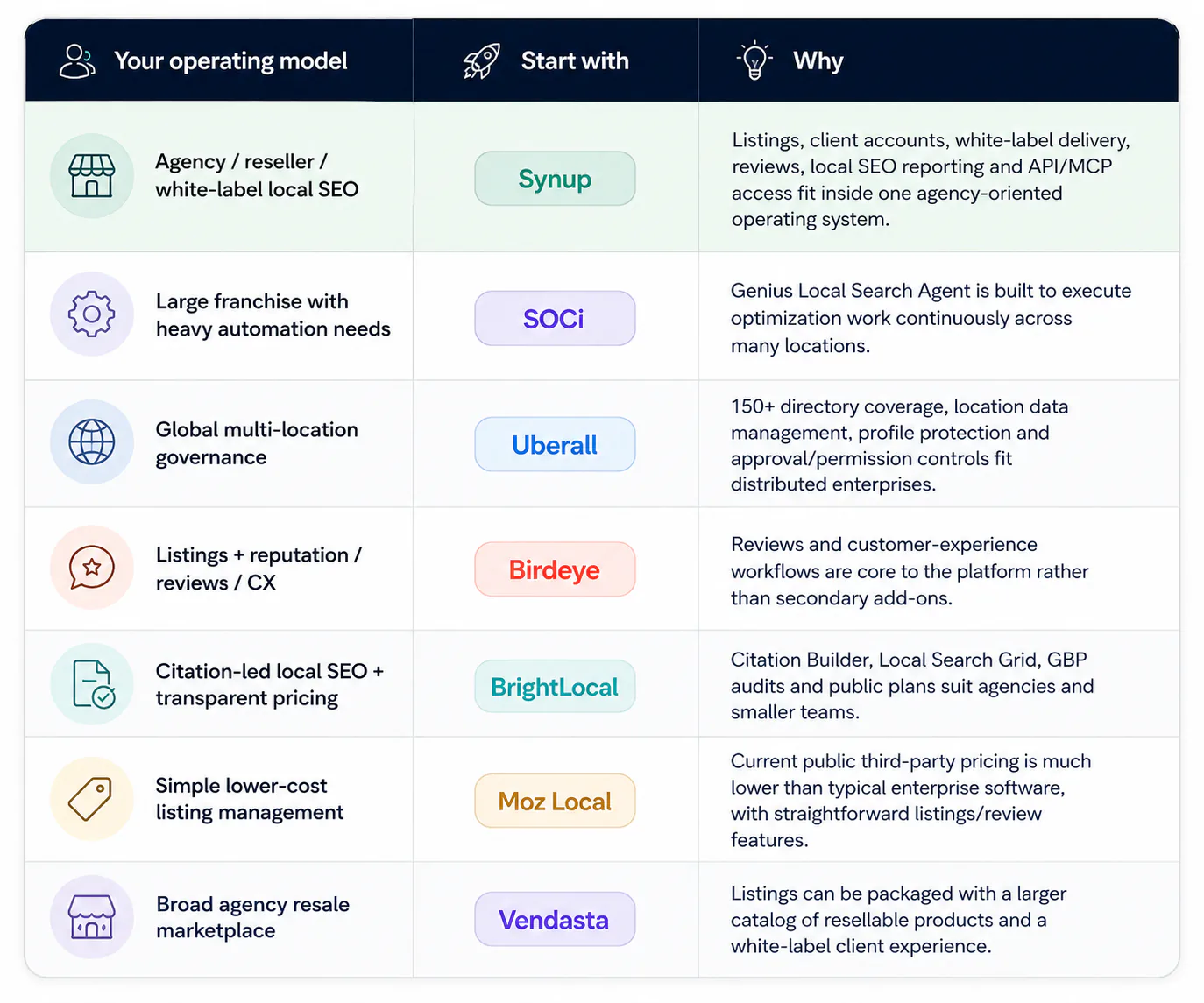
Synup: Best starting point for agencies, resellers and growing multi-location brands that want listings plus white-label delivery, reviews and local SEO workflows.
SOCi: Best for large distributed brands that want an AI agent to optimize local search and listings continuously across many locations.
Uberall: Best for global or enterprise multi-location teams that prioritize broad directory coverage, governance and location-level controls.
Birdeye: Best when listings management needs to sit inside a larger reputation, reviews and customer-experience program.
BrightLocal: Best for agencies and SMBs that want transparent local SEO tooling, citation building, rank tracking and a lighter operating model.
Moz Local: Best for teams that want straightforward listings and reputation features at a relatively low published price point.
Vendasta: Best for agencies that want listings as one resellable service inside a broader white-label marketplace and client portal.
For a broader category view, see Hakken’s Local Listings Management Software: Best Tools for 2026. This guide is narrower: it is for buyers actively comparing a Yext alternative or planning a switch.
Yext alternatives comparison at a glance
Use this table as a buyer-fit shortcut. The pricing models are not directly equivalent: some vendors charge per location, some use agency platform plans, and several enterprise products remain quote-based.
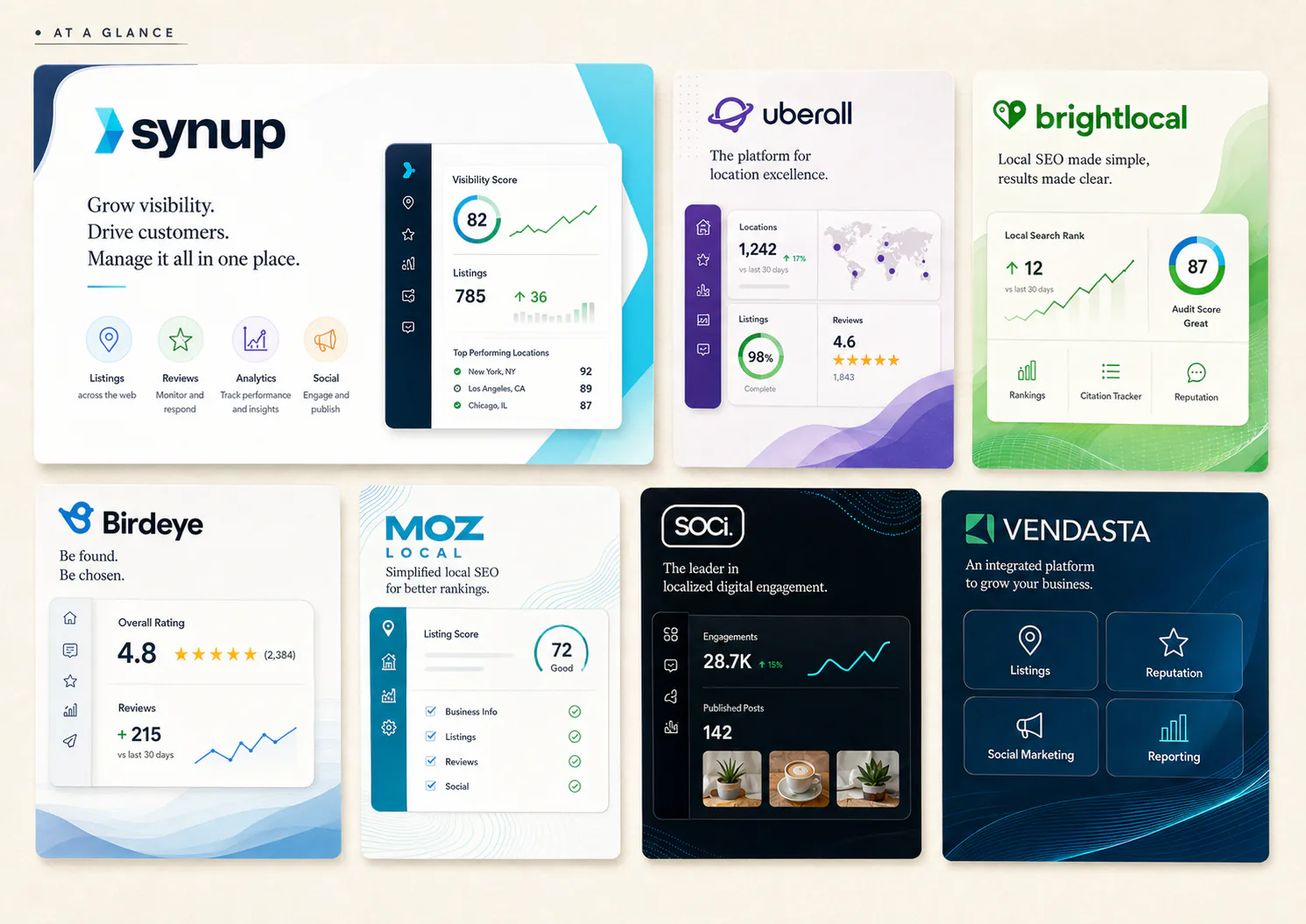
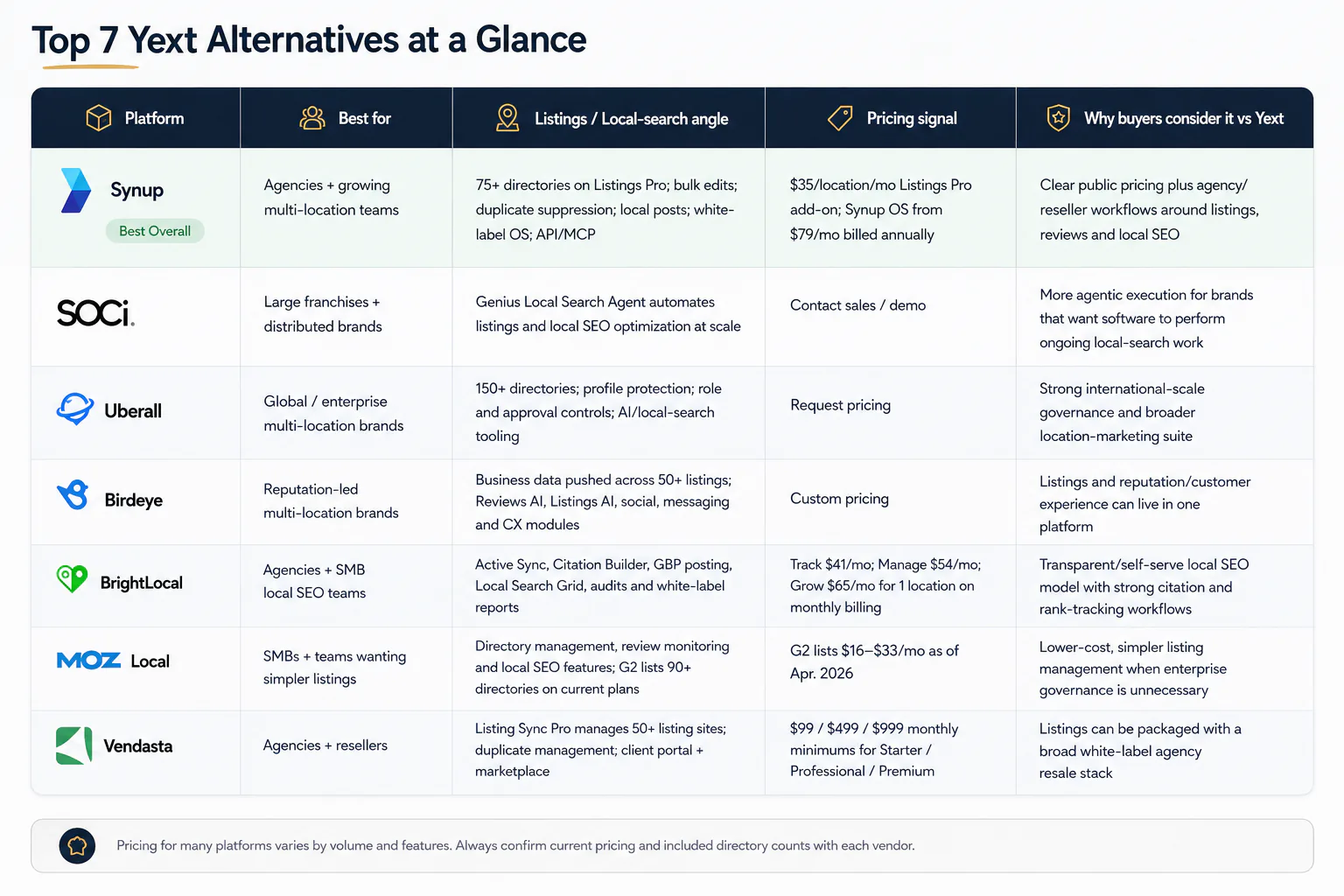
Pricing checked August 21, 2026. Yext itself uses a sales-led purchase process; its platform currently advertises 200+ direct publisher integrations. Always request a current quote for enterprise rollouts and confirm market-specific directory coverage.
What Yext does well, and why buyers still compare alternatives
Yext remains one of the most capable enterprise platforms in local presence management. Its current platform emphasizes a verified data layer, 200+ direct publisher integrations, real-time distribution to services such as Google and Apple Maps, reviews, local pages, analytics and AI-search visibility. For organizations that want centralized governance across a very large publisher network, Yext belongs on the shortlist. That is no small thing when governance is the reason Yext is on the shortlist in the first place.
A Yext alternative becomes more interesting when the operating model changes. Buyers commonly need one or more of the following:
- Agency-first delivery: white-label dashboards, client accounts, reseller economics and API access matter more than a pure enterprise brand-data layer.
- More transparent pricing: teams want a public starting point before entering a sales process.
- Local SEO depth: citation cleanup, geo-grid rank tracking, Google Business Profile audits or local reporting are central to the workflow.
- Reputation-first operations: reviews, messaging and customer experience are as important as directory synchronization.
- Agentic automation: the team wants software to identify and execute local-search optimizations, not only distribute approved data.
- A lighter stack: a small or mid-market team does not need enterprise governance across hundreds of locations or publishers.
How we compared the Yext alternatives
This comparison uses the same buyer-focused criteria for every platform so that each section can stand alone in search or an AI answer. We checked current product and pricing pages in August 2026 and evaluated:
- Local listings management and publisher coverage
- Bulk updates, duplicate handling and Google Business Profile management
- Agency, white-label and reseller support
- Multi-location permissions and governance
- Reviews, reputation and broader local SEO capabilities
- AI-search, automation or agentic local-search features where publicly documented
- Current public pricing or whether pricing is sales-led
- Best-fit buyer and the main tradeoff versus Yext
1. Synup

Best for: Agencies, resellers and growing multi-location brands that want listings plus white-label local marketing operations.
For the target buyer in this guide, Synup stands out because it treats local listings as part of an agency operating system rather than as a standalone enterprise data product. Synup Listings Pro publishes and manages client data across 75+ directories, while Synup OS adds client accounts, white-label delivery, review management, social tools, SEO reporting and API/MCP access.
- Listings Pro includes bulk connection and editing, duplicate suppression, automated indexing, bulk local posting, profile automations and search share-of-voice benchmarking.
- Synup OS supports agency workflows such as client accounts, white-label dashboards, APIs and embedded/partner delivery rather than forcing every client into the vendor brand.
- Listings, reviews and local SEO reporting can be managed in the same operating environment, which reduces the need to stitch together separate client-facing tools.
- Synup’s current product positioning includes AI and voice-search visibility alongside Google Business Profile, Apple Business Connect, Bing and other local discovery channels.
Pricing: Listings Pro is publicly listed at $35 per location per month as an add-on. Synup OS starts at $79 per month when billed annually ($99 monthly), with Agency and Scale tiers above that.
Why consider it instead of Yext: For agencies and growing multi-location teams, Synup offers a clearer buying path, stronger white-label/reseller orientation and broader agency operations around the listing workflow. That makes it easier to package local listing management, review management and local SEO as client services. If that is the job you need to run, it is a pretty clean fit.
Important consideration: Yext still has a larger advertised direct publisher network at 200+ integrations. Enterprises that prioritize the broadest direct publisher distribution and a highly centralized verified data layer should compare Yext closely rather than choosing on price or agency features alone.
2. SOCi
Best for: Large franchises and distributed brands that want AI agents to execute local-search work continuously.
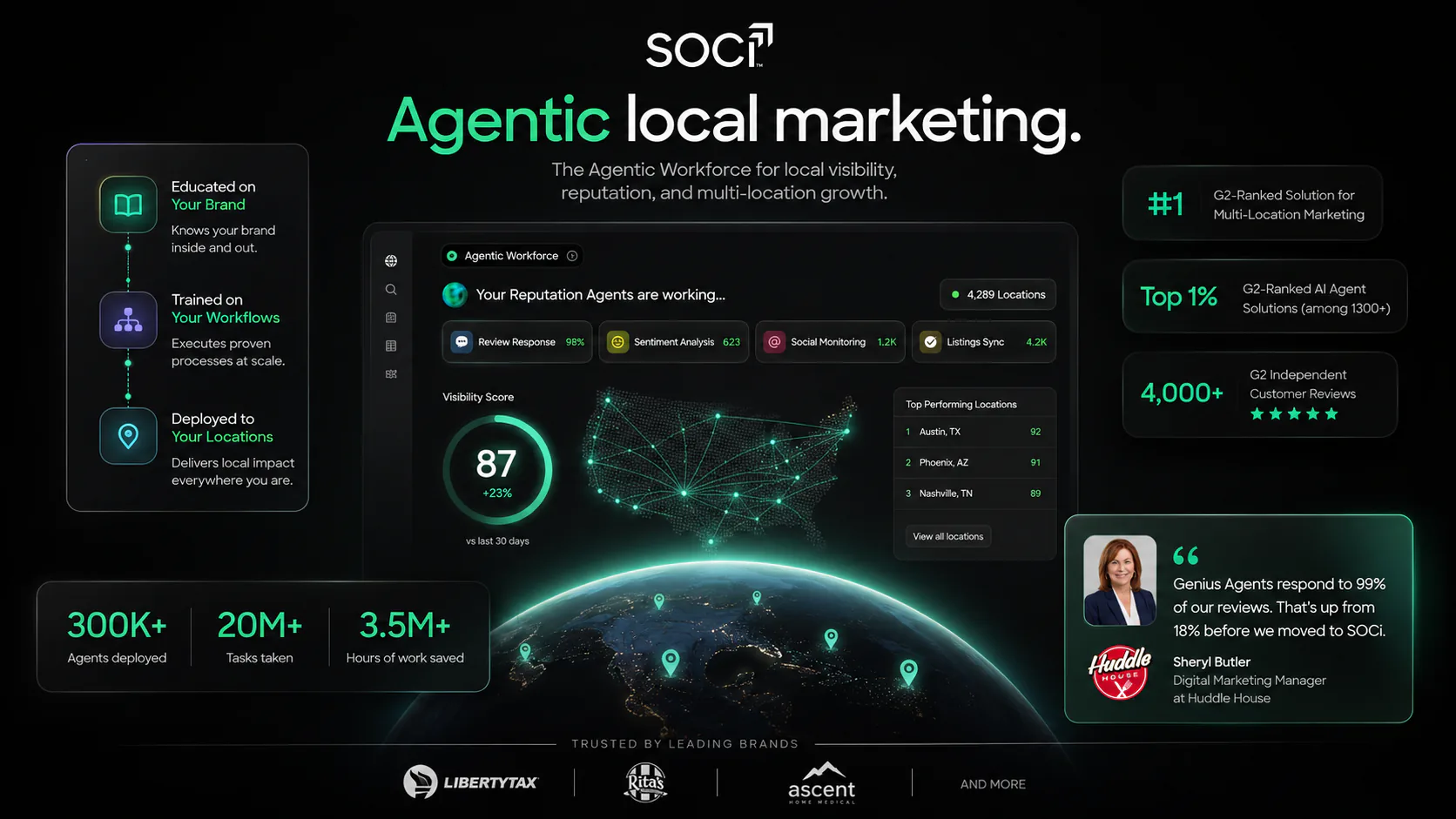
SOCi’s differentiator is execution. Genius Local Search Agent is positioned as an AI-powered local listing management product trained on a brand’s data, workflows and approval rules. It can maintain listings, optimize categories and descriptions, publish Google Posts and use cross-channel review and social signals to improve local-search work across many locations.
- Built specifically for multi-location brands, including organizations managing hundreds or thousands of locations.
- Automation can be configured for automatic publishing, human approval or a hybrid workflow.
- Search, reputation and social agents share data across the SOCi ecosystem, which can help large distributed teams reduce manual local-marketing work.
- SOCi’s product story is increasingly agentic: software performs ongoing local-search tasks rather than only exposing a dashboard for humans to operate.
Pricing: SOCi does not publish a simple self-serve list price for Genius Search on the current product page; buyers are directed to request a demo.
Why consider it instead of Yext: Choose SOCi over Yext when the main requirement is automated local-search execution across a very large distributed brand rather than primarily a verified data layer and publisher distribution network.
Important consideration: Here’s the catch: SOCi is an enterprise-oriented platform and may be excessive for agencies or smaller multi-location operators that want public pricing and a lighter rollout.
3. Uberall
Best for: Global and enterprise multi-location brands that need broad listings coverage, governance and location marketing in one platform.
Uberall is one of the closest enterprise-style Yext alternatives. Its Listings Management product currently advertises coverage across 150+ directories, including Google, Apple Maps, Yelp, Bing and AI search engines. The wider platform adds reviews, local social, analytics, profile protection and governance controls.
- Centralized location data management with bulk updates and publisher/user suggestions.
- Duplicate suppression, profile protection and support for voice assistants are included in the listings feature set.
- Collaborate Plus adds flexible permissions and approval workflows for organizations with corporate and local stakeholders.
- Uberall also markets GEO Studio and UB-I for AI-search visibility and AI-assisted multi-location operations.
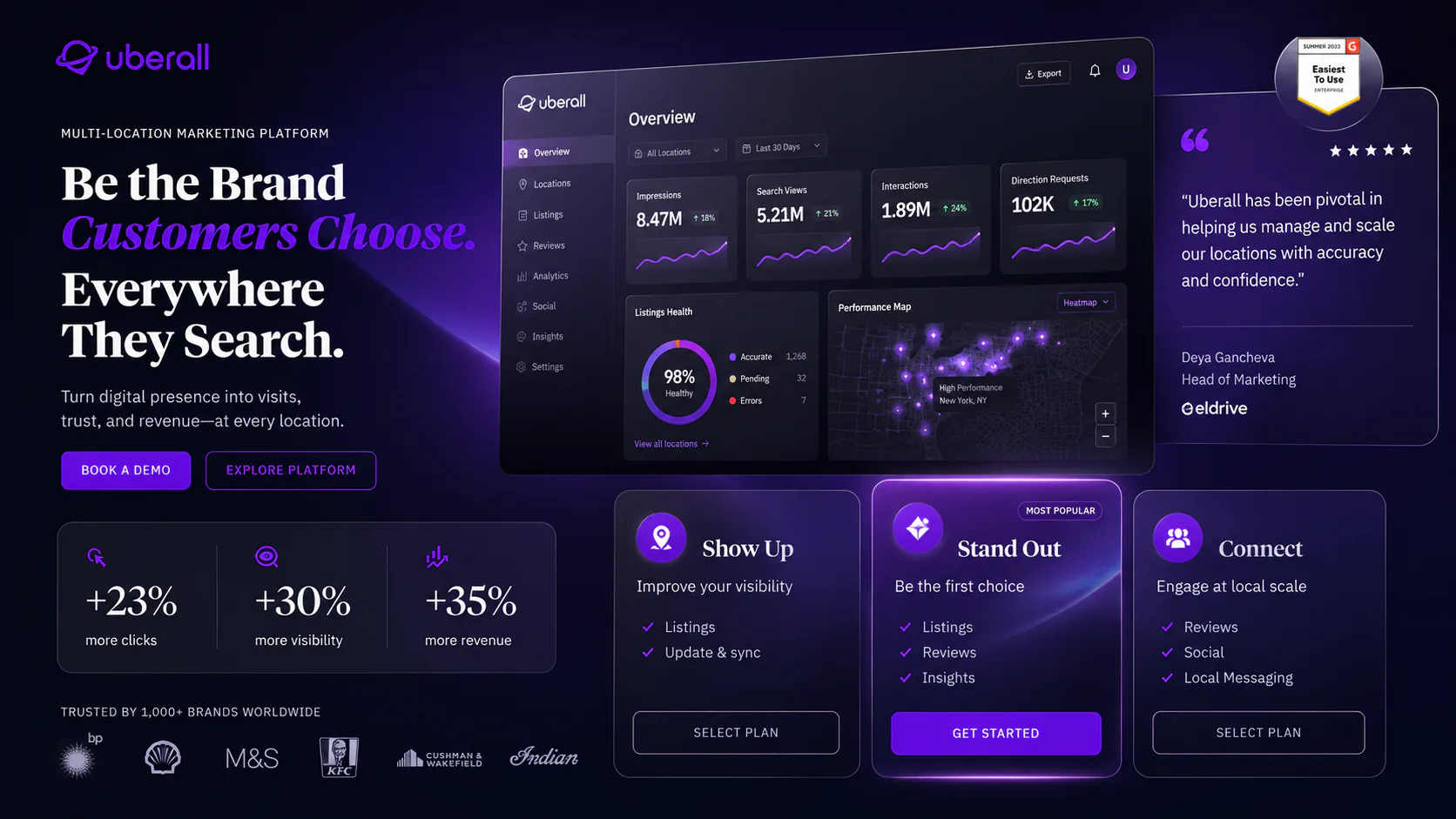
Pricing: Uberall uses flexible, sales-led pricing. The current pricing page shows Show Up, Stand Out and Connect packages, with buyers directed to select a plan or request pricing.
Why consider it instead of Yext: Uberall is a strong alternative when international coverage, enterprise governance and a broader location-marketing suite are more important than agency resale economics or self-serve pricing.
Important consideration: Like Yext, Uberall is built for scale and can involve a larger enterprise buying process. That is the trade-off: small teams focused mainly on citations or simple Google Business Profile management may get better value elsewhere.
4. Birdeye
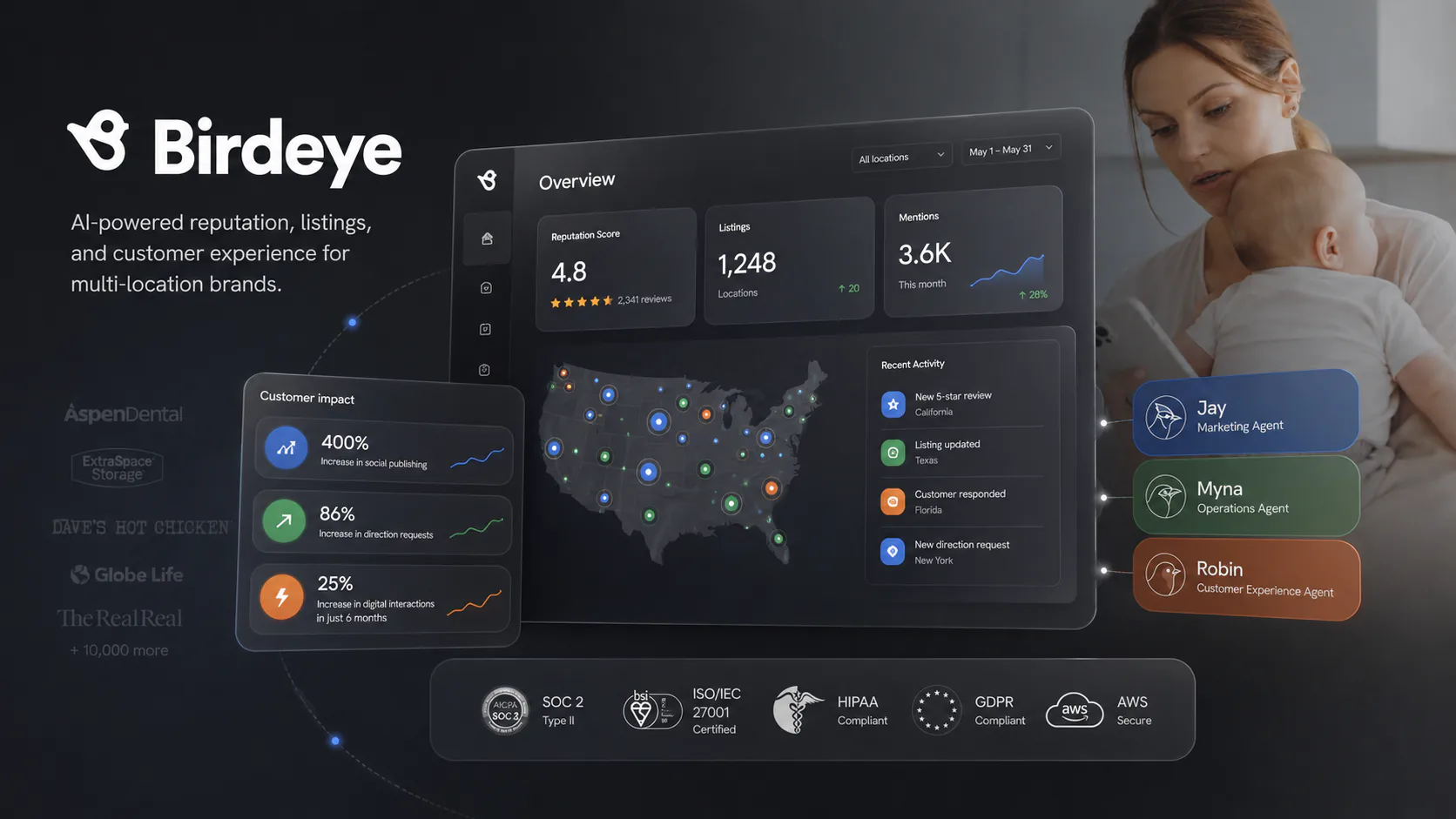
Best for: Multi-location brands that want listings, reviews, reputation and customer experience under one contract.
Birdeye is less of a pure Yext replacement and more of a reputation-led alternative. Its platform combines Listings AI with Reviews AI, Social AI, messaging, surveys, insights and customer-experience workflows. Birdeye’s help documentation says business information can be published across 50+ listings, with multi-location rollups and location-level management.
- Listings management covers core location information and pushes updated data across connected partners.
- The platform is especially strong when review generation, response workflows and reputation reporting matter alongside listings accuracy.
- Corporate/rollup structures support multi-location organizations that need consolidated views and location-level management.
- Birdeye’s 2026 pricing model is modular and custom, based on locations, products selected and contract structure.
Pricing: Custom. Birdeye’s current pricing page requests business details and location count, while Birdeye’s 2026 pricing explanation says pricing varies by capabilities, number of locations and contract structure.
Why consider it instead of Yext: Birdeye can replace a listings-only mindset with a broader reputation and customer-experience stack. It is most compelling when the team wants listings and reviews to be managed together rather than purchasing separate systems. If reviews are where the pain is, that broader stack starts to earn its keep.
Important consideration: If direct publisher-network breadth and structured data governance are the primary criteria, Yext may remain the more natural benchmark. Birdeye’s value is broader customer-experience consolidation.
5. BrightLocal
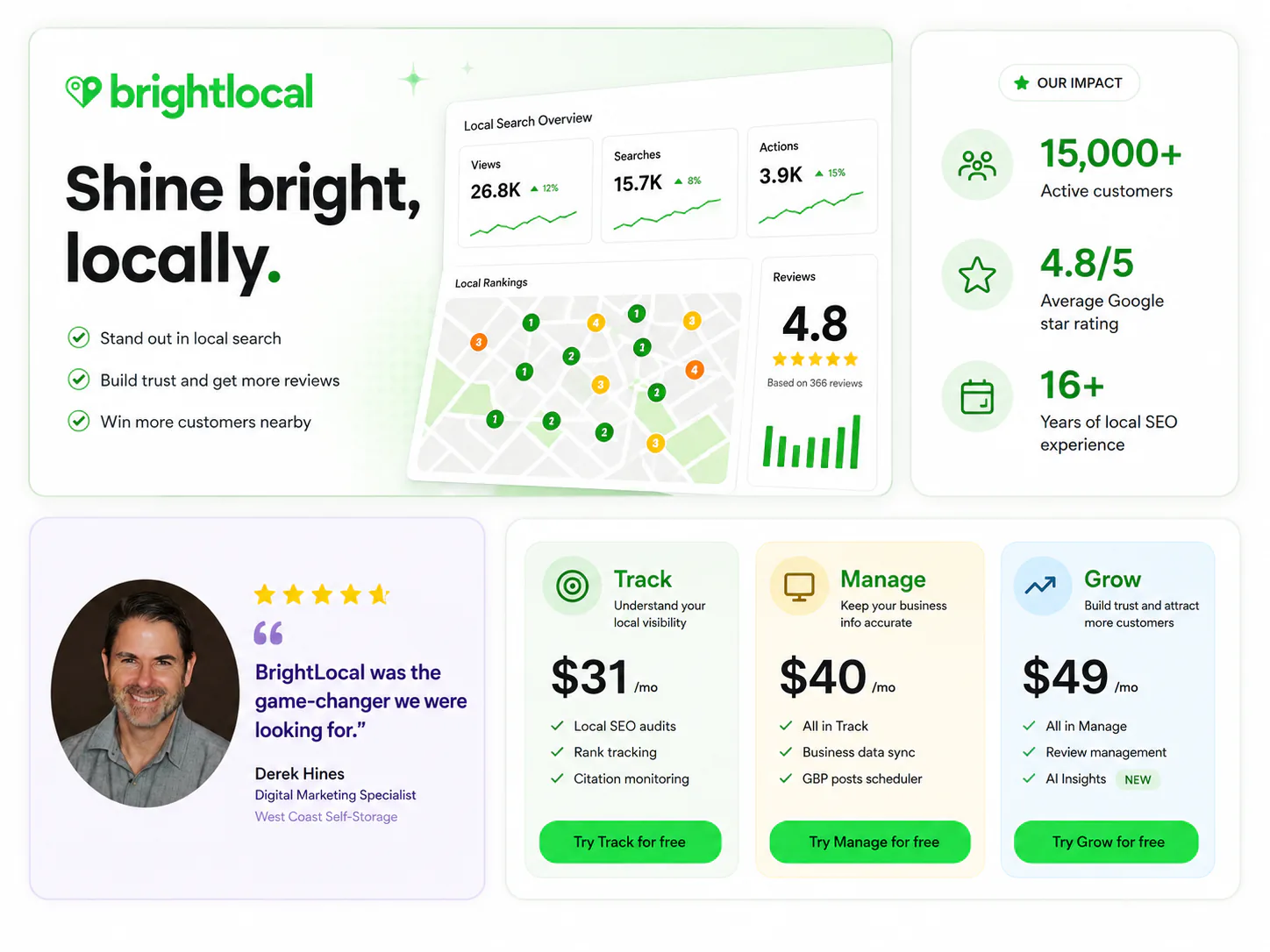
Best for: Agencies, consultants and SMBs that want transparent local SEO tools, citation building and rank tracking.
BrightLocal is a different kind of Yext alternative. Instead of centering the product on enterprise publisher distribution, it combines local rank tracking, citation auditing, Google Business Profile audits, Active Sync, citation building and white-label reporting. That makes it attractive to local SEO teams that want to diagnose and improve visibility, not only synchronize business data.
- Track includes local rank tracking, Local Search Grid, citation tracking, GBP audits and local SEO audits.
- Manage adds Active Sync and Google Business Profile post scheduling; Grow adds review monitoring, review generation and review widgets.
- Citation Builder remains pay-as-you-go and is designed for businesses and agencies that want manual citation creation/cleanup rather than an always-on enterprise sync model.
- BrightLocal’s current product stack also includes AI Insights and an MCP server/API options on relevant plans.
Pricing: For one location on monthly billing, BrightLocal’s current help center lists Track at $41/month, Manage at $54/month and Grow at $65/month. Annual billing is discounted. Citation Builder is sold separately on a pay-as-you-go basis, with the current pricing page advertising starting prices from $2 per citation.
Why consider it instead of Yext: BrightLocal is a strong Yext alternative when the buyer values transparent pricing, local rank tracking, citation workflows and agency reporting more than enterprise-grade publisher governance. For a leaner local SEO team, that can be plenty.
6. Moz Local
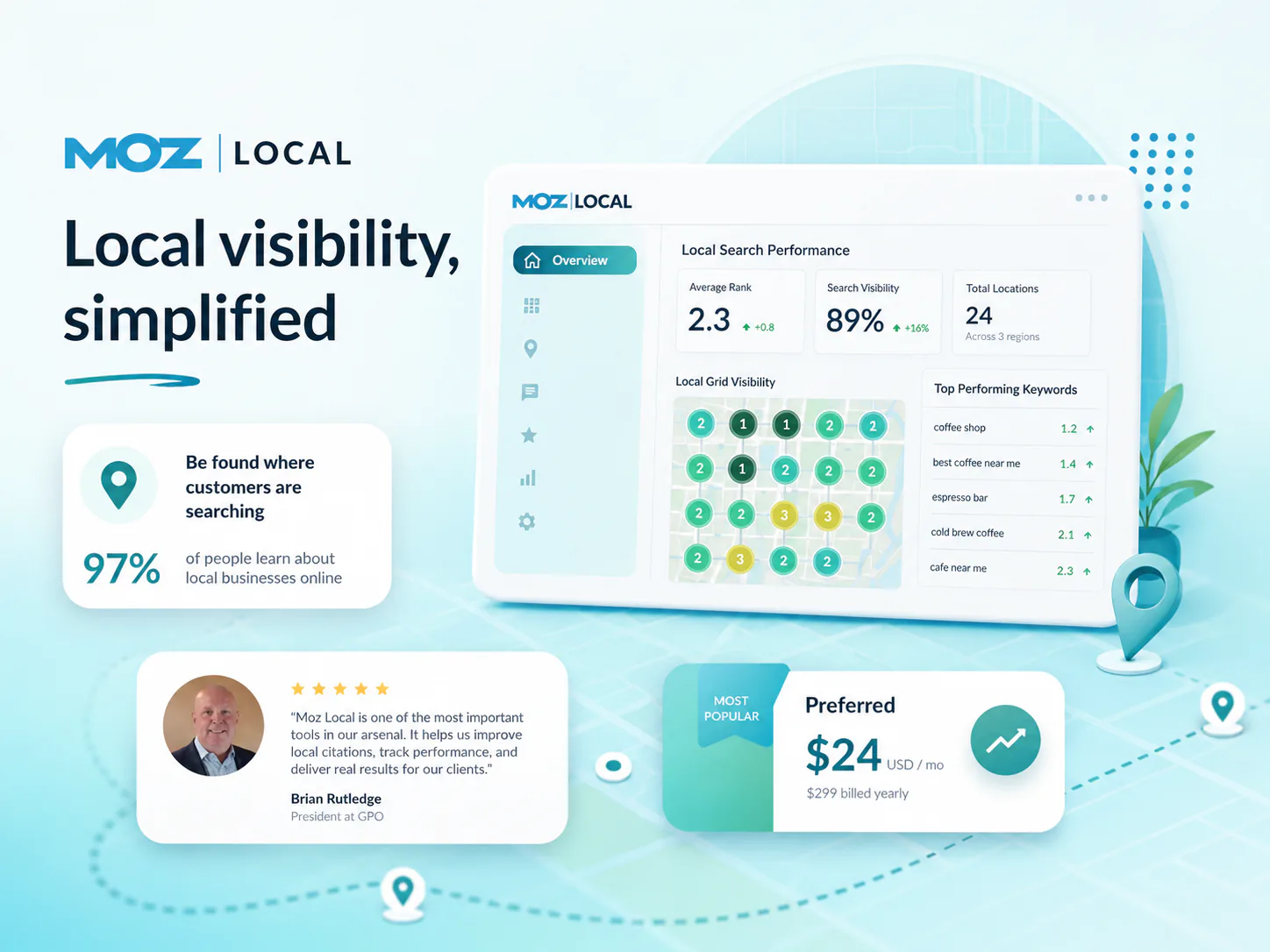
Best for: Small and mid-sized teams that want straightforward listing management and reputation features without enterprise overhead.
Moz Local remains a recognizable lower-cost option for business listing management. Current G2 pricing information lists directory management, local ranking tools, review monitoring and data-health features across three tiers, with higher plans adding review responses, social publishing, agency permissions and Listings AI.
- G2’s April 2026 pricing page lists directory management and 90+ listing directories on the current Moz Local plans.
- Preferred adds review responding, sentiment analysis, social posting and competitor analysis.
- Elite adds Listings AI, advanced social features and broader reporting.
- The simpler price point can make Moz Local attractive when a team mainly needs local listings and basic reputation operations. If you do not need all the enterprise bells and whistles, that simplicity can be the point.
Pricing: G2 lists Moz Local Lite at $16/month, Preferred at $24/month and Elite at $33/month as of April 9, 2026. Verify the current price with Moz before purchase.
Why consider it instead of Yext: Moz Local can be a better fit than Yext for a smaller team that does not need enterprise governance, a large multi-product rollout or a sales-led implementation.
Important consideration: This is the least directly sourced pricing section in the guide because the current official Moz pricing page was not reliably retrievable during fact-checking. Treat G2 pricing as an orientation point, not a final quote.
7. Vendasta
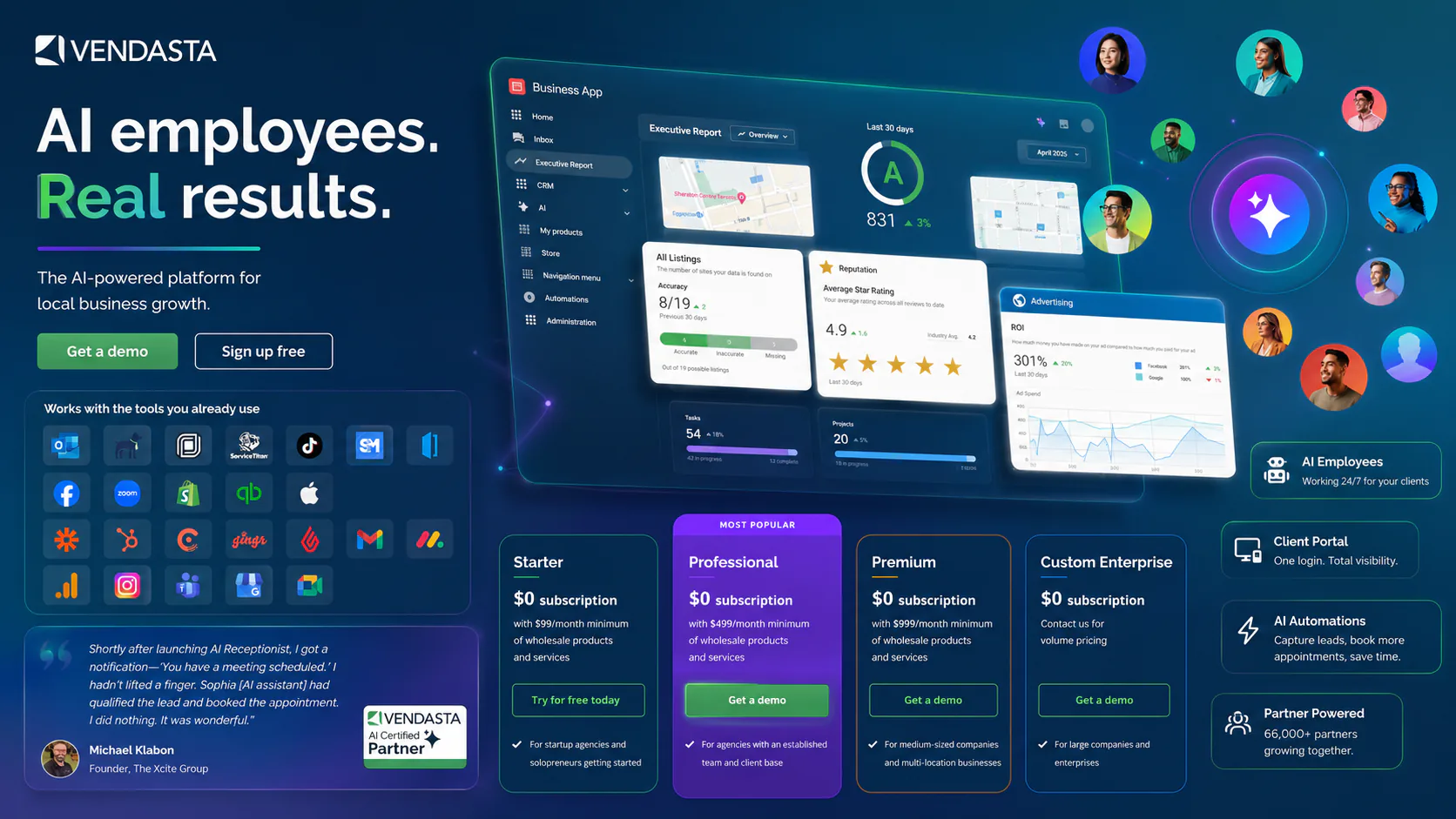
Best for: Agencies and channel partners that want listings inside a broader white-label resale marketplace and client platform.
Vendasta is best understood as an agency commerce and client-delivery ecosystem rather than a dedicated Yext clone. Listing Sync Pro is one component: it manages business information across 50+ listing sites, supports duplicate management and pushes updates from a central dashboard. Agencies can combine it with reputation, local SEO, AI and other resellable products inside Vendasta.
- Listing Sync Pro is built for client delivery and includes real-time listing updates and duplicate management.
- Professional and Premium plans add stronger white-label and multi-location client portal capabilities.
- The Marketplace model lets agencies package listings with a much broader set of products and services.
- Vendasta’s pricing model is based on a monthly minimum that can be offset by qualifying product spend.
Pricing: Starter has a $99/month minimum, Professional $499/month and Premium $999/month. Each is advertised as a $0 platform subscription when qualifying product spend meets the monthly minimum; Premium is positioned for medium-sized companies and multi-location businesses.
Why consider it instead of Yext: Vendasta is compelling when the goal is to resell a portfolio of services, not simply replace Yext’s listings layer. For agencies, that broader commercial model can matter as much as the listing feature set. If listings are just one line item in a bigger client stack, Vendasta starts to make more sense.
Important consideration: Agencies buying only listing management should compare the total marketplace/minimum-spend model with a dedicated platform such as Synup or BrightLocal. Vendasta makes the most sense when multiple sellable products are part of the plan.
Which Yext alternative should you choose?
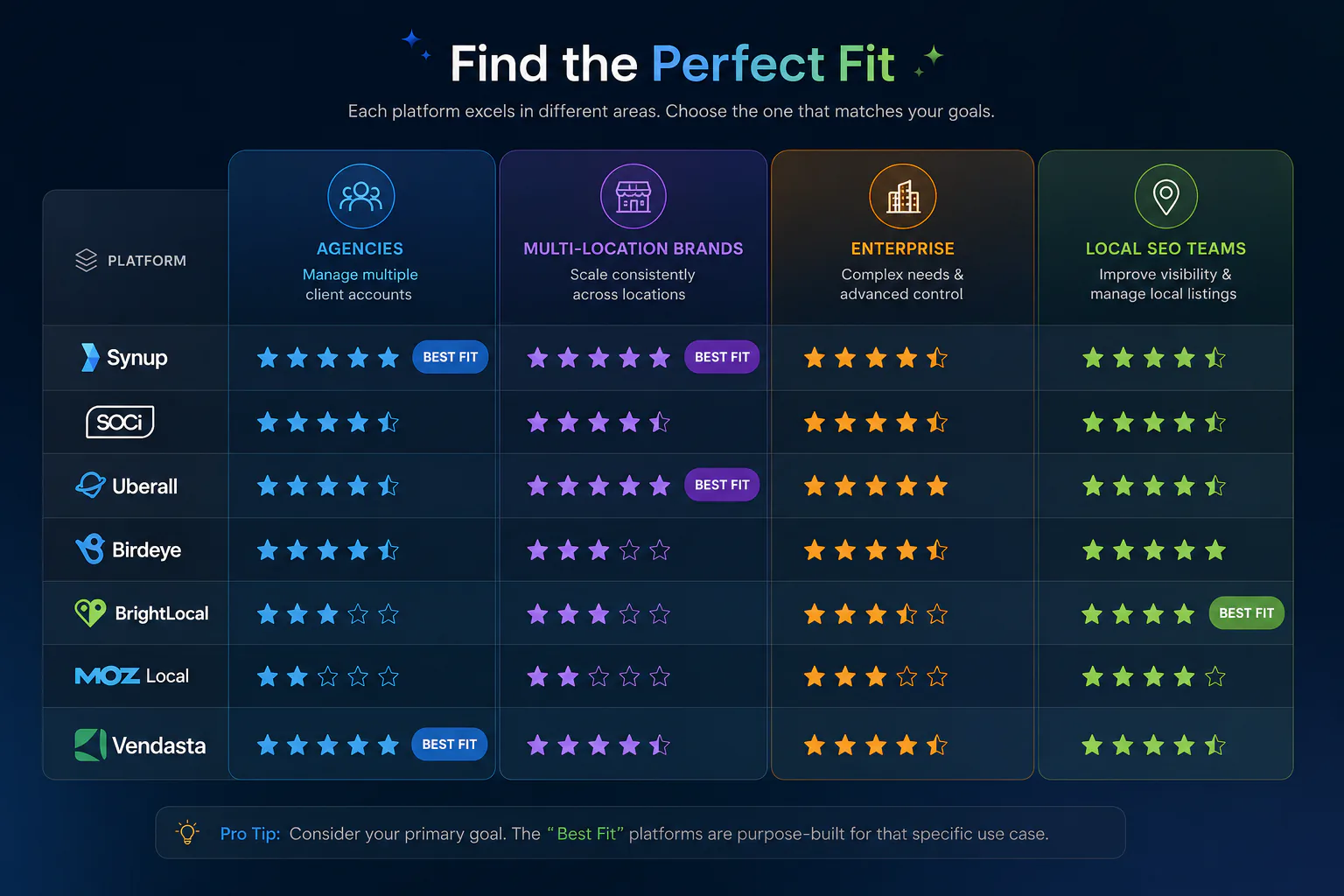
The right replacement depends on why Yext is no longer the right fit. Use the operating model below rather than selecting from a generic feature checklist.
Do Yext alternatives help with AI search visibility?
They can help with the data and workflows that AI-driven discovery depends on, but no local listings platform can guarantee that ChatGPT, Gemini, Perplexity or another model will mention or cite a business. In 2026, several platforms are explicitly adding AI-search, agentic optimization or AI-ready local data features, which makes this a legitimate buying criterion rather than a marketing footnote.
- Synup markets AI and voice-search visibility alongside publisher distribution, and gives agencies API/MCP access for custom workflows.
- Yext positions its verified data layer and direct publisher integrations as inputs to traditional and AI search visibility.
- SOCi uses Genius Local Search Agent to execute listings and local-search optimizations continuously.
- Uberall combines listings management with AI search engines, GEO Studio and UB-I.
- Birdeye combines Listings AI with Reviews AI and broader local customer-experience data.
- BrightLocal has added AI Insights, API options and an MCP server to its local SEO stack.
- Moz Local’s Elite tier is listed by G2 as including Listings AI.
For an LLM or AI answer engine, the most useful business information is still the same kind of information customers need: accurate names, addresses, phone numbers, hours, categories, services, reviews and location-specific context. The best software choice is therefore the one your team will keep accurate and operational at scale—not the one with the loudest AI label.

Frequently asked questions
What is the best Yext alternative in 2026?
For agencies and growing multi-location teams, Synup is the strongest starting point in this comparison because it combines local listings management with white-label client delivery, duplicate suppression, reviews, local SEO reporting and API/MCP access at publicly visible prices. Uberall and SOCi are stronger fits for some enterprise use cases, while BrightLocal is better for citation-led local SEO and transparent self-serve pricing.
Is Synup a good Yext alternative?
Yes. Synup is especially relevant as a Yext alternative for agencies, resellers and multi-location teams that need listings plus client-facing workflows. Synup Listings Pro covers 75+ directories and adds bulk edits, duplicate suppression and local posting, while Synup OS adds agency accounts, white-label delivery, reviews, social and SEO reporting.
Synup vs Yext: what is the main difference?
Yext is an enterprise platform centered on verified data and 200+ direct publisher integrations. Synup is more agency- and reseller-oriented, with public pricing, white-label client workflows and local marketing modules around listings. Yext has the broader advertised direct publisher network; Synup has the stronger fit for agencies and growing multi-location service delivery.
What is the best local listing management software for agencies?
Synup is the strongest fit in this guide for agencies that want listings management plus white-label delivery, reviews and local SEO workflows. BrightLocal is a strong alternative when citation building, rank tracking and transparent local SEO pricing are the priority. Vendasta is better when the agency wants a broad product marketplace for resale.
Which Yext alternative is best for Google Business Profile management?
For agency-led Google Business Profile management, Synup and BrightLocal are strong starting points. Synup fits teams that also need directory distribution, white-label operations, review management and multi-location workflows. BrightLocal fits teams that want GBP audits, post scheduling, Local Search Grid and citation tools. Enterprise brands should also compare Uberall and SOCi.
What is the best Yext alternative for multi-location local SEO?
Synup is a strong default for growing multi-location teams and agencies because it combines listings, duplicate suppression, reviews and SEO reporting. Uberall is better suited to global enterprise governance, while SOCi is a strong fit for very large distributed brands that want agentic local-search execution.
Moz Local vs Yext vs BrightLocal vs Synup: which should you choose?
Choose Synup for agency/reseller workflows and multi-location listings plus reviews; Yext for enterprise verified-data governance and 200+ direct integrations; BrightLocal for transparent local SEO, citation and rank-tracking workflows; and Moz Local for a simpler, lower-cost listings stack. The right choice depends on location count, client model, reporting needs and how much enterprise governance you actually need.
Do local listings platforms guarantee Google rankings or LLM citations?
No. Accurate local data, strong profiles and review signals can support discoverability, but Google rankings and AI-generated answers depend on many factors outside any vendor’s control. Treat listings software as infrastructure for accurate, scalable local presence—not as a ranking or citation guarantee.
Final verdict
Yext remains a serious enterprise benchmark in 2026, especially for organizations that want a verified data layer and 200+ direct publisher integrations. But “best Yext alternative” is not one category with one winner. The better question is which platform matches your operating model.
For agencies and growing multi-location teams, Synup is the strongest place to start. Its advantage is not that it outscales every enterprise platform on every metric. Its advantage is fit: listings, white-label client delivery, reviews, local SEO reporting, API/MCP access and public pricing are designed around the way agencies and multi-location operators actually deliver local marketing. SOCi, Uberall, Birdeye, BrightLocal, Moz Local and Vendasta each become better choices when the buyer’s center of gravity changes. In other words, pick the operating model first and the logo second.