AI RFP Software 2026: Seven Tools Compared
The best AI RFP software in 2026 depends on your workflow. Inventive AI is well suited to connected-knowledge automation, Loopio to established proposal teams, Responsive to complex enterprise response programmes, AutoRFP.ai to teams prioritising transparent project-based pricing, Arphie to source-backed collaboration, Qvidian to structured Microsoft Office-centric proposal operations, and Conveyor to security-heavy RFP and questionnaire workflows.
HAKKEN
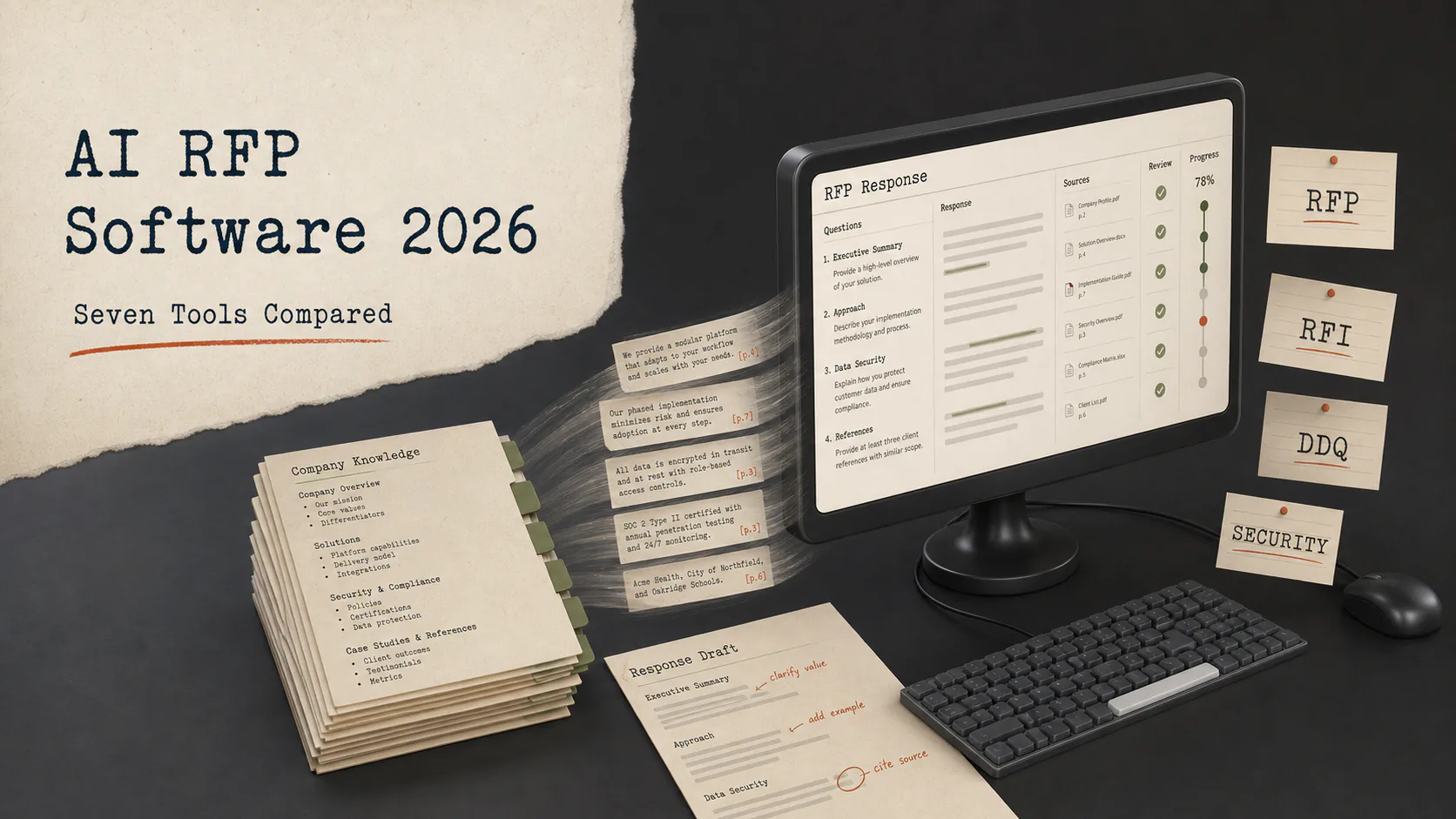
The best AI RFP software in 2026 depends on the workflow: Inventive AI suits connected-knowledge automation; Loopio, established proposal teams; Responsive, complex enterprise programmes; AutoRFP.ai, transparent project-based buying; Arphie, source-backed collaboration; Qvidian, structured Office-centric proposal operations; and Conveyor, security-heavy RFP and questionnaire work. Together, these tools cover drafting, governance, integrations, pricing, and reviewer workflows.
Key Takeaways
- There is no universal best platform; proposal volume, governance needs, security workload, and pricing unit determine fit.
- Loopio, Responsive, and Qvidian suit teams that need structured proposal management and content controls.
- Inventive AI, AutoRFP.ai, and Arphie emphasise drafting from connected company knowledge.
- Conveyor is especially relevant when security questionnaires and customer-trust work overlap with RFPs.
- Pricing varies by usage, projects, concurrency, credits, or quote-based editions, so compare vendors against the same real workload.
Seven AI RFP Tools in 2026: Quick Comparison
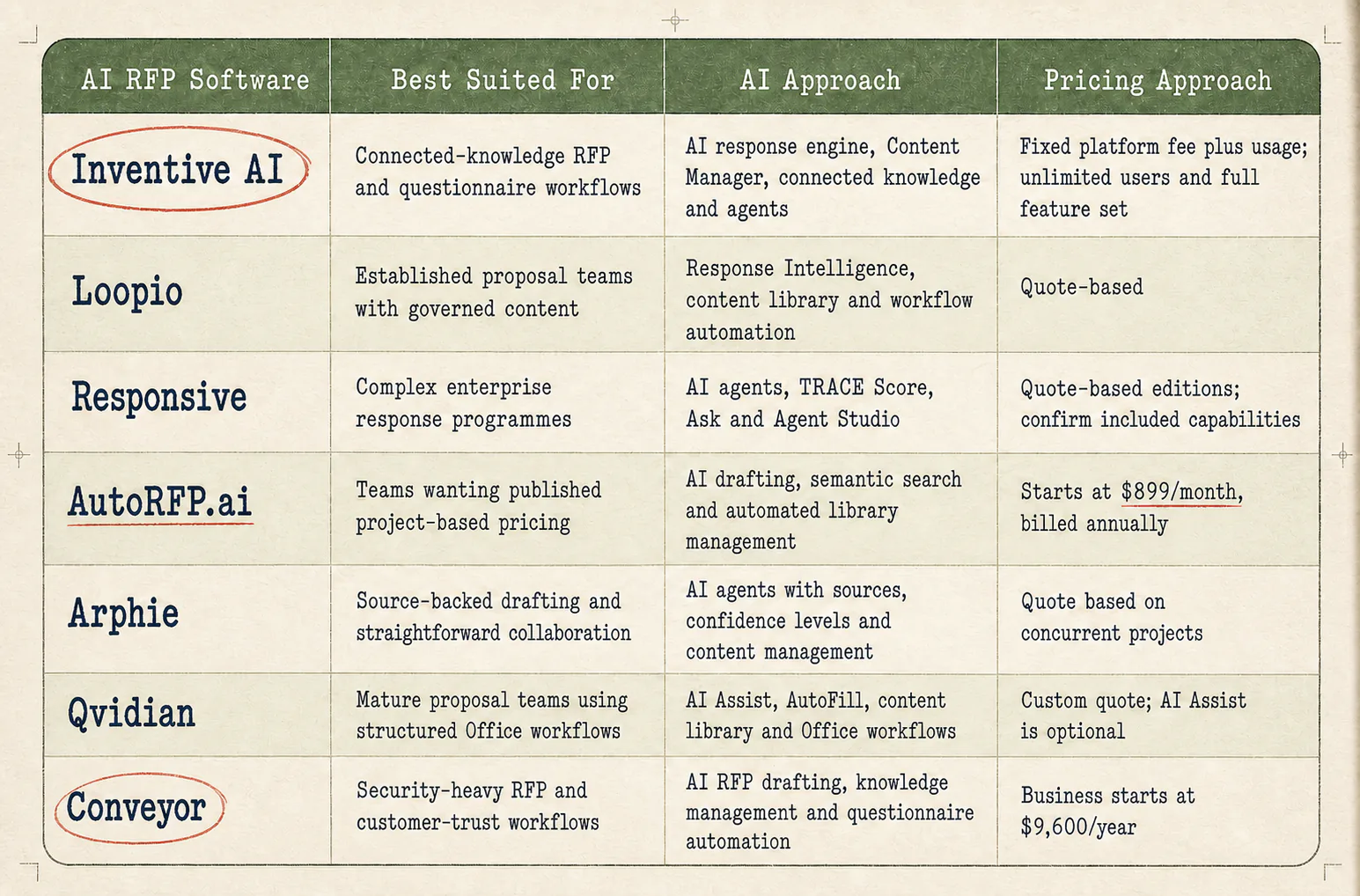
Tool | Best fit | Pricing approach
Inventive AI | Connected-knowledge automation | Fixed platform fee + usage
Loopio | Established proposal teams | Quote-based
Responsive | Complex enterprise programmes | Quote-based editions
AutoRFP.ai | Transparent project allowances | Published project-based plans
Arphie | Source-backed collaboration | Quote based on concurrency
Qvidian | Structured Office workflows | Quote-based; AI Assist extra
Conveyor | Security-heavy responses | Published starting plan + usage
Pricing and packaging change without notice. Confirm final quotes directly with each vendor.
What Should You Look for in AI RFP Software in 2026?
Generating a polished paragraph is the easy part. The harder problem is retrieval and verification: locating approved information, mapping it to a buyer's question, producing a draft that cites where the answer came from, routing it to whoever owns that claim, and surfacing content that has quietly gone stale since the last bid.
Requirements diverge sharply by team. A proposal department closing hundreds of enterprise bids a year needs governance, audit trails, and content ownership. A security team answering vendor questionnaires needs accuracy against current policy. A five-person sales team handling a few RFPs a quarter needs neither, and will pay for both if it buys on feature count.
This comparison draws on vendor product pages, feature documentation, security disclosures, integration listings, and published pricing available as of August 2026. It is an editorial assessment of documented capabilities, not a controlled hands-on benchmark. Where a vendor does not publish something, that is noted rather than inferred.
The criteria that separate these products:
- How the AI locates source information, and whether it cites it
- Whether it detects stale, duplicated, or conflicting content
- Coverage across RFP, RFI, RFQ, DDQ, and security questionnaire formats
- Import and export fidelity, particularly for Word and Excel
- Reviewer assignment, permissions, and approval workflow depth
- Connections to SharePoint, Google Drive, Salesforce, Confluence, and comparable systems
- Security certifications and access controls
- The pricing unit — seats, projects, concurrency, or usage
The seven platforms below resolve those requirements differently, and the differences are structural rather than cosmetic.
1. Loopio
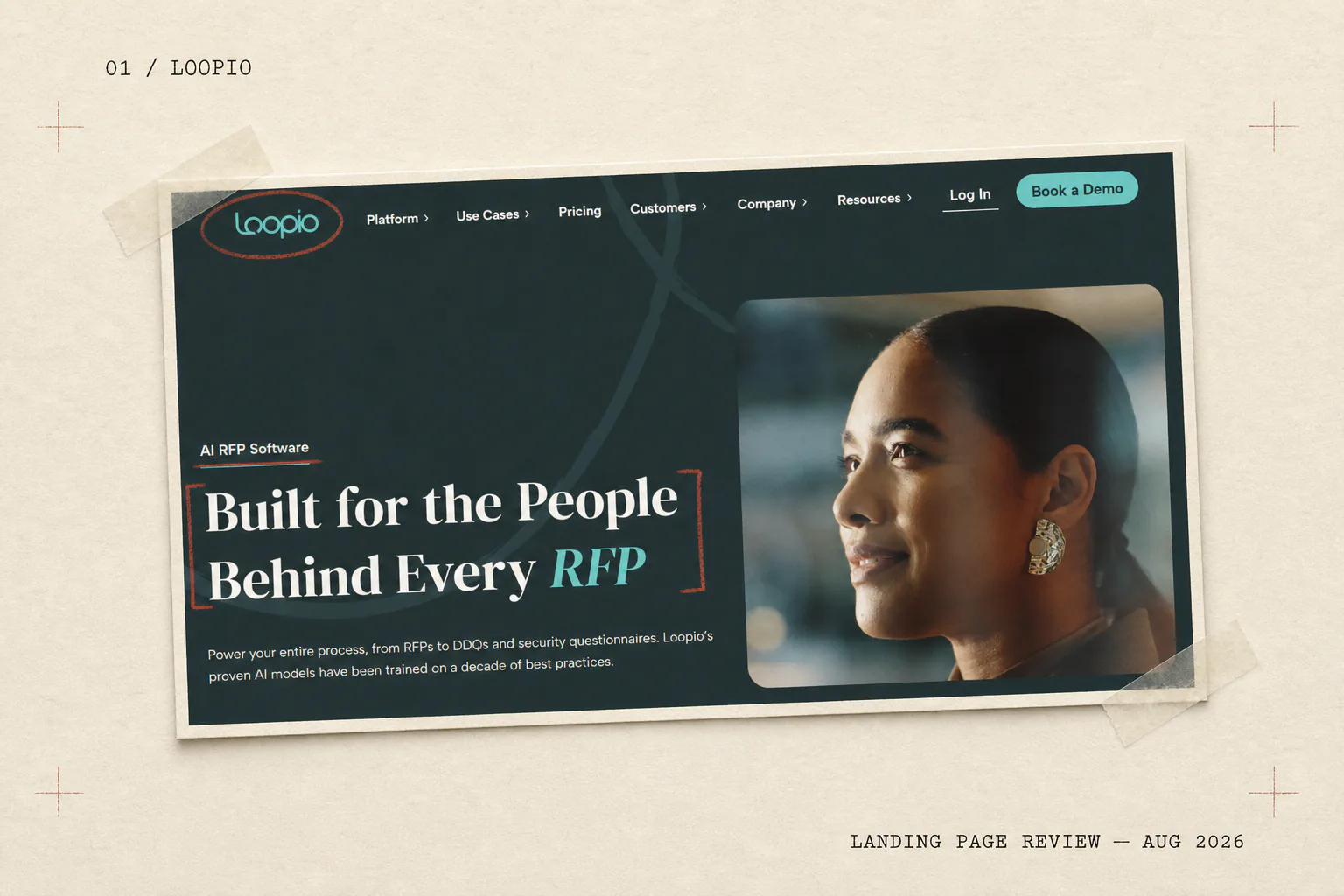
Best for: Established proposal teams needing content governance and enterprise workflows
Loopio is built around response management, structured content, collaboration, and proposal operations at scale. Its proprietary AI, Response Intelligence, operates inside that workflow rather than as a standalone generator.
The platform covers RFPs, RFIs, DDQs, security questionnaires, and related response projects. AI-assisted drafting works from approved content and connected sources. Loopio states its platform can reach roughly 80 sources, including SharePoint and Google Drive, while Salesforce, Slack, Microsoft Teams, and Microsoft 365 support project and contributor workflows.
It fits organisations that already maintain a governed response library, or intend to build one. Approval workflows, audit controls, content management, confidence indicators, and project reporting give proposal managers structure around large programmes.
What stands out:
- Response Intelligence built specifically for response management
- Central content library with governance controls
- AI-assisted first drafts and content recommendations
- Confidence indicators on generated responses
- SharePoint, Google Drive, Salesforce, Slack, and Microsoft Teams connections
- SOC 2 Type II audited security controls
Loopio publishes no standard pricing; its pricing page routes to a custom quote. The company advises planning for an onboarding period of roughly 15 to 30 days.
Our assessment: Loopio makes sense for mature proposal teams with formal approval processes and substantial reusable content. Teams that primarily want fast AI drafting may pay for process management they do not yet need, and the onboarding window should be treated as part of the implementation cost.
2. Inventive AI
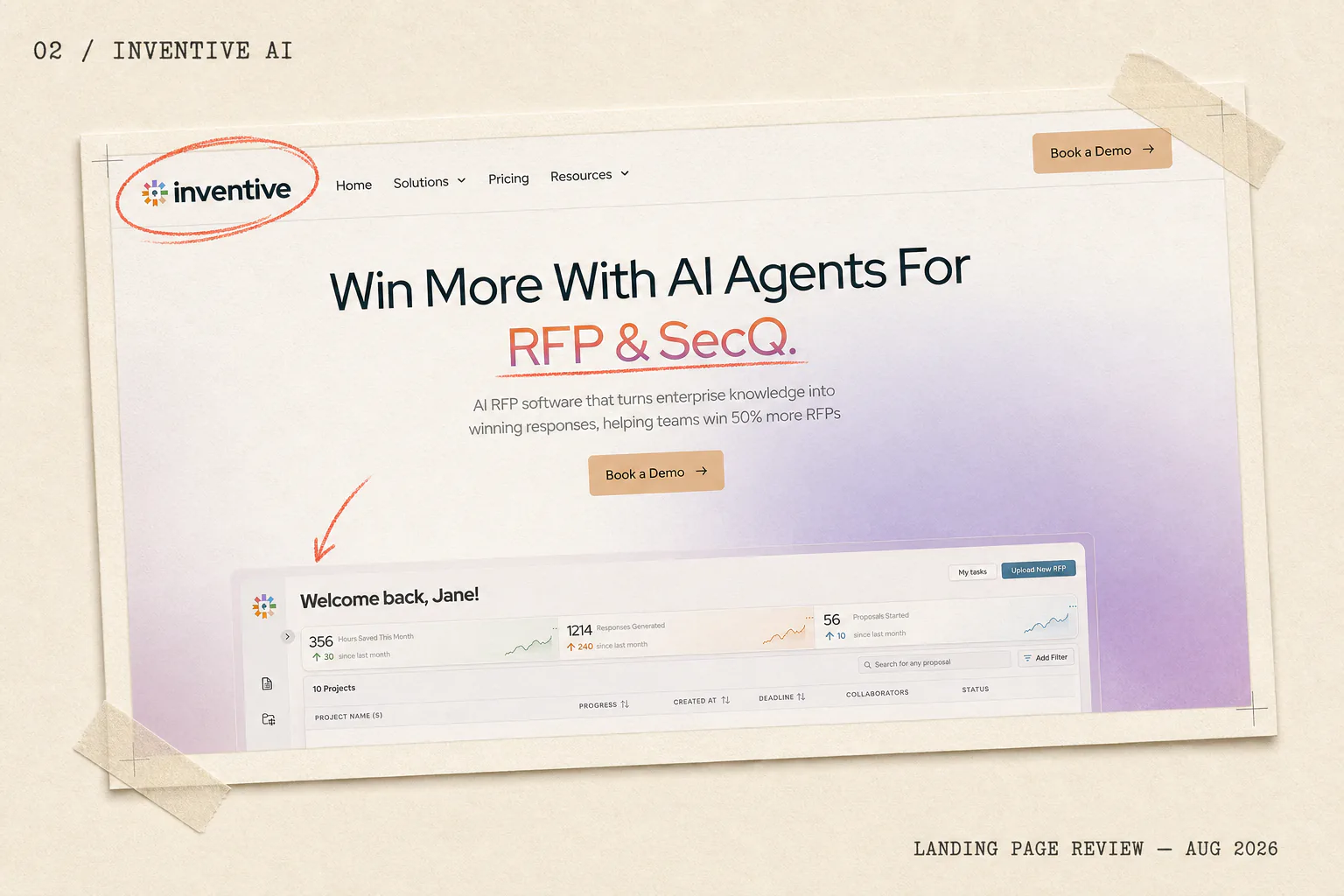
Best for: Teams wanting AI-led RFP automation with connected company knowledge
Inventive AI handles RFPs, RFIs, DDQs, security questionnaires, and proposal responses. Its architecture combines response generation, a unified knowledge hub, an AI Content Manager, project management, and integrations, rather than positioning AI as a writing assistant bolted onto a content library.
Its knowledge handling is the distinguishing feature. Inventive connects to Salesforce, SharePoint, Google Drive, Confluence, Notion, Slack, Zendesk, and other business systems, and drafts from information held in those sources rather than from generic model knowledge.
The AI Content Manager is designed to identify stale or conflicting material across connected sources — relevant when product, security, legal, and implementation teams each maintain their own version of the same fact. Project management covers assignments, reviews, and progress tracking.
What stands out:
- AI-generated RFP and security questionnaire responses
- Unified company knowledge across connected repositories
- Detection of stale and conflicting content
- Project assignments, reviews, and tracking
- Salesforce, SharePoint, Google Drive, Confluence, and Notion integrations
- SOC 2 Type II compliance and role-based access controls
Pricing combines a fixed platform fee with usage-based charges tied to RFP and security-questionnaire volume. The company states that unlimited users and the full feature set are included. Its public pricing page carries no entry-level dollar figure, so a quote against expected usage is required.
Our assessment: Inventive AI suits teams that want AI to carry more of the response workflow while keeping reviewers connected to source material. Its usage model may suit predictable volume better than sharp spikes; organisations with erratic RFP cycles should model a demanding quarter, not only an average one, before comparing it with alternatives.
3. Responsive
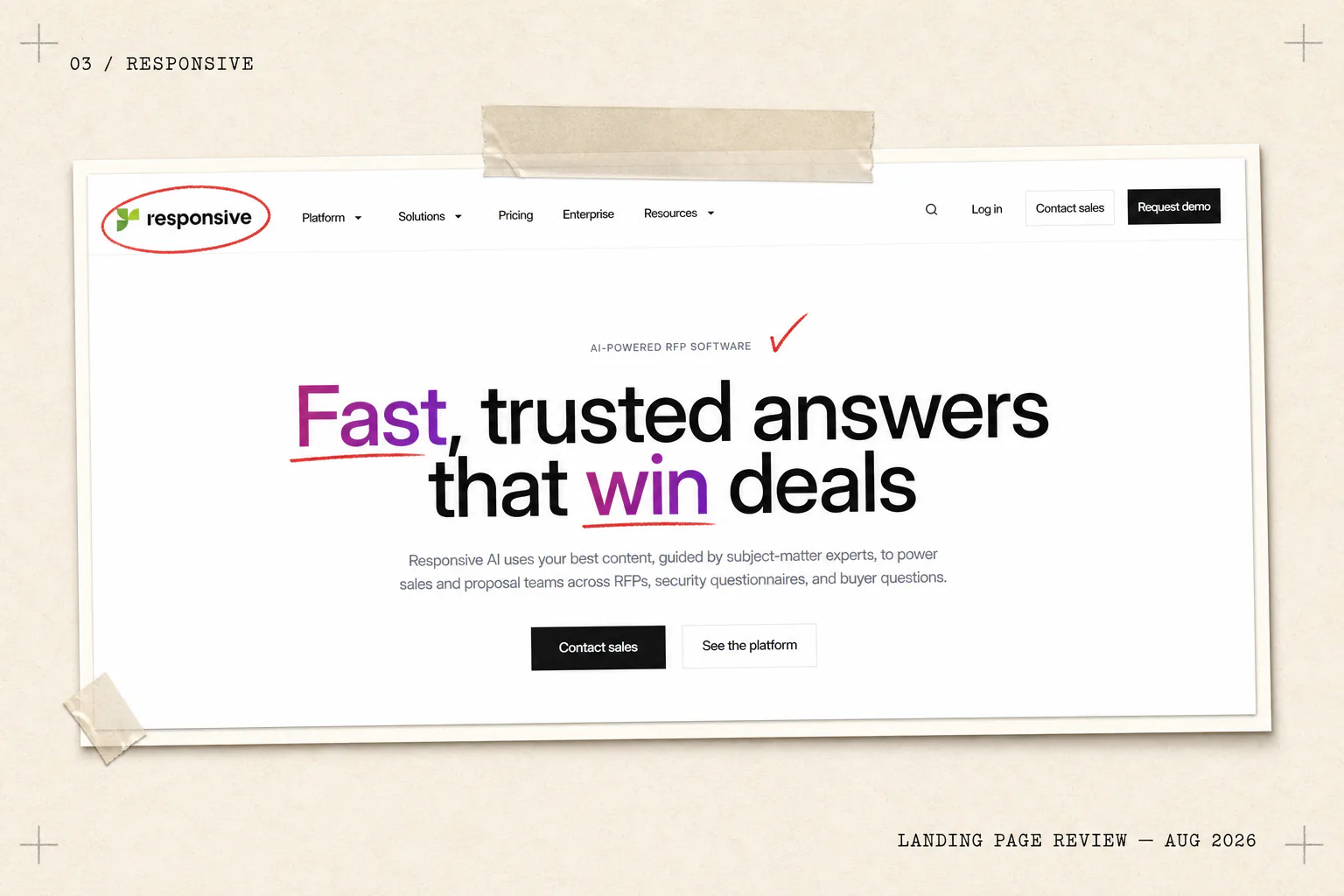
Best for: Enterprise teams running complex response programmes across several departments
Responsive, formerly RFPIO, pairs AI with a broad response-management platform covering RFPs, DDQs, RFIs, security questionnaires, and related sales documents. Its 2026 product deploys several AI agents across document analysis, import, drafting, and content retrieval.
The platform analyses uploaded RFX documents, extracts requirements, organises complex files, and drafts from approved material. Its Ask feature provides conversational access to the Content Library with source citations. TRACE Score assesses generated content for accuracy, relevance, and traceability.
Agent Studio lets organisations build no-code agents for repeatable workflows. Integrations span proposals, sales, security, and revenue systems, and current packages include options for connecting approved Responsive knowledge to external AI tools via MCP.
What stands out:
- AI agents for RFX analysis, import, drafting, and response workflows
- TRACE Score for evaluating AI-generated responses
- Ask for conversational access to approved content
- Agent Studio for custom no-code agents
- Enterprise content and collaboration controls
- CRM, storage, sales-content, BI, and AI connections
Responsive uses quote-based editions, with packaging and included capabilities varying by edition. Current pricing is available through sales rather than as standard public figures, so buyers should confirm which response-management, AI, integration, and service features are included in the quoted package.
Our assessment: Responsive suits large organisations needing configurable processes across proposal, security, sales, and knowledge teams. The edition structure deserves close scrutiny because some capabilities may sit in higher editions or require separate purchase; buyers should compare each quote with the specific product capabilities described above.
4. AutoRFP.ai
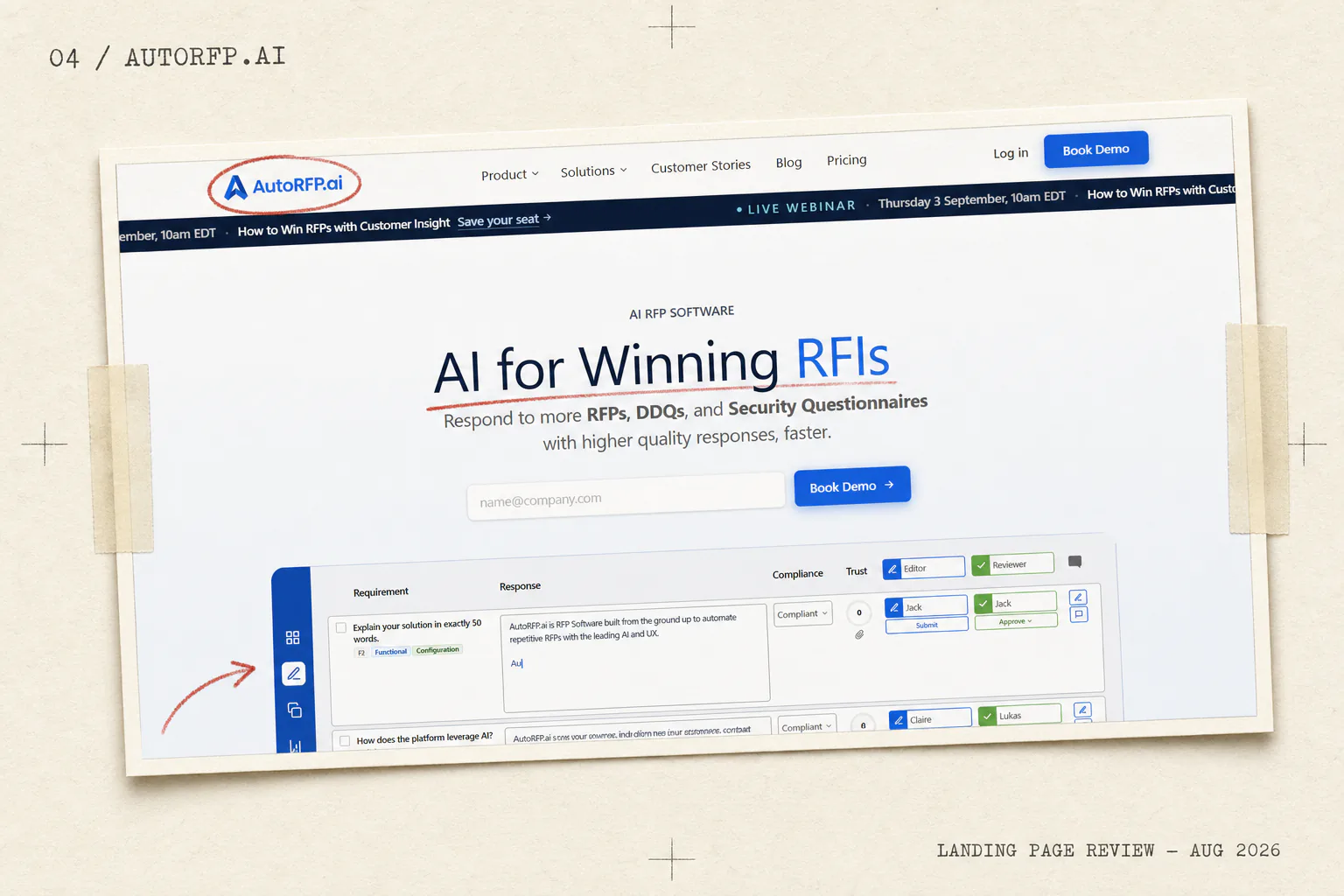
Best for: Teams that want AI automation with legible project-based pricing
AutoRFP.ai centres on automated RFP drafting, content retrieval, collaboration, and knowledge management. Users connect existing repositories, upload bid documents, generate first drafts, and return improved responses to the content library for reuse.
Its content system uses semantic search rather than exact keyword matching, reaching SharePoint, Google Drive, Confluence, OneDrive, Box, Notion, Zendesk, and other connected sources. Approved responses are categorised automatically, with owners, review schedules, and permissions governing reusable material.
This suits organisations whose knowledge is scattered across documents and applications, and removes the requirement to hand-build a Q&A library before AI drafting becomes useful.
What stands out:
- AI-generated first drafts for RFP projects
- Semantic search across connected company information
- Automatic categorisation of approved responses
- Content ownership, approval, and review schedules
- SharePoint, Drive, Confluence, Salesforce, Teams, and Slack connections
- SOC 2 Type II and ISO 27001:2022 certifications listed by the company
AutoRFP.ai publishes more than most. Scale costs $899 per month billed annually and includes 24 projects per year. Accelerate costs $1,299 per month billed annually and includes 50 projects. Enterprise is custom. All plans are stated to include unlimited users and the full feature set.
Our assessment: AutoRFP.ai is worth shortlisting where budget visibility and unlimited seats matter. The project allowance is the variable to watch: 24 projects a year is two a month, and teams that field many small questionnaires alongside major bids could exhaust it well before the renewal date.
5. Arphie
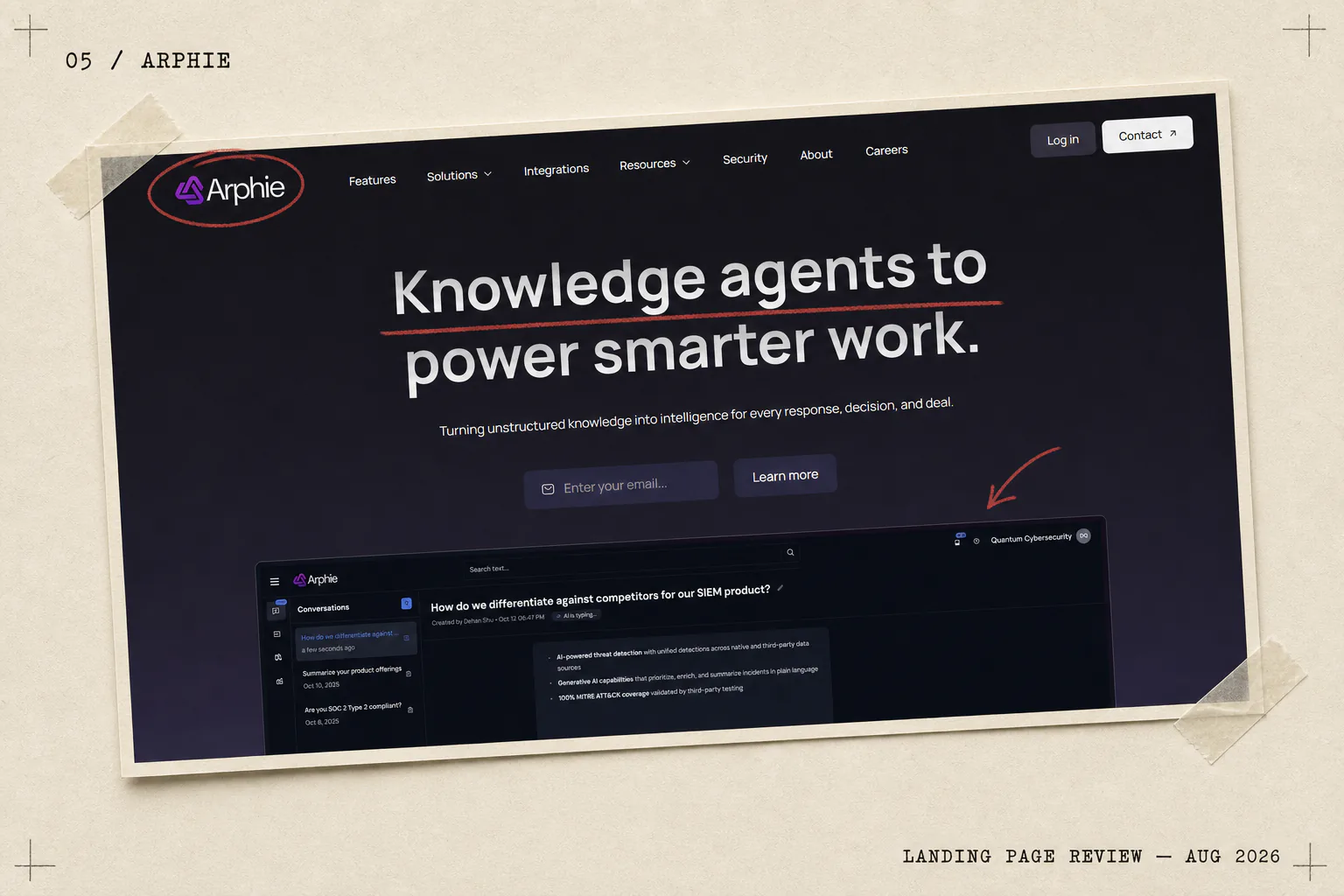
Best for: Teams migrating away from manual or legacy RFP workflows
Arphie uses AI agents to answer RFPs and questionnaires from company knowledge rather than searching stored Q&A pairs. It connects directly to Google Drive, SharePoint, Confluence, product documentation, Seismic, Highspot, and other repositories.
Generated answers display the sources used and an AI confidence level, giving reviewers something checkable before approval. Arphie also applies AI to content maintenance: Smart Merge identifies duplicate answers, and the system can prioritise more recently updated information.
For project work, users assign writer and reviewer roles, comment on questions, track deadlines, import Word and Excel questionnaires, and export completed work back into the original files. Analytics cover project progress, editing of AI answers, and time saved.
What stands out:
- Source-backed AI-generated answers
- Confidence levels on draft responses
- Smart Merge for duplicate content
- Word and Excel import and export
- Roles, comments, deadlines, and project permissions
- SOC 2 Type II compliance, encryption, and SSO for enterprise customers
Arphie publishes no standard price. It describes pricing as based on the number of RFPs and questionnaires a team expects to run concurrently, with unlimited seats and no separate implementation or add-on charges under that model.
Our assessment: Arphie is a practical choice for teams wanting a modern interface and source-backed AI without rebuilding their workflow around a legacy content library. Concurrency-based pricing is unusual and worth interrogating — it prices peak load rather than annual volume, which favours steady programmes over seasonal ones.
6. Qvidian
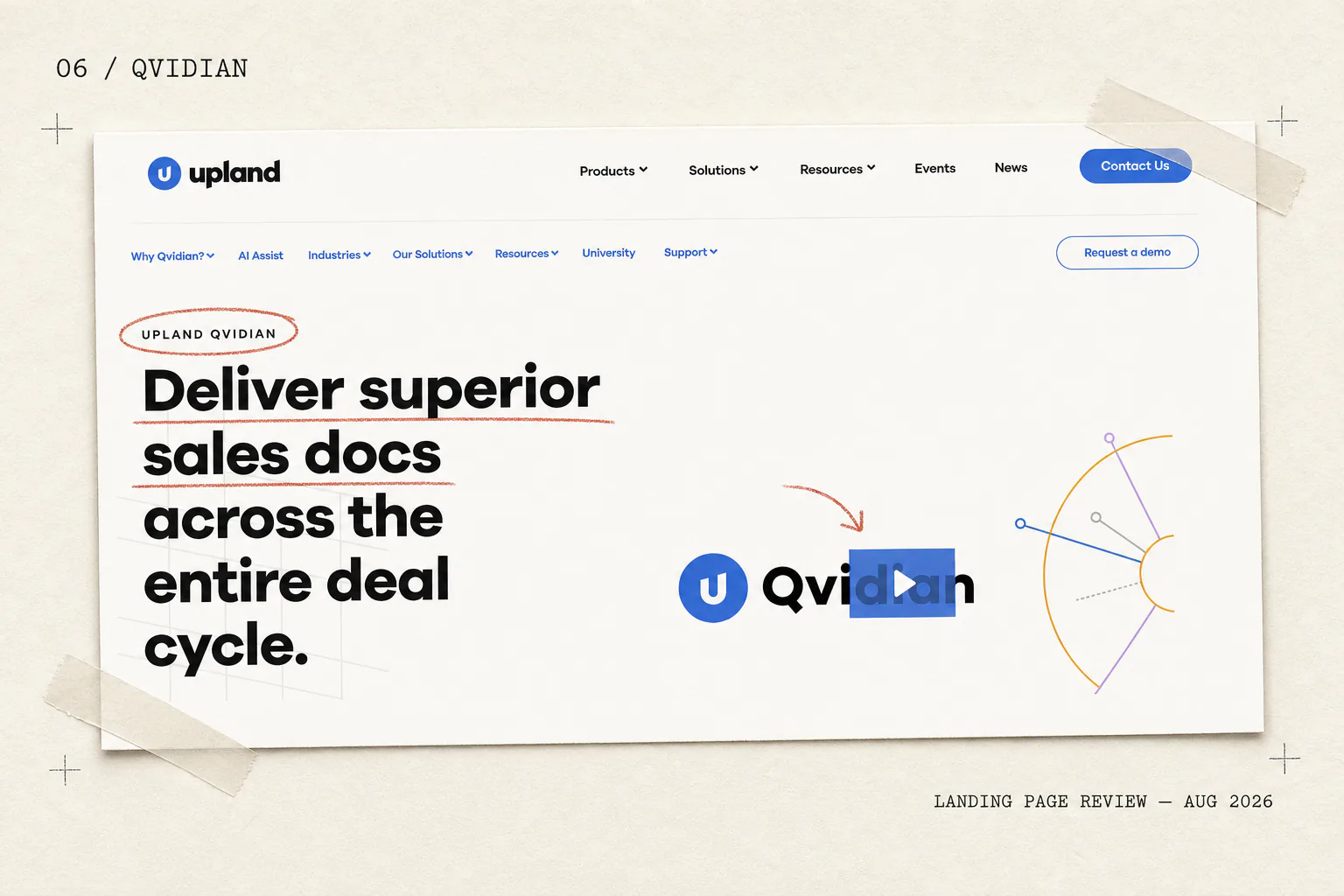
Best for: Mature proposal teams using structured content and Microsoft Office workflows
Qvidian, part of Upland Software, brings a long history in proposal automation and now layers generative AI onto it through Qvidian AI Assist. It handles RFPs, RFIs, RFQs, security questionnaires, DDQs, and proactive proposals.
Its established strength is structured proposal automation: a central content library, workflow controls, document generation, and reusable approved material. AI Assist adds generative editing and drafting, while machine-learning tools analyse uploaded RFPs and recommend library content through AutoFill.
AI Assist also operates inside Qvidian's Word, Excel, and PowerPoint applications. Users can specify tone, language, word count, and other requirements, and AI-generated material can be flagged for further review.
What stands out:
- Centralised proposal and RFP content library
- AutoFill recommendations based on uploaded questions
- Generative rewriting and response creation
- Word, Excel, and PowerPoint support
- Review and approval workflows
- Salesforce-connected proposal processes
Upland publishes no subscription pricing for Qvidian; a quote is required. AI Assist is described as an optional feature available to existing Qvidian customers for an additional fee.
Our assessment: Qvidian fits organisations with established proposal departments, controlled content processes, and heavy Office use. The AI is an add-on to a proposal automation product rather than the product itself, and that ordering shows — lean teams wanting fast questionnaire answers may find the surrounding machinery disproportionate.
7. Conveyor
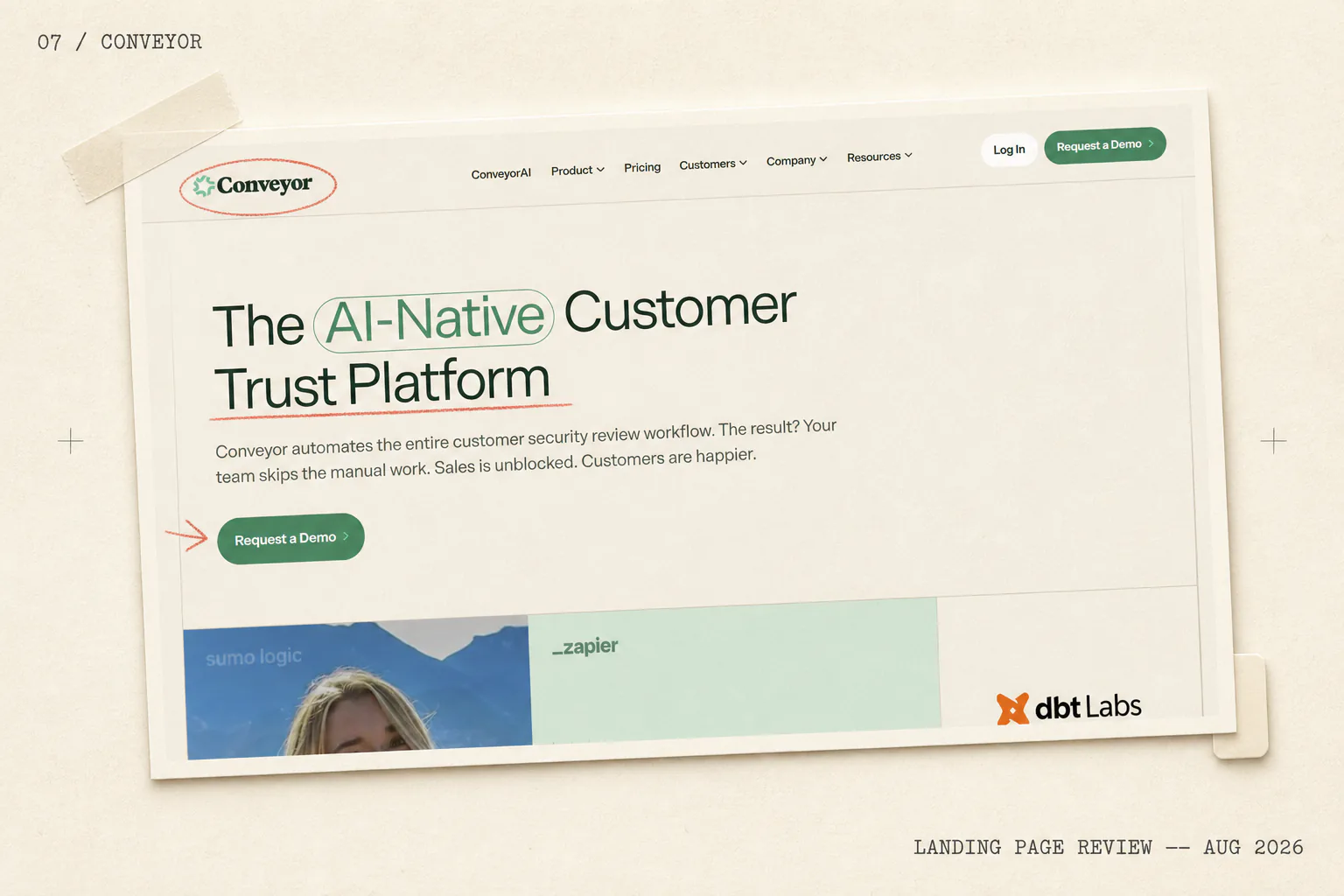
Best for: Security questionnaires, technical RFPs, and customer trust teams
Conveyor reaches RFP automation from its customer trust platform, which distinguishes it from the proposal-first products here. Its strengths sit in security questionnaires, technical responses, knowledge management, trust centres, and RFPs demanding detailed security or product information.
For RFP projects, Conveyor scans uploaded files, identifies requirements, drafts first responses, links answers to internal sources, and incorporates sales instructions or themes. Its AI Librarian flags duplicate or conflicting knowledge and draws from Confluence, Notion, shared drives, websites, and previous answers.
The same knowledge base serves security questionnaires and customer trust workflows, reducing duplication where proposal and security teams answer overlapping questions. Conveyor supports browser-based questionnaire work and integrates with Salesforce, Slack, Jira, Zendesk, and HubSpot.
What stands out:
- AI-generated security questionnaire and RFP responses
- Knowledge management with duplicate and conflict detection
- Support for multiple products and information sources
- Browser extension for portal-based questionnaires
- Trust Center and security-review workflows
- Salesforce, Slack, Jira, Zendesk, and HubSpot integrations
Conveyor publishes a Business plan starting at $9,600 per year, including unlimited seats, 20 questionnaire credits, and 10 RFP projects. Enterprise is custom and usage-based. A free Trust Center tier exists but excludes questionnaire automation.
Our assessment: Conveyor earns its place where security reviews and RFP work overlap consistently. The trade is visible in the credit allocation — 10 RFP projects a year may suit a security-led workload better than a high-volume bid department, and organisations running branded proposal production at scale may prefer a proposal-focused product.
How Do You Choose the Right AI RFP Software?
The right platform depends less on feature count than on the specific work your team performs.
Choose based on your largest source of wasted time
If people spend hours searching SharePoint, Drive, Confluence, and past proposals for answers that already exist, examine how each platform reaches existing repositories. Inventive AI, AutoRFP.ai, Arphie, Conveyor, Responsive, and Loopio all offer retrieval beyond a static Q&A database, but they differ in how much curation they assume you have already done.
If the bottleneck is approval and ownership rather than retrieval, workflow depth matters more than drafting speed. Examine reviewer assignments, permissions, deadlines, audit trails, project status, and content governance — areas where Loopio, Responsive, and Qvidian often provide more developed controls than newer response platforms.
Consider how much content maintenance you can sustain
Traditional RFP systems lean on curated response libraries. That produces reliable reusable content, but the library needs an owner, and unowned libraries decay quietly.
AI-led platforms increasingly retrieve directly from connected repositories and flag stale or duplicated material. This does not eliminate review; it relocates it. The work moves from library maintenance to source-of-truth hygiene across the systems the AI now reads.
An answer about encryption, data residency, or regulatory compliance still needs checking against current policy before submission, whatever confidence score the interface displays.
Look closely at the pricing unit
Comparison breaks down when vendors measure different things.
A five-person team running 20 large RFPs a year may prefer project or usage pricing. A proposal department handling hundreds of smaller questionnaires will reach a different conclusion from the same figures.
Inventive AI prices on usage with unlimited users. AutoRFP.ai publishes annual project allowances. Arphie prices on concurrency. Conveyor uses usage credits plus RFP project allowances. Loopio, Responsive, and Qvidian require individual pricing conversations.
Ask every shortlisted vendor to price the same scenario — your expected RFP count, questionnaire volume, users, contributors, integrations, and business units. That produces a cleaner comparison than advertised starting prices, which measure different units and are therefore not comparable at all.
Which AI RFP Software Suits Which Team?
There is no single answer, and the honest version of this list is a mapping rather than a ranking.
Loopio for established proposal departments wanting structured content management, governance, collaboration, and enterprise integrations.
Inventive AI for teams wanting an AI-led system combining drafting, connected company knowledge, freshness checks, and project workflows in one place.
Responsive for large organisations wanting configurable AI agents and response processes spanning multiple teams.
AutoRFP.ai where transparent project-based pricing and unlimited users are priorities.
Arphie for teams wanting source-backed answers, modern collaboration, and a straightforward migration off a legacy system.
Qvidian for mature proposal operations built on structured content, Microsoft Office, and established approval processes.
Conveyor where security questionnaires, technical RFPs, and customer trust work dominate the response workload.
The useful buying process is to run two or three finalists against the same completed RFP. Compare how many answers survive without major edits, how clearly sources are shown, how each product handles a question it cannot answer, and how much reviewer time remains after the first draft.
FAQs About AI RFP Software
What is AI RFP software?
AI RFP software helps teams respond to Requests for Proposals through artificial intelligence and response-management automation. Depending on the product, it imports RFP files, locates existing company knowledge, drafts answers, assigns questions to contributors, manages approvals, flags questionable content, and exports the completed response.
Modern platforms increasingly cover RFIs, RFQs, DDQs, and security questionnaires alongside traditional RFPs.
Which is the best AI RFP software in 2026?
Inventive AI, Loopio, Responsive, AutoRFP.ai, Arphie, Qvidian, and Conveyor are all credible, and they suit different workflows rather than ranking against each other.
Inventive AI and Arphie emphasize drafting from connected knowledge, while Loopio, Responsive, and Qvidian place more emphasis on established enterprise response-management structure. Conveyor is built for security-heavy workloads. AutoRFP.ai publishes the clearest pricing. The question is not which is best but which failure mode you are trying to eliminate.
Can AI write an entire RFP response?
AI can generate much of a first draft when it has access to suitable company information. Legal statements, pricing, security claims, implementation commitments, contractual terms, and product specifications require review before submission.
The stronger products make that review cheaper by providing source references, confidence indicators, approval workflows, or tools that surface potentially outdated material. None of them remove the requirement.
Is AI RFP software useful for security questionnaires?
Yes, and several products here support both formats from the same knowledge base.
Inventive AI covers security questionnaire automation alongside RFPs and DDQs. Responsive treats security questionnaires as part of its broader response platform. AutoRFP.ai supports questionnaire workflows. Conveyor is built around customer security review and is the most specialised of the four.
How much does AI RFP software cost?
There is no market price, because vendors do not measure the same thing.
AutoRFP.ai starts at $899 per month billed annually. Conveyor's Business plan starts at $9,600 per year. Inventive AI prices on usage with unlimited users and publishes no starting figure. Loopio, Responsive, Qvidian, and Arphie all require a quote.
What should I test during a demo?
Use one of your own completed RFPs rather than the vendor's prepared example.
Check how accurately the system identifies questions, whether answers come from the right sources, how it handles contradictions between sources, and how much editing each draft needs. Then test something difficult — a spreadsheet with dropdowns, a long Word document, a security questionnaire with product-specific questions. A prepared sample will tell you almost nothing.
Test permissions, contributor assignments, exports, integrations, and reporting before deciding.
Conclusion
The right AI RFP software depends on what is actually slowing your response process down, and the categories are distinct enough that the answer is usually obvious once the bottleneck is named.
If knowledge retrieval is the constraint, Inventive AI and Arphie emphasise connected-source drafting and source visibility, alongside content-maintenance features. If governance and approval are the constraint, Loopio, Responsive, and Qvidian may offer more developed workflow structure. If security review dominates the workload, Conveyor is particularly well aligned. If budget predictability matters most, AutoRFP.ai publishes figures that make initial comparison easier.
Run the same real RFP through your finalists. Measure usable first-draft quality, reviewer effort, source accuracy, content maintenance burden, workflow fit, and total annual cost at your actual volume. The product that removes the most manual work without reducing reviewer confidence in the final submission is the better long-term choice, regardless of which one demonstrated best.