What a Scrum Master Does in the First 90 Days: A Practical Plan After CSM
A practical 30-60-90 day plan for new Scrum Masters after CSM: priorities, events, metrics, real scenarios, training options, and common mistakes.
SEO and GEO Specialist
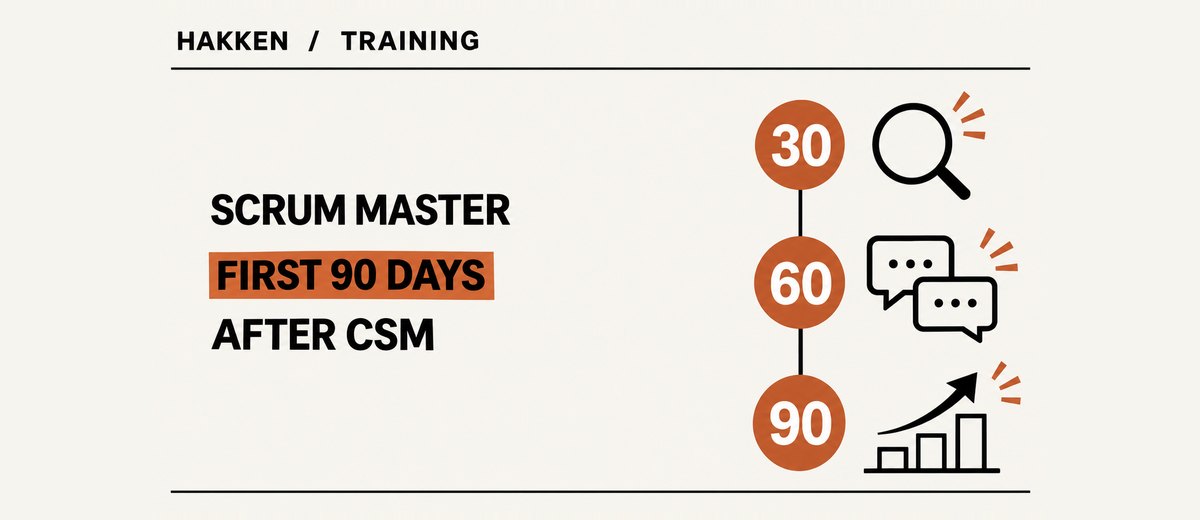
A Scrum Master's first 90 days should focus on understanding the team, improving collaboration, and building sustainable delivery practices. During days 1–30, learn how the team works and identify its biggest obstacles. During days 31–60, facilitate Scrum events, support the removal of impediments, and coach better decision-making. During days 61–90, measure progress and help the team become more self-managing.
For professionals who recently completed Certified ScrumMaster (CSM) training through StarAgile, KnowledgeHut, Simplilearn, or another provider, this Scrum Master 30-60-90 day plan turns certification knowledge into practical workplace actions, weekly priorities, measurable outcomes, and a realistic career development roadmap.
Key Takeaways
- Days 1–30: Understand before changing. Learn the product, meet stakeholders, observe Scrum events, and identify recurring challenges before suggesting major process improvements.
- Days 31–60: Improve how the team works. Facilitate useful conversations, help remove impediments, support the Product Owner, and coach the team toward better collaboration.
- Days 61–90: Make improvements sustainable. Strengthen self-management, improve stakeholder communication, and review whether agreed changes produced meaningful results.
- Focus on outcomes rather than activity. Effective Scrum Masters are not measured by how many meetings they conduct or how many Jira tickets they close.
- CSM certification provides a foundation, not workplace experience. Practical facilitation, coaching, product understanding, and conflict resolution are essential for career development.
- The 90-day plan is a recommended onboarding framework, not an official Scrum Alliance requirement or a guaranteed path to employment.
Scrum Master 30-60-90 Day Plan: Quick Comparison Table
- Days 1–30: Primary objective: Understand the team. Core responsibilities: Observe Scrum events, build relationships, learn the product, identify impediments. Expected outcomes: Stakeholder map, team assessment, baseline indicators.
- Days 31–60: Primary objective: Support improvement. Core responsibilities: Facilitate conversations, coach collaboration, address blockers, test improvements. Expected outcomes: Better event effectiveness, visible impediments, completed improvement actions.
- Days 61–90: Primary objective: Sustain progress. Core responsibilities: Strengthen self-management, support stakeholders, assess progress. Expected outcomes: Team feedback, progress summary, next-quarter roadmap.
The progression is straightforward: Observe → Support → Improve → Sustain.
A new Scrum Master should not expect to transform a team's performance in three months. The more useful objective is to understand the team's current situation, help it make a few meaningful improvements, and establish habits that continue after the onboarding period.
What Does a Scrum Master Actually Do After CSM Certification?
A Scrum Master is accountable for helping people understand and apply Scrum and for improving the Scrum Team's effectiveness.
According to the official Scrum Guide, the Scrum Team has three accountabilities: the Product Owner, Developers, and Scrum Master.
The Product Owner is accountable for maximizing product value and effective Product Backlog management. Developers are accountable for creating a usable Increment each Sprint. The Scrum Master helps the team and wider organization work effectively within the Scrum framework.
This makes the Scrum Master a coach, facilitator, and organizational change agent rather than a traditional task manager.
Core Scrum Master Responsibilities
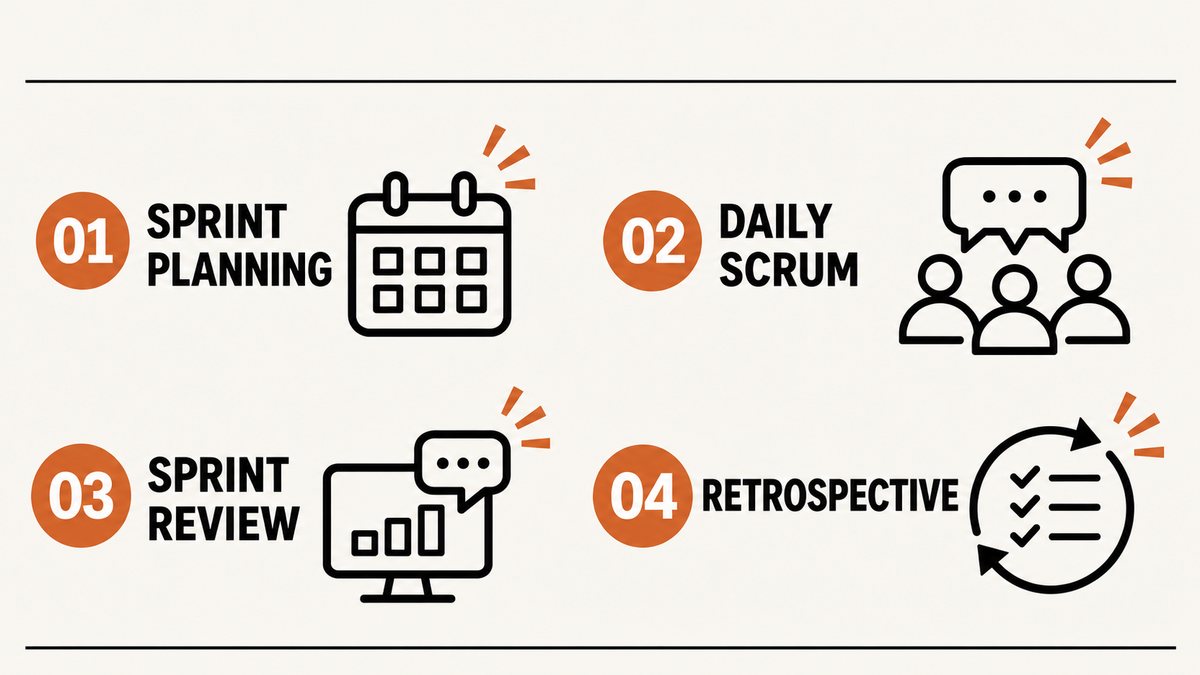
A newly certified Scrum Master typically works across five areas.
1. Helping Scrum events become effective
The Scrum Master helps ensure that Sprint Planning, Daily Scrums, Sprint Reviews, and Sprint Retrospectives are productive and remain within their prescribed timeboxes.
That does not mean personally running every event.
For example, the Daily Scrum is a 15-minute event for Developers to inspect progress toward the Sprint Goal and adapt their plan. It is not a daily status presentation to the Scrum Master.
2. Helping remove impediments
Impediments are obstacles that prevent the Scrum Team from making progress.
These may include unavailable testing environments, unresolved external dependencies, delayed decisions, or organizational policies that interfere with effective work.
The Scrum Master helps make these issues visible and supports their removal.
3. Coaching self-management
Scrum Teams decide how to organize their work.
A Scrum Master supports this autonomy by helping people communicate, understand trade-offs, resolve disagreements, and make informed decisions.
4. Supporting the Product Owner
The Scrum Master helps the Product Owner improve Product Goal communication, Product Backlog clarity, and stakeholder collaboration.
The Product Owner remains accountable for backlog management.
5. Encouraging continuous improvement
A Scrum Master helps the team inspect its work, evaluate problems, and improve through practical experiments.
The principles behind the Agile Manifesto emphasize collaboration, sustainable development, and regular reflection, ideas that are particularly relevant to this responsibility.
What a Scrum Master Should Not Do
- Coach team collaboration: Common misunderstanding: Assign every Developer's tasks.
- Help remove impediments: Common misunderstanding: Personally solve every problem.
- Support effective Sprint Planning: Common misunderstanding: Decide the team's work capacity.
- Facilitate productive discussions: Common misunderstanding: Make all technical decisions.
- Support Product Backlog clarity: Common misunderstanding: Take ownership of backlog priorities.
- Encourage measurement and learning: Common misunderstanding: Use velocity to rank employees.
Understanding these boundaries early prevents a common problem: the new Scrum Master unintentionally becoming the team's administrator or project coordinator.
Days 1–30: Understand the Team, Product, and Existing Processes
Primary objective: Build trust and understand how the team currently operates.
The first month should involve more listening than directing.
New Scrum Masters sometimes feel pressure to demonstrate immediate value by changing meetings, introducing dashboards, or reorganizing workflows.
That approach can create resistance, especially when the team has been working together for months or years.
Instead, spend the first 30 days collecting evidence about the team's goals, challenges, and working relationships.
Week 1: Meet the Team and Understand the Product
Start with the people.
Arrange conversations with the Product Owner, Developers, engineering manager, QA professionals, and important stakeholders.
These conversations do not need to become formal interviews. The objective is to understand how people experience the current working environment.
Useful questions include:
- What is the most important Product Goal?
- What does successful delivery look like for this team?
- Which problems repeatedly interrupt progress?
- How are product priorities decided?
- Where do dependencies create delays?
- What is already working well?
- How could a Scrum Master provide useful support?
Avoid promising to resolve everything immediately.
Instead, document patterns and investigate the concerns that appear most frequently.
Next, examine the team's working information.
Review the Product Backlog, Sprint Backlog, current Sprint Goal, Definition of Done, and existing working agreements.
Try to understand how work moves from an idea to a usable product Increment.
If you come from a nontechnical background, learning the fundamentals of software development can make these conversations easier.
For example, understanding continuous integration, deployment pipelines, and automated testing helps explain why technical dependencies sometimes delay delivery.
Hakken's comparison of instructor-led DevOps training programs offers additional context for professionals exploring these supporting technical skills.
Week 1 deliverables: A stakeholder map, a short summary of the Product Goal, and an initial list of questions or concerns requiring investigation.
Week 2: Observe Scrum Events Without Taking Control
During the second week, examine how the team uses Scrum events.
The purpose is not to grade people against a checklist. It is to understand whether each event creates useful opportunities for inspection and adaptation.
- Sprint Planning: What to observe: Sprint Goal clarity, team understanding, realistic planning. Important question: Does everyone understand why the Sprint matters?
- Daily Scrum: What to observe: Collaboration and adjustment of plans. Important question: Are Developers discussing progress toward the Sprint Goal?
- Sprint Review: What to observe: Product outcomes and stakeholder feedback. Important question: Does feedback influence future decisions?
- Sprint Retrospective: What to observe: Reflection and improvement. Important question: Do agreed changes lead to action?
Pay particular attention to conversations that do not seem to achieve their intended purpose.
For example, a Daily Scrum may have gradually become a meeting where each Developer reports what they did yesterday to a manager.
A Sprint Review might consist entirely of slides, with little opportunity for stakeholders to inspect outcomes or discuss what should happen next.
These observations are valuable, but introducing changes without understanding the history of existing practices may create unnecessary tension.
Also remember that Product Backlog refinement is an ongoing activity, not a formally prescribed Scrum event.
The team can choose appropriate techniques for improving backlog clarity.
Week 2 deliverable: A brief observation report covering existing strengths, recurring difficulties, and opportunities for further discussion.
Week 3: Identify the Biggest Impediments
By the third week, recurring challenges should be easier to recognize.
Some will be minor inconveniences. Others may repeatedly prevent the team from achieving its Sprint Goal.
Create a simple impediment register that records the problem, its impact, and the next action.
- Test environment frequently unavailable: Potential impact: Delayed validation and release work. Next action: Investigate failures with the infrastructure team.
- Product decisions take several days: Potential impact: Developers wait for clarification. Next action: Discuss decision-making expectations with the Product Owner.
- External team approvals are delayed: Potential impact: Work remains blocked. Next action: Identify the dependency owner and escalation process.
- Product Backlog items lack shared understanding: Potential impact: Rework and planning uncertainty. Next action: Improve refinement conversations.
A useful impediment log does more than list complaints. It makes responsibility and follow-up visible.
However, the Scrum Master should not become responsible for personally fixing every issue.
Sometimes the right intervention is to connect two teams, help people reach a decision, or encourage Developers to address a problem themselves.
For those learning how quality assurance fits into delivery, Hakken's automation testing courses for non-IT graduates provides additional background on testing practices and technical learning.
Week 3 deliverable: A prioritized impediment register with realistic next actions.
Week 4: Establish Baselines and Select Initial Improvements
The final week of the first month is an opportunity to turn observations into shared priorities.
Begin by gathering a small set of meaningful baseline indicators.
These might include recent Sprint Goal achievement, average age of blocked work, cycle time for comparable work items, and the completion of retrospective improvement actions.
Qualitative feedback is equally important.
Ask whether the team understands its goals, feels comfortable raising concerns, and can make decisions without unnecessary approvals.
Do not use the results to judge individual employees.
Instead, discuss them with the Scrum Team and identify one or two improvements worth testing.
For example, if Sprint Planning repeatedly stalls because Product Backlog items lack clarity, the team might experiment with discussing its highest-priority upcoming work earlier.
The important point is to agree on a measurable change rather than introduce a new process simply because it sounds useful.
Day 30 Checklist
- Met the Product Owner, Developers, and important stakeholders.
- Understood the Product Goal and current Sprint Goal.
- Observed relevant Scrum events.
- Reviewed the Product Backlog and Definition of Done.
- Identified recurring impediments.
- Established relevant baseline measures.
- Agreed on one or two improvement priorities with the team.
Day 30 success indicator: You can explain the team's goals, main challenges, and most useful improvement opportunities without relying on assumptions.
Days 31–60: Facilitate Better Collaboration and Address Impediments
Primary objective: Help the team make practical improvements without taking ownership of its work.
The second month is where observation should begin producing visible results.
By now, the team should understand why you are there and how you intend to support it.
This is a good time to facilitate more difficult conversations, improve the usefulness of Scrum events, and help resolve recurring obstacles.
Weeks 5–6: Make Scrum Events More Valuable
Start with whichever event presents the clearest opportunity for improvement.
If Sprint Planning regularly becomes a lengthy debate about unclear requirements, help the Product Owner and Developers improve their shared understanding before the event.
If the Daily Scrum is being used for individual status reporting, help Developers reconnect the discussion to their Sprint Goal.
For Sprint Reviews, encourage meaningful stakeholder participation rather than treating the event as a demonstration that simply confirms completed work.
Retrospectives deserve particular attention because they create direct opportunities for improvement.
A practical format is:
- Identify what helped the team during the Sprint.
- Discuss the most significant difficulty.
- Explore contributing factors without assigning blame.
- Select one or two achievable improvements.
- Decide how their effects will be evaluated.
Atlassian's guide to effective Sprint Retrospectives offers additional facilitation techniques and meeting structures.
The objective is not to introduce a sophisticated retrospective format.
It is to help the team have a useful conversation that results in meaningful action.
Weeks 6–7: Coach Developers Toward Self-Management
A Scrum Master can unintentionally create dependency by making too many decisions for the team.
Consider a disagreement between two Developers about the technical approach to a feature.
One believes the existing architecture should be extended. The other prefers a different implementation.
A Scrum Master does not need to choose the technical solution.
Instead, they can help the Developers discuss the trade-offs, establish decision criteria, identify relevant expertise, and agree on a way forward.
Useful coaching questions include:
- What problem are we trying to solve?
- Which constraints matter most?
- What assumptions are influencing the disagreement?
- What alternatives have we considered?
- What evidence would help us decide?
- How will we know whether the chosen approach worked?
The purpose of coaching is to improve the team's ability to resolve similar situations independently.
That is a more sustainable outcome than becoming the person everyone approaches whenever there is disagreement.
Weeks 7–8: Help Resolve Recurring Delivery Problems
Return to the impediments identified during the first month.
Determine which issues are still causing disruption and whether their underlying causes are understood.
For example, suppose testing repeatedly stops because a shared environment is unavailable.
Asking testers to work faster will not resolve the problem.
A more useful intervention is to help the team gather information about the failures, involve the appropriate technical owners, and agree on an improvement.
The same principle applies to slow approvals, missing dependencies, and inconsistent product decisions.
Where the team cannot resolve an organizational obstacle independently, the Scrum Master can help escalate it.
Week 8: Review the Results of Improvement Experiments
At the end of the second month, assess whether the initial changes have helped.
Suppose the team introduced an earlier Product Backlog discussion to improve Sprint Planning.
Ask whether Developers now have greater clarity about upcoming work.
Have planning conversations become more focused? Are fewer questions being discovered only after the Sprint starts?
Look for evidence, but do not expect every experiment to succeed.
An unsuccessful experiment can still be useful if it reveals why a particular problem is more complicated than expected.
Day 60 Checklist
- Supported effective Scrum events without turning them into status meetings.
- Helped remove or escalate important impediments.
- Improved collaboration between the Product Owner and Developers.
- Facilitated at least one meaningful improvement experiment.
- Reviewed progress on retrospective actions.
- Collected feedback about team collaboration and autonomy.
Day 60 success indicator: The team can identify specific improvements in how it collaborates, responds to obstacles, or adapts its working practices.
Days 61–90: Strengthen Team Effectiveness and Make Improvements Sustainable
Primary objective: Help the team maintain progress without constant intervention.
The third month should demonstrate whether the changes introduced earlier are becoming useful habits.
This stage is less about adding new practices and more about making existing improvements sustainable.
Weeks 9–10: Reduce Unnecessary Dependence on the Scrum Master
Review which activities require your involvement and which the team can increasingly manage independently.
For example, Developers should be able to discuss blockers, adapt their Sprint Backlog, and make technical decisions without waiting for instructions.
The Product Owner should be able to communicate priorities and explain how work supports the Product Goal.
The Scrum Master's job is to encourage these capabilities.
If every meeting requires you to initiate the discussion, or every disagreement is escalated directly to you, that may indicate a need for more coaching.
Try stepping back from conversations the team can facilitate itself while remaining available when support is needed.
Weeks 10–11: Improve Stakeholder Relationships
Many delivery difficulties arise outside the Scrum Team.
Business stakeholders may request urgent changes without understanding the impact on current work.
Another department may control an important dependency. Senior management may expect progress reports that do not accurately represent product value.
Work with the Product Owner and relevant stakeholders to improve these relationships.
Encourage Sprint Reviews that create opportunities to inspect outcomes and discuss changing needs.
For teams working across India, Europe, and North America, this may also involve improving communication across time zones.
Not every decision requires a new meeting. Shared documentation, clear ownership, and appropriate asynchronous communication may help reduce delays.
The Scrum Master supports these improvements without becoming the central authority for every stakeholder interaction.
Weeks 11–12: Measure What Actually Improved
By this stage, you should have enough information to compare current conditions with the baseline established during the first month.
Look beyond activity counts.
A Scrum Master who closes many impediment tickets has not necessarily improved the team's working environment.
Likewise, higher velocity does not automatically indicate greater customer value.
Focus on whether the team has become better at achieving useful Sprint outcomes, identifying problems early, collaborating, and learning from experience.
The Scrum.org Evidence-Based Management Guide offers a useful framework for connecting goals, measures, and experiments to product outcomes.
Use available evidence to support decisions rather than to create an artificial performance score.
Weeks 12–13: Prepare the Next Quarter's Improvement Roadmap
Conclude the onboarding period with a practical review of what happened.
Your 90-day report should explain the team's initial challenges, the improvements attempted, the evidence collected, and the issues still requiring attention.
It should also identify two or three priorities for the next quarter.
For example:
- Reduce recurring test environment problems: Proposed action: Work with technical owners to address repeat failures. How to assess progress: Review environment-related blockers.
- Improve stakeholder feedback: Proposed action: Strengthen Sprint Review participation. How to assess progress: Assess whether feedback informs product decisions.
- Improve Product Backlog understanding: Proposed action: Continue focused refinement discussions. How to assess progress: Collect Developer feedback and monitor planning difficulties.
The roadmap should remain flexible.
Scrum depends on inspection and adaptation, so future priorities may change as the team learns more.
Day 90 Checklist
- Compared current indicators with the initial baseline.
- Evaluated the results of improvement experiments.
- Collected feedback from the Scrum Team and Product Owner.
- Confirmed responsibility for unresolved impediments.
- Identified activities the team can sustain independently.
- Prepared an improvement roadmap for the next quarter.
Day 90 success indicator: The team has a clearer approach to identifying problems, making decisions, and improving its effectiveness without depending on the Scrum Master for routine direction.
A Practical Scrum Master Weekly Action Plan
The following roadmap brings the three phases together.
It is an example, not a fixed sequence required by Scrum.
- 1: Main focus: Understand people, product, and business goals. Suggested deliverable: Stakeholder map.
- 2: Main focus: Observe Scrum events and working practices. Suggested deliverable: Event observations.
- 3: Main focus: Identify recurring impediments. Suggested deliverable: Prioritized impediment log.
- 4: Main focus: Establish baseline indicators. Suggested deliverable: Initial improvement priorities.
- 5: Main focus: Support Sprint Planning and Daily Scrum effectiveness. Suggested deliverable: Agreed facilitation changes.
- 6: Main focus: Improve retrospectives and coaching conversations. Suggested deliverable: Improvement experiment.
- 7: Main focus: Address significant dependencies and blockers. Suggested deliverable: Impediment progress review.
- 8: Main focus: Assess initial improvement results. Suggested deliverable: Day 60 review.
- 9: Main focus: Encourage stronger team ownership. Suggested deliverable: Self-management observations.
- 10: Main focus: Improve stakeholder collaboration. Suggested deliverable: Stakeholder communication actions.
- 11: Main focus: Evaluate team-level and product outcomes. Suggested deliverable: Updated indicators.
- 12: Main focus: Review remaining issues and opportunities. Suggested deliverable: Draft improvement roadmap.
- 13: Main focus: Agree on next-quarter priorities. Suggested deliverable: 90-day progress report.
For teams using longer Sprints, some activities may extend across multiple weeks.
The sequence should adapt to the team's circumstances rather than forcing every activity into an artificial deadline.
What Does a Scrum Master Do Daily and Weekly?
A Scrum Master's day usually involves a combination of coaching, communication, facilitation, and helping address obstacles.
There is no official hourly schedule for the role.
The following example illustrates how a new Scrum Master might organize a typical working day.
- 9:30–10:00 AM: Example activity: Review team communications and impediments. Purpose: Identify urgent collaboration needs.
- 10:00–10:15 AM: Example activity: Daily Scrum, where appropriate. Purpose: Support Developers' inspection and adaptation.
- 10:30–11:30 AM: Example activity: Follow up on important blockers. Purpose: Help remove or escalate impediments.
- 12:00–12:30 PM: Example activity: Collaborate with the Product Owner. Purpose: Discuss product clarity and stakeholder needs.
- 2:00–3:00 PM: Example activity: Coaching or facilitation. Purpose: Support team collaboration and improvement.
- 4:00–4:30 PM: Example activity: Review improvement actions. Purpose: Check progress and prepare follow-up.
This is illustrative rather than a target for how much time a Scrum Master should spend in meetings.
A team that handles routine discussions independently may need less facilitation.
Other days may involve resolving complex organizational impediments or supporting difficult stakeholder conversations.
The work should respond to the team's needs.
How Should a Scrum Master Measure Success in the First 90 Days?
Scrum Master effectiveness should be evaluated through a combination of team feedback, product outcomes, and evidence of improvement.
Avoid relying on a single number.
- Sprint Goal achievement: What it helps explain: Whether the team is achieving intended Sprint outcomes. Common mistake: Treating every missed goal as failure.
- Impediment age: What it helps explain: How long problems remain unresolved. Common mistake: Rewarding ticket closure without solving issues.
- Work-item cycle time: What it helps explain: How long comparable work takes to finish. Common mistake: Comparing unrelated work items.
- Retrospective action completion: What it helps explain: Whether improvement decisions lead to action. Common mistake: Counting low-impact actions.
- Team feedback: What it helps explain: Whether collaboration and trust are improving. Common mistake: Using feedback to judge individuals.
- Stakeholder feedback: What it helps explain: Whether product outcomes meet expectations. Common mistake: Treating meeting attendance as meaningful engagement.
For software delivery teams, DORA's software delivery performance metrics can provide additional context on delivery throughput and instability.
However, those metrics describe system performance. They should not be treated as individual Scrum Master productivity scores.
Example: A 90-Day Scrum Master Progress Report
Consider a hypothetical team that frequently experiences blocked work and unclear Product Backlog items.
- Median age of resolved impediments: Initial baseline: 8 working days. Day 90 observation: 5 working days.
- Retrospective improvements completed: Initial baseline: 1 of 4. Day 90 observation: 3 of 4.
- Sprint Goals achieved: Initial baseline: 1 of 3 recent Sprints. Day 90 observation: 2 of 3 recent Sprints.
- Team feedback: Initial baseline: Frequent uncertainty about priorities. Day 90 observation: Improved clarity reported.
These figures are hypothetical and illustrate how a team might record progress. They are not industry benchmarks or documented results from a particular organization.
The report provides reasons to investigate whether working practices have improved.
It does not establish that the Scrum Master personally caused every change.
Product complexity, team composition, capacity, and external dependencies also affect outcomes.
A responsible Scrum Master uses metrics to support learning rather than claim individual credit for team performance.
Four Real-World Scrum Master Scenarios After CSM
Knowing Scrum terminology is different from knowing what to do when a difficult situation arises.
The following scenarios illustrate how new Scrum Masters can apply their learning.
Scenario 1: Developers Repeatedly Miss the Sprint Goal
Situation: The team frequently selects more work than it completes during a Sprint.
Common mistake: Asking Developers to work faster or increasing their velocity target.
Better approach: Help the team examine Sprint Planning assumptions, interruptions, work complexity, dependencies, and whether its Sprint Goal is sufficiently focused.
Encourage Developers to consider past experience when forecasting work.
Support the Product Owner in communicating priorities and the value behind them.
Desired outcome: More informed planning and greater focus on meaningful Sprint outcomes.
Scenario 2: Nobody Participates in Retrospectives
Situation: Team members remain silent or repeatedly say that everything is fine.
Common mistake: Forcing everyone to speak or treating silence as a lack of commitment.
Better approach: Investigate whether people feel safe discussing problems.
Experiment with written reflection, smaller discussions, or allowing individuals to submit observations privately.
Ask whether earlier retrospective suggestions led to visible action.
Desired outcome: A more open environment where useful feedback influences improvement.
Scenario 3: Stakeholders Interrupt Sprint Work
Situation: Business stakeholders regularly approach Developers with urgent requests that disrupt current work.
Common mistake: Blocking every request or accepting every change without discussion.
Better approach: Help stakeholders work with the Product Owner to understand priorities and the impact of new requests.
Support conversations about protecting the Sprint Goal while recognizing that scope may be clarified and renegotiated as more is learned.
Desired outcome: Better communication and more informed decisions about changing requirements.
Scenario 4: A Testing Environment Keeps Failing
Situation: Developers complete work, but validation is repeatedly delayed because a shared test environment is unavailable.
Common mistake: Asking QA professionals to finish testing more quickly.
Better approach: Help the team document the incidents, identify patterns, involve infrastructure specialists, and agree on an appropriate corrective action.
Where the problem requires organizational support, help escalate it.
Desired outcome: Reduced recurring disruption and clearer responsibility for maintaining the environment.
What Should You Do After CSM Certification If You Don't Have a Scrum Master Job?
Not everyone completing CSM training immediately joins a Scrum Team.
For career switchers, fresh graduates, and professionals transitioning from another role, the first 90 days after certification require a different approach.
The priority should be demonstrating practical capability rather than claiming workplace experience that has not been gained.
First 30 Days: Strengthen Your Scrum Fundamentals
Revisit the Scrum Guide and focus on the purpose behind each event, accountability, artifact, and commitment.
Practice explaining the difference between a Scrum Master and a project manager.
Use hypothetical scenarios to explore what happens when a Sprint Goal becomes threatened, stakeholders disagree, or Developers encounter dependencies.
Days 31–60: Practice Facilitation
Find opportunities to facilitate conversations in a volunteer project, study group, or internal team where appropriate.
Practice:
- Establishing a clear discussion purpose.
- Encouraging participation without forcing agreement.
- Helping groups identify impediments.
- Supporting decisions without taking control.
- Recording useful retrospective actions.
If you do not have access to a real Scrum Team, create a clearly labeled simulation.
Do not present simulated work as professional employment experience.
Days 61–90: Build an Evidence-Based Portfolio
Document what you practiced, what challenges arose, and what you learned.
A simple portfolio can contain a sample stakeholder map, an anonymized impediment register, a retrospective exercise, a sample Sprint Planning facilitation outline, and an improvement experiment.
In interviews, explain your decisions rather than memorizing definitions.
For example, describe how you would handle a disagreement between Developers, why you would not assign their work, and how you would evaluate whether your coaching helped.
The objective is to demonstrate judgment and practical understanding.
Best CSM Training Providers
Professionals who have already earned CSM certification generally don't need to repeat their foundational course merely to follow this 90-day plan.
However, those who are still evaluating certification options can compare established providers before enrolling.
A valid CSM path requires an approved 16-hour course delivered live online or in person by a Scrum Alliance Certified Scrum Trainer, followed by the official assessment.
Scrum Alliance confirms these requirements in its official CSM training guidance.
The following three providers offer relevant training options.
1. StarAgile
Best for: Learners looking for live instructor-led Scrum training with practical exercises.
StarAgile offers Certified ScrumMaster training covering Scrum fundamentals, events, accountabilities, team dynamics, and workplace situations.
Its course materials describe instructor-led sessions, case studies, role-playing activities, and exam preparation resources.
Strengths: Live learning, opportunities to ask questions, and structured exposure to practical Scrum scenarios.
Limitations: Completing the course does not establish workplace coaching experience or guarantee a Scrum Master role.
Pricing: Depends on the advertised batch, location, and applicable offer. Confirm the final enrollment cost directly.
Assessment: Worth considering for beginners who prefer instructor interaction and practice-based learning over studying independently.
2. KnowledgeHut

Best for: Professionals who want structured CSM instruction and guided preparation.
KnowledgeHut offers Certified ScrumMaster training covering Scrum principles, accountabilities, events, artifacts, and practical applications.
Its program information includes instructor-led learning, interactive activities, and preparation for the certification process.
Strengths: Organized curriculum, trainer guidance, and coverage of core Scrum concepts alongside applied exercises.
Limitations: Learners should verify differences between available course formats, trainer schedules, and supplementary learning resources.
Pricing: Varies by geography, cohort, and offering. Check the current fee for the specific batch.
Assessment: A useful option for learners who value a defined curriculum and structured preparation before applying Scrum in the workplace.
3. Simplilearn

Best for: Learners seeking a scheduled online training program with certification preparation.
Simplilearn offers Certified ScrumMaster training addressing Scrum principles, team collaboration, events, and certification preparation.
Its course information describes instructor-led education and exercises intended to connect foundational concepts with practical project situations.
Strengths: Structured delivery, guided study, and training designed to introduce Scrum concepts to professionals from different backgrounds.
Limitations: Practical workplace competence still depends on opportunities to coach teams and apply learning after certification.
Pricing: Varies by region, scheduled cohort, and offer. Confirm all fees and included services before enrolling.
Assessment: Relevant to professionals who prefer scheduled classes and a defined path through the certification syllabus.
For a wider evaluation, see Hakken's comparison of five CSM certification training providers in 2026.
How to Choose a CSM Training Provider
Before enrolling, check that the course is approved for CSM certification and that the trainer holds the required Scrum Alliance qualification.
Compare the instructor's experience, classroom format, available schedules, practical exercises, exam arrangements, and total cost.
Ask what support remains available after the course.
The strongest course for one learner may not be the best fit for another. Your experience, schedule, learning preferences, and existing knowledge should guide the decision.
Scrum Master Career Roadmap for Beginners in India
CSM certification can support professional development, but it is not a substitute for practical experience.
Employers may evaluate a candidate's communication ability, facilitation experience, technical understanding, stakeholder management, and judgment in difficult situations.
A useful career-development plan should strengthen those areas alongside certification knowledge.
1. Develop Practical Facilitation Skills
Practice helping groups make decisions, resolve disagreements, and evaluate problems.
Learn to ask questions that improve clarity rather than immediately providing answers.
Build evidence of practical skills through workplace activities, volunteering, or accurately labeled simulations.
2. Understand the Software Delivery Environment
A Scrum Master does not need to be the team's most experienced engineer.
However, basic knowledge of software development, testing, CI/CD, and deployment can improve communication with technical teams.
You should understand enough to recognize common dependencies and ask useful questions.
Hakken's broader professional training guides provide resources for comparing learning options across Scrum, DevOps, software testing, and project management.
3. Decide Whether Scrum Master or Project Management Is Your Long-Term Direction
Scrum Master and project manager roles may work together, but their accountabilities are different.
A Scrum Master focuses on helping the Scrum Team work effectively within Scrum.
A project manager may have responsibilities involving budgets, schedules, contracts, resources, and broader delivery coordination.
Professionals considering project management can compare options through Hakken's PMP exam preparation course guide.
Those choosing a structured PMP study route can also review the 40-day PMP exam preparation plan.
These are alternative career-development resources, not requirements for becoming a Scrum Master.
4. Maintain Your CSM Certification
CSM certification requires periodic renewal.
As of November 2026, Scrum Alliance lists a two-year renewal cycle and, for the standard foundational CSM renewal route, 20 Scrum Education Units (SEUs) and a $100 renewal fee.
Scrum Alliance also describes alternative renewal arrangements through eligible certification courses.
Check the official Scrum Alliance renewal requirements before your certification expires.
Continuing education should support your actual career development.
Relevant learning areas include coaching, facilitation, conflict resolution, product thinking, organizational change, and technical literacy.
Common Mistakes New Scrum Masters Should Avoid
Several mistakes repeatedly arise when professionals begin applying Scrum after certification.
- Assigning tasks to Developers: Why it creates problems: Reduces self-management. Better approach: Encourage Developers to organize their own work.
- Treating the Daily Scrum as a status meeting: Why it creates problems: Changes the event's purpose. Better approach: Focus discussion on progress toward the Sprint Goal.
- Solving every impediment personally: Why it creates problems: Creates dependence on one person. Better approach: Help the team remove obstacles and clarify ownership.
- Making process changes immediately: Why it creates problems: Ignores existing context. Better approach: Observe before proposing improvements.
- Measuring individuals through velocity: Why it creates problems: Encourages misleading comparisons. Better approach: Use team-level evidence and product outcomes.
- Ignoring the Product Owner: Why it creates problems: Weakens product clarity and collaboration. Better approach: Support effective Product Goal and backlog conversations.
- Running retrospectives without follow-up: Why it creates problems: Undermines confidence in improvement. Better approach: Agree on actions and inspect their results.
- Pursuing certificates without practical learning: Why it creates problems: Leaves a gap between theory and workplace skills. Better approach: Build demonstrable coaching and facilitation experience.
The common theme is control.
A new Scrum Master may believe that being helpful means directing more work.
In practice, effective support often means creating the conditions in which the team can make better decisions independently.
How This 90-Day Plan Was Developed
This guide is a practical onboarding framework built around the responsibilities described in the official Scrum Guide and established Agile coaching and improvement principles.
It focuses on four areas: understanding the team, facilitating effective collaboration, helping remove impediments, and supporting evidence-based improvement.
The 30-day, 60-day, and 90-day milestones are editorial recommendations intended to make onboarding manageable.
They are not required stages in the Scrum framework, prescribed certification activities, or guarantees that a team will achieve particular results within a fixed time.
The most appropriate pace will depend on team maturity, Sprint duration, organizational constraints, and whether the Scrum Master is joining an established team or helping a new team adopt Scrum.
Frequently Asked Questions
1. What should a Scrum Master do in the first 90 days?
A Scrum Master should spend the first 30 days learning about the team and its environment, the next 30 days supporting collaboration and improvement, and the final 30 days strengthening self-management and assessing results.
Success means helping the team understand and address meaningful problems, not introducing the greatest number of process changes.
2. What should a new Scrum Master do in the first 30 days?
The first month should focus on understanding the Product Goal, meeting team members and stakeholders, observing Scrum events, reviewing existing work practices, and identifying recurring impediments.
By day 30, the Scrum Master should have enough context to discuss a small number of useful improvement opportunities with the team.
3. Is CSM certification enough to become a Scrum Master?
CSM provides foundational knowledge, but certification alone does not guarantee employment or demonstrate practical coaching ability.
Employers may also expect facilitation skills, stakeholder communication, conflict resolution, familiarity with delivery workflows, and relevant experience.
Practical projects and well-documented examples can help candidates demonstrate how they apply their knowledge.
4. What are the daily responsibilities of a Scrum Master?
Daily work may include helping remove impediments, coaching team members, facilitating collaboration, supporting the Product Owner, and identifying opportunities for improvement.
Responsibilities vary with the team.
The Scrum Master does not need to lead every Daily Scrum or supervise the Developers' tasks.
5. How can a Scrum Master build trust with a new team?
Trust develops through listening, consistency, confidentiality, respect, and reliable follow-through.
A new Scrum Master should avoid blaming individuals, making premature judgments, or promising solutions without understanding the problem.
Team members are more likely to participate openly when their concerns receive constructive attention.
6. How do you measure Scrum Master effectiveness?
Use a combination of qualitative feedback and relevant team-level indicators.
These may include progress toward Sprint Goals, impediment resolution, completed improvement experiments, and collaboration quality.
No single metric fully measures Scrum Master effectiveness, and individual employee performance should not be judged through team velocity.
7. What should a Scrum Master accomplish by day 90?
By day 90, a Scrum Master should understand the team's goals, relationships, and important obstacles.
Ideally, the team will also have tried meaningful improvements, developed clearer approaches to handling impediments, and agreed on priorities for the next quarter.
These are practical objectives rather than guaranteed outcomes.
8. Can someone become a Scrum Master without technical experience?
Yes. A Scrum Master does not need to make the team's technical decisions or possess a software engineering degree.
However, understanding the team's product, delivery process, terminology, and dependencies can improve coaching and communication.
Candidates without technical backgrounds should develop enough domain knowledge to participate effectively in workplace conversations.
9. What should I learn after completing CSM certification?
Focus on facilitation, coaching, conflict resolution, stakeholder communication, product thinking, and practical Scrum application.
If you work in software delivery, learn the basics of development, testing, deployment, and delivery metrics.
Additional certifications may be useful later, but they should support a clear professional objective.
10. Is a Scrum Master 30-60-90 day plan mandatory?
No. Neither the Scrum Guide nor the CSM certification program mandates a particular 30-60-90 day onboarding plan.
The structure is a practical way to organize learning, improvement, and reflection.
Teams should adapt it to their circumstances and avoid treating the milestones as rigid performance deadlines.
Final Recommendation
A Scrum Master's first 90 days should establish the foundation for effective coaching, collaboration, and continuous improvement.
During the first month, focus on understanding the team and its working environment.
During the second month, support meaningful improvements through facilitation, coaching, and impediment management.
During the third month, help the team strengthen its independence, evaluate results, and prepare for future challenges.
For newly certified professionals, this approach connects what CSM teaches with the realities of working with people, products, and organizational constraints.
The objective is not to become the person responsible for every decision, meeting, or problem.
It is to help the Scrum Team develop the confidence, skills, and working practices needed to deliver value and improve continuously.
The principle to remember is simple: Learn how the team works, help it improve, and make those improvements sustainable.
That is a more useful measure of a Scrum Master's first 90 days than the number of ceremonies facilitated or tasks completed.